Published: May 1, 2026 at 4:02 pm
In the course of history, India has produced several families who have achieved laurels in different sports. These include the Pataudi family in cricket, the Amarnath family in cricket, the Mankad family – Vinoo and son Ashok (cricket), daughter-in-law Nirupama (tennis) and grandson Harsh (tennis), the Amritraj brothers in tennis and PV Sindhu and her parents in badminton and volleyball.
The unique aspect of the Pataudi family, is that its members achieved laurels in sports as well as politics and showbiz. One of the lesser-known members of that family was Sher Ali Khan Pataudi, younger brother of Nawab Iftikhar Ali Khan Pataudi. So, he was the uncle of Mansur Ali Khan Pataudi and the grand uncle of Saif Ali Khan and his sisters Soha and Saba.
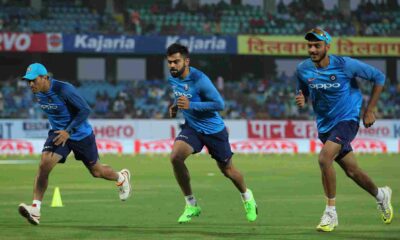
Captains Courageous: Dhoni, Kohli top list of India’s best-ever cricket captains
Sher Ali Khan was born in 1913 and at the age of 20, he joined the British Indian army in undivided India. This was before independence, so the Indian Army was under the control of the British government. He was commissioned into the 7th Light Cavalry of the British Indian Army in 1933. He subsequently commanded the 1st battalion of the First Punjab Regiment during the Second World War. After World War II had ended, he served as the Defence Attache of the British Indian Armed Forces in Washington, D.C.
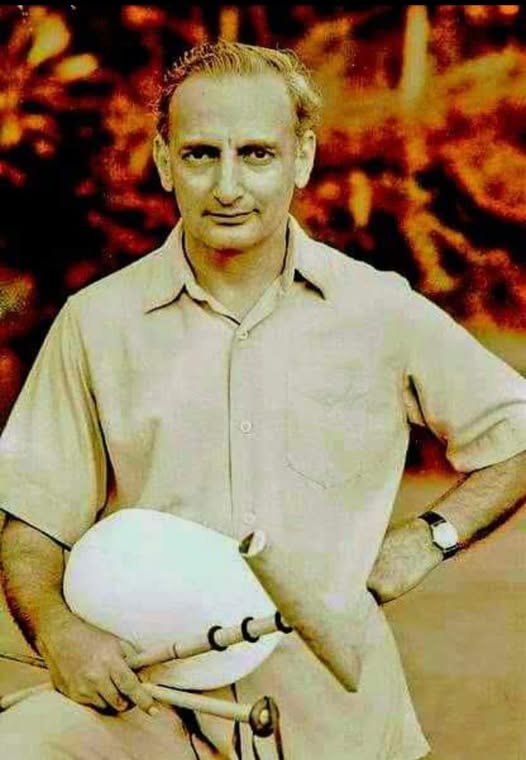
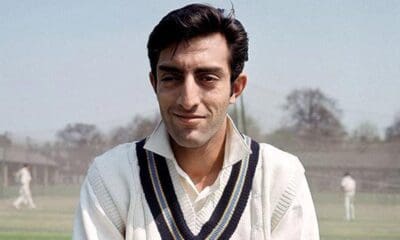
Sher Ali Khan Pataudi, brother of Iftikhar Ali Khan Pataudi, was also an excellent polo player
When India became independent in 1947 and partition took place, he opted to live in Pakistan. When he opted to serve the rest of his army career in Pakistan, British Field Marshal Sir Claude Auchinlek is said to have remarked to Sir Frank Messervy who was then the Commander-in-Chief of the Pakistan Army: “You are getting one of my finest officers Frank.”
Sher Ali Khan was an excellent polo player
Besides being an able army officer, Sher Ali Khan was also a very good polo player and represented Pakistan in polo for many years. His skills were held in such great esteem that he was named captain of the All Malaysia Polo team for six years and later also served as president of the Malaysian Polo Association. He founded the Djakarta (now Jakarta) Riding Club and was its first president.
In 1958, he retired from army service and was appointed Pakistan’s High Commissioner to Malaysia. In 1963 he became Pakistan’s Ambassador to Yugoslavia. Then he served in the cabinet of General Yahya Khan as the central Minister for Information, Broadcasting. He died at the age of 89 in Lahore.
Interesting background of Pataudi family
But the background of the ruling family of Pataudi is also an interesting one. The family traces their origin to Faiz Talab Khan, an ethnic Pashtun from Kandhahar in Afghanistan. Faiz Talab Khan became the first Nawab of the Pataudi State in 1806. The Pataudi estate was formed by means of a land grant from Lord Lake, army commander of the British East India Company. Faiz Talab Khan was gifted this estate after he aided the East India Company in battles against the Maratha empire.
The 7th Nawab of the lineage of Pataudi rulers was Ibrahim Ali Khan and his sons were Iftikhar Ali Khan and Sher Ali Khan. The mother of the two sons was Begum Shahar Bano. She was the daughter of Amiruddin Ahmad Khan, the Nawab of Loharu. This Nawab was related to the great Urdu poet Mirza Ghalib. So Iftikhar Ali Khan and his son MAK Pataudi were also connected to the legendary poet through their mother’s side.
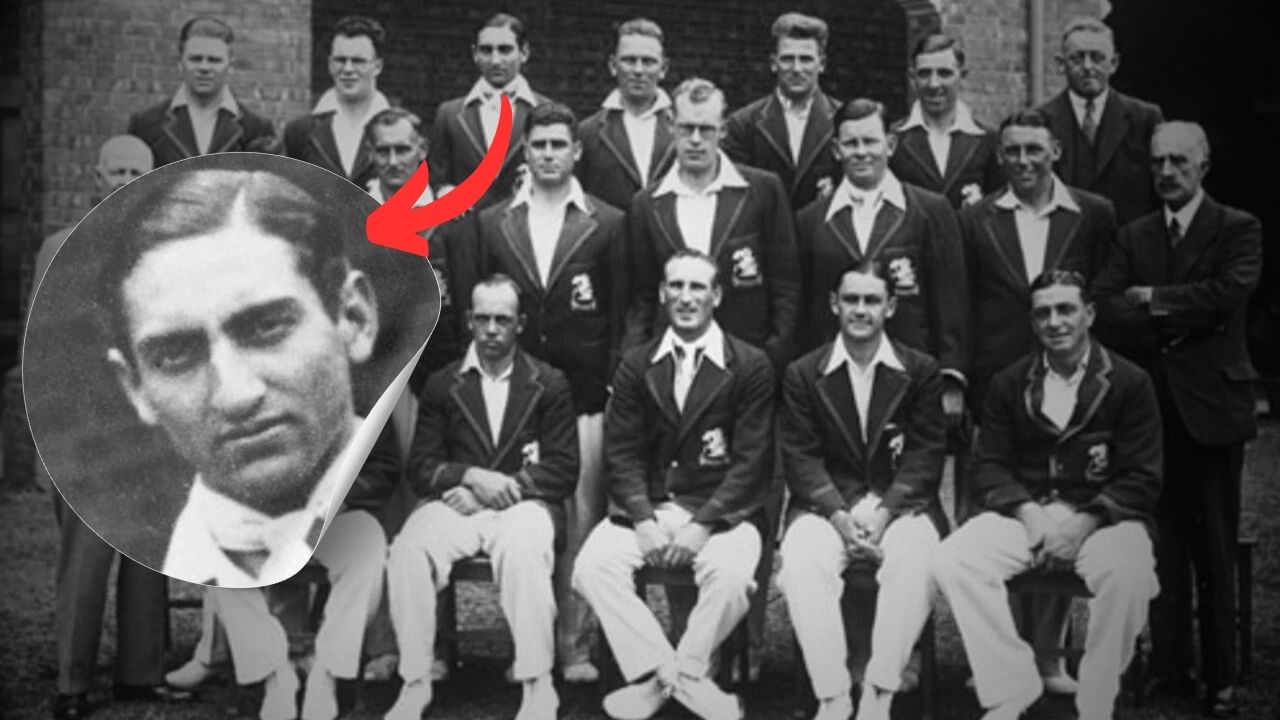
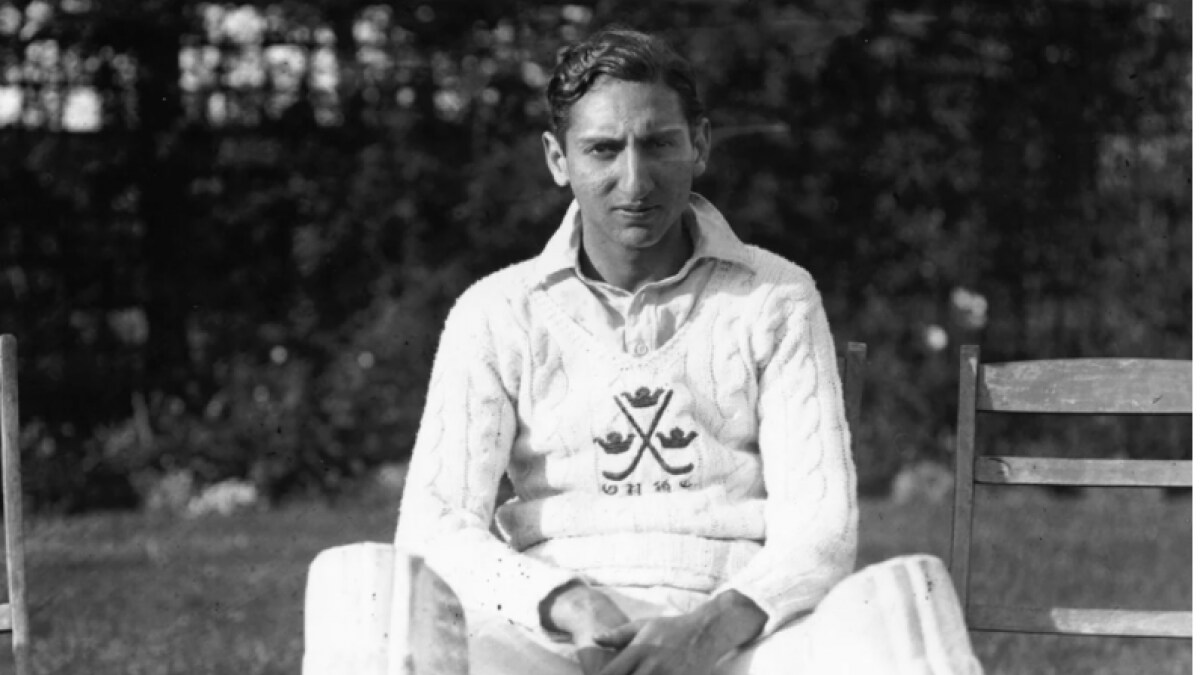
Iftekhar Ali Khan Pataudi’s first example of his principled stand in favour of good sportsmanship was seen in his debut Test series for England. Pic: Sports Yaaari
Iftikhar Ali Khan carved out an outstanding career in cricket and hockey. Above all he was a fearless man and refused to be cowed down by the reputations of more famed players.
Iftikhar had impressive performances for Oxford University
The first example of his principled stand in favour of good sportsmanship was seen in his debut Test series for England. Having studied at Balliol College and played cricket (and hockey too) with considerable success at Oxford University, he was a well-known figure in cricket circles in England. In the 1931 season, he scored 1307 runs at an amazing average of 93. In the much-awaited Oxford vs Cambridge match, he scored 238 which became a record that was broken only in 2005.
So, it was not surprising when he was selected for England’s team in 1932. Before embarking on the tour of Australia in 1932-33, the captain of England’s cricket team, Douglas Jardine, had already formed a plan in his mind about how to tackle the Australian batsmen, in particular Don Bradman. Jardine had not revealed his plan to anyone so as to prevent it from being leaked to the media. But after the team had begun the voyage on board the ship, he called his players together one day.
Gubby Allen and Iftikhar objected to Jardine’s plan
After lining up his players on the deck, he revealed his strategy to them. He instructed them to develop a hatred for the Australians. “Our fast bowlers will attack on the leg stump line with short-pitched deliveries and we will set a predominantly leg side field,” he revealed. As he explained his plan in detail, most England players agreed with his policies except for two team members. One was fast bowler George Allen better known as Gubby Allen who rejected Bodyline despite his good friendship with Jardine. The second dissenting player was Iftikhar Ali Khan Pataudi.
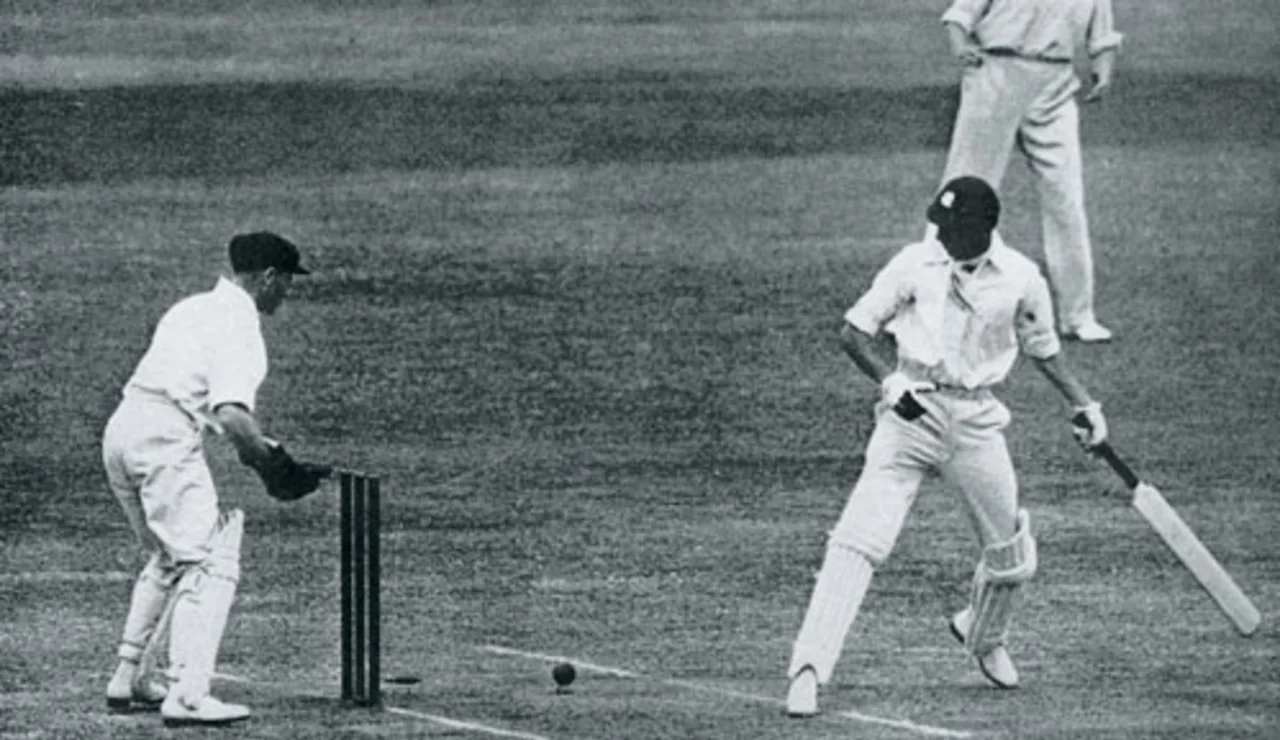
Iftikhar Ali Khan Pataudi scored 102 in the very first Test. His teammates Herbert Suttcliffe and Wally Hammond also scored centuries which enabled England to win the Test by 10 wickets. Pic: The International Cricketer
It was remarkable that a man who had been selected to play in his very first Test series, took a stand against his captain because he felt there was wrongdoing on the captain’s part. Few players have such courage and belief in their principles. Khan spoke up and told his skipper that the tactics would not be in keeping with the principles of good sportsmanship. When the Test matches began, the Nawab scored 102 in the very first Test. His teammates Herbert Suttcliffe and Wally Hammond also scored centuries which enabled England to win the Test by 10 wickets.
Simmering tension between Iftikhar and Jardine
But the simmering tension between Iftikhar Ali Khan and his captain Jardine came to the forefront in the second Test. When the captain instructed Pataudi to take up a fielding position within the arc on the leg side, the Indian flatly refused. He told his skipper that he will not be a party to this unsportsmanlike approach. Jardine sneered at him: “I see his Highness is a conscientious objector.” But Iftikhar Ali Khan stood by his statement and did not budge.
https://www.facebook.com/share/p/1CHkZVLwxt/
It so happened that in that Test, Khan could not get a big score and Australia won by 111 runs. That result provided Jardine with the excuse that he needed to drop the Indian player from the side. But the incident brought into sharp focus Iftikhar Ali Khan’s love for fair play and courage to stand by his beliefs. The Nawab came from a long line of warriors and he showed his bravery by opposing his own captain when he felt that the spirit of sportsmanship was being disregarded.
Iftikhar was also a top-class hockey player
Iftikhar Ali Khan was the only player to have represented both England as well as India in Test cricket. But not many are aware of the fact that he was also a top-class hockey player and was named in the Indian squad before the 1928 Olympic Games. He had proved his mettle in hockey when he was a student in the UK and the Indian hockey selectors had named him in the squad.
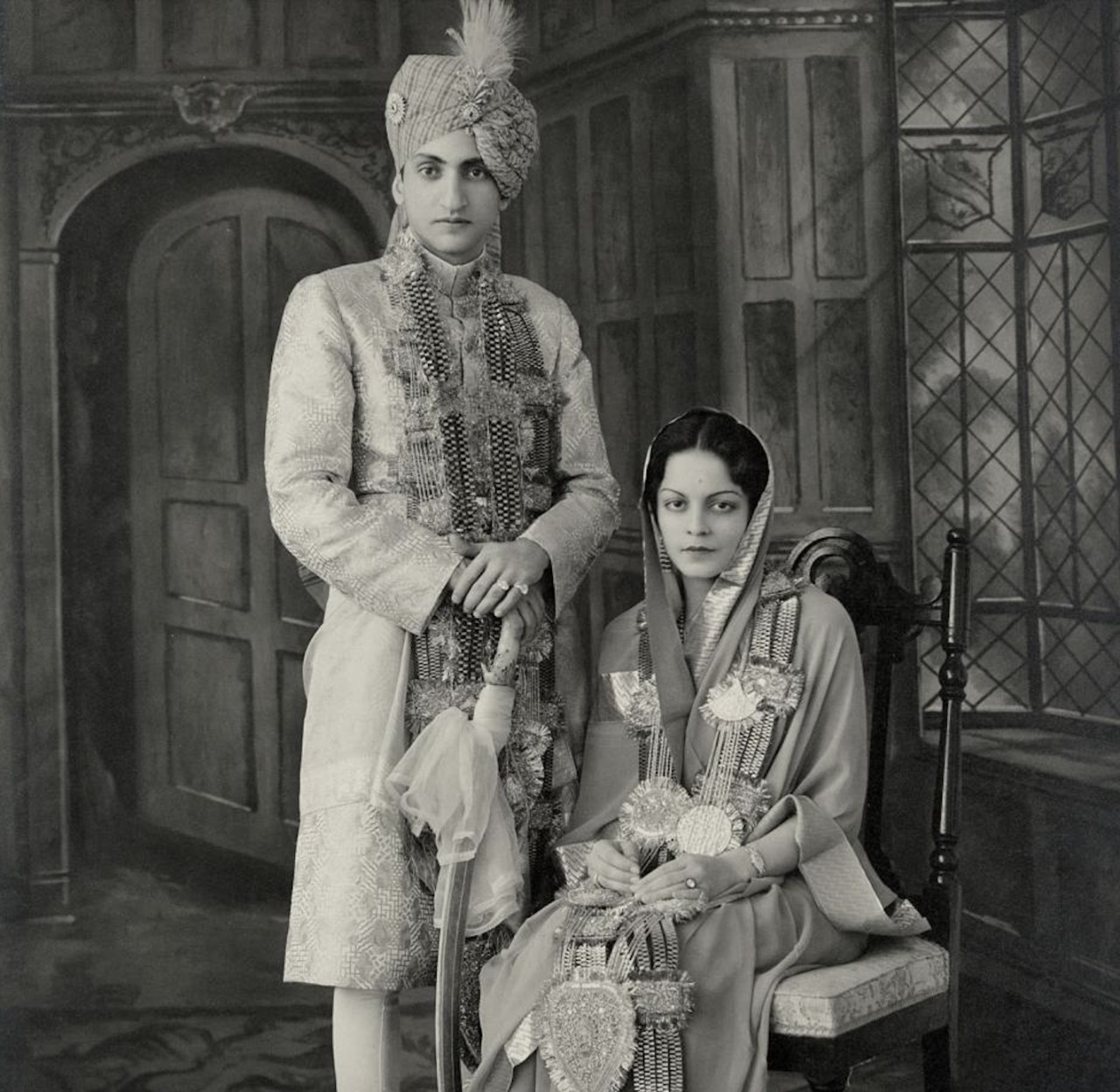
Iftikhar Ali Khan Pataudi and his wife Begum Sajida Sultan, who belonged to the ruling family of Bhopal
Back then India was the best team in world hockey so just being named in the list automatically meant that he was among the world’s best hockey players too. However, he could not take part in the Olympics due to various personal reasons.
Helped to develop hockey in Bhopal
After retiring from active participation in sports, he helped to develop hockey in Bhopal. By then he had married Begum Sajida Sultan who belonged to the ruling family of Bhopal. Thanks to this early start at the initiative of Pataudi and other able administrators, Bhopal later produced several superb hockey players including former India captain Aslam Sher Khan, Sameer Dad, Nausheen Naz and many more.
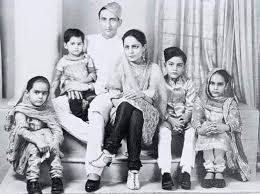
Iftikhar Ali Khan with his wife and children
Iftikhar Ali Khan was also a skilled billiards player and an excellent polo and squash player. In 1946, he was named captain of India for the tour of England. But by then he was past his prime, and his performance did not have that earlier class.
Iftikhar had a sharp wit and sense of humour
However, his wit and humour continued to regale many people including Englishmen. On one occasion, as captain of the Indian team, he was asked to give a speech at a formal dinner party which was attended by several dignitaries. Around the same time, a three-member delegation of the British Government was scheduled to meet Jawaharlal Nehru and other Indian leaders for political discussions.
So Iftikhar Ali Khan began his speech by remarking that his task as captain of the Indian cricket team was even more difficult than the task faced by Nehru and the political leaders of India. “They will have to deal with three Englishmen while I will have to tackle eleven Englishmen,” he said amidst roars of laughter.
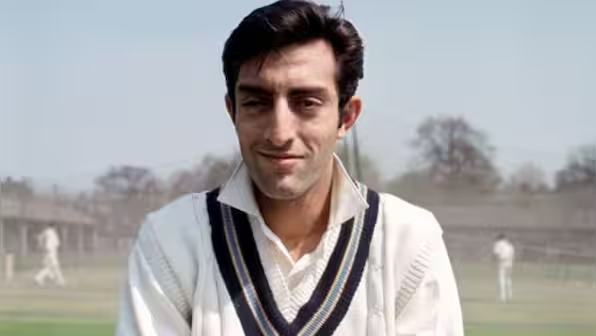
Iftikhar Pataudi passed away on his son Mansur Ali Khan Pataudi’s 11th birthday and the latter never celebrated his birthday thereafter in memory of his father
In 1947, when India became independent, the Nawab voluntarily ceded his kingdom to India, and his act was praised by many important personalities. The well-known civil servant of that time V P Menon has mentioned his decision in the book “The Story of the Integration of Indian States” and referred to Iftikhar Ali Khan Pataudi as a great patriot.
Passed away on his son’s birthday
The Nawab passed away of a heart attack on January 5, 1952, while playing polo. It was his son Mansur’s 11th birthday. Mansur Ali Khan also went on to become a famous cricketer, but he never celebrated his birthday thereafter in memory of his father. Mansur’s cricket career is well known but his contributions to Indian cricket deserve a separate story.