Published: August 29, 2026 at 12:19 pm
Indian hockey fans were left saddened and disappointed by the nation’s abject surrender in the 2026 FIH Hockey World Cup recently. Both the men’s as well as the women’s teams failed to enter the semifinals.
For the men, it was an utterly gloomy story. There was no silver lining. After a bronze and a silver in the early 1970s and a gold medal in 1975, the Indian men’s team has never stood higher than 5th. The 2026 World Cup was a forgettable outing too. India finally finished 8th after losing to Belgium in a placings match. For a country that had once ruled the world, an 8th place was extremely disappointing.
https://x.com/PTI_News/status/2093417461274276244?s=20
This time, India’s semifinal hopes were dashed after a 5-3 defeat to Argentina, following an earlier 3-1 loss to The Netherlands. The team’s defensive failures were very obvious. The men’s team conceded 16 goals in five matches, their worst record since 2010. India struggled to beat higher-ranked teams, losing to England, Netherlands and Argentina by two-goal margins, indicating that we were not among the top rankers at all.
https://x.com/PTI_News/status/2093419365698015343?s=20
Head Coach Craig Fulton acknowledged the team started poorly and committed horrendous mistakes in defence. After losing 3-1 to The Netherlands, India needed a win against Argentina to keep their World Cup semifinal hopes alive. Instead, they slipped to a 5-3 defeat and were knocked out. India’s problems had been building throughout the year, and they finally caught up with the team on the biggest stage.
Thrust in attack was sadly missing
In the entire tournament, Harmanpreet Singh scored eight goals from penalty corners but that was only one aspect of the game. The overall thrust in the attack which could have put the opponents under pressure, was sadly missing. Totally India scored 14 goals and conceded 18, in the 5 matches that they played in the tournament.
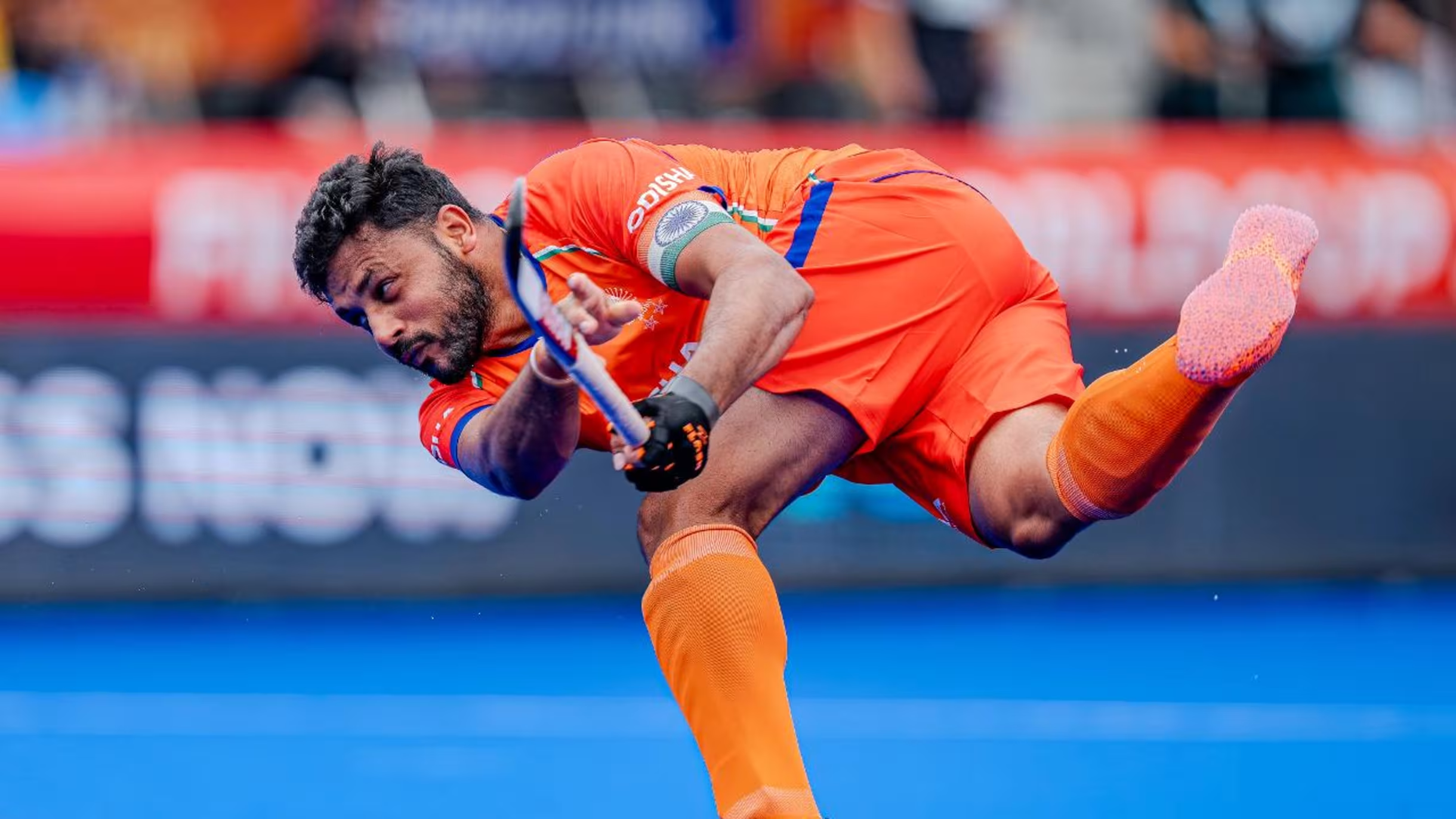
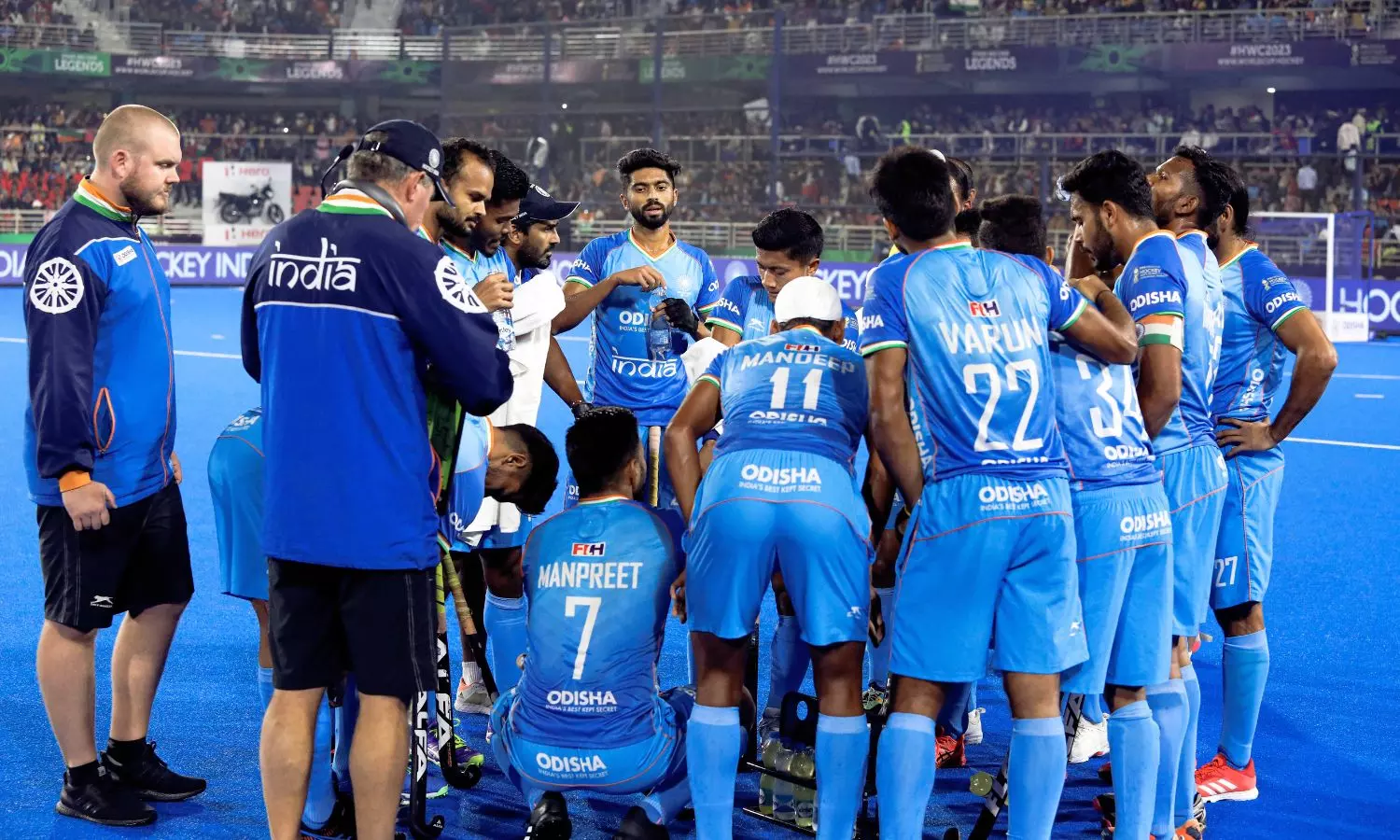
In the entire tournament, Harmanpreet Singh scored eight goals from penalty corners but that was only one aspect of the game. Pics: Hockey India
Against Argentina, India were woefully inadequate. India needed to win by at least two goals, but the South Americans struck early and immediately put India under pressure. The psychological weight of playing in a must-win game was clear as India struggled to find their rhythm. India were beaten to the ball, made poor decisions and struggled with basic defensive clearances. It looked like the Indians were a team of novices.
Indians looked sloppy and lethargic
Their passing was sloppy; they gave away possession and struggled to match Argentina’s energy. The defence lacked organisation, while the attack was short of ideas. Even when India had opportunities to build pressure, poor decisions let them down. By the time they found some rhythm, it was too late.
Indian women’s hockey team provide spark of hope but must aim to be consistently high
India’s eighth-place finish in the FIH Pro League, where they managed just four wins from 16 games, had already raised plenty of concerns. So, the World Cup exit did not come like a bolt from the blue. It was the result of problems that had been piling up for a long time. The recurring picture that was visible to all, was India’s defensive vulnerability.
India go down to Argentina 3-5, hopes of reaching FIH World Cup semifinals vanish
India’s attack too was well below the mark. It often looked toothless, with the forwards struggling to make an impact. In defence, apart from Harmanpreet Singh and Sanjay, there was little consistency, while Hardik Singh had a fairly ordinary tournament by his usual high standards.
Replacements were not up to the mark
There was also another issue that weighed heavily upon India. Several of the old stalwarts have retired and the next generation has not been able to fill their shoes. The absence of defenders like Rupinder Pal Singh and Birender Lakra, who were key to India’s teams in the past, along with the ever-reliable goalie P R Sreejesh, has left a void that India have yet to fill in an adequate manner.
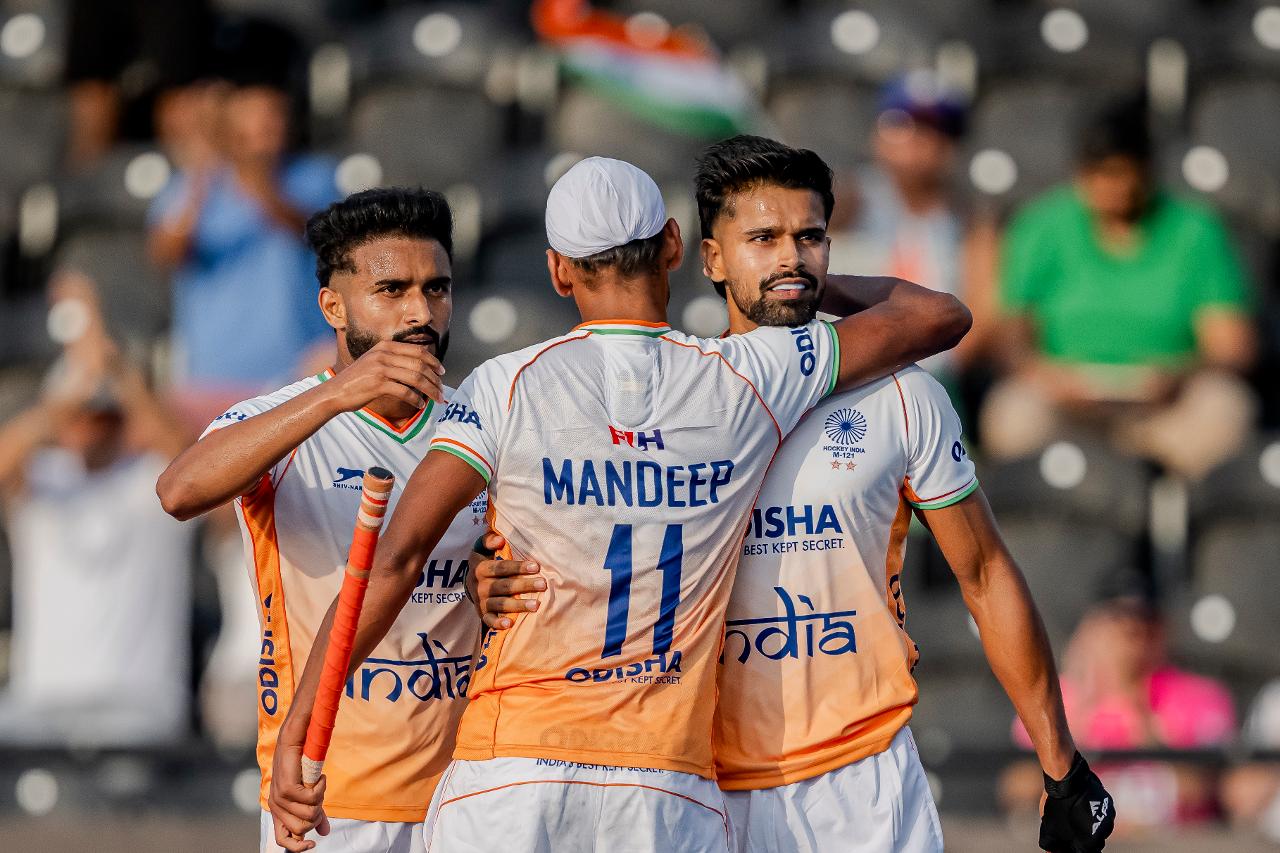
There was also another issue that weighed heavily upon India. Several of the old stalwarts have retired and the next generation has not been able to fill their shoes
Harmanpreet may still be India’s most reliable penalty-corner expert, but he didn’t look as good as he normally does. Is he too fading? If he bows out who can replace him? Perhaps the defensive unit built around Harmanpreet and Sanjay needs a reconstruction. There is a dire need for fresh legs and an extra bit of energy.
Team was not properly selected, say veterans
The team selection came under fire from the veterans. Former Indian captain V Baskaran, who led India to their last Olympic hockey gold medal at Moscow in 1980, was critical of the way the Indian team for the 2026 FIH Men’s Hockey World Cup was selected.
His main criticism was that India had not managed the transition from the junior to the senior level properly. He pointed to Germany and the Netherlands as examples of countries that had successfully brought young players into their senior sides.
Baskaran’s comments came alongside similar criticism from former goalkeeper Sreejesh, who specifically mentioned promising juniors such as Manmeet Singh, Amir Ali, Roshan Kujur, Shardanand Tiwari, Talem Priyabarta, Rohit and Arshdeep Singh as players who had not been given sufficient senior-level exposure.
Baskaran also felt that India’s forwards had been underperforming for several years. He said he had not seen an Indian forward perform exceptionally well in the previous four years, and criticised the team’s lack of back-passing, shooting and midfield support when pressing.
In the near future, India will need to start planning for the next generation. If the present-day ongoing issues aren’t addressed, India could find themselves facing the same recurring problems in future tournaments and slide further down the world ladder.