Published: April 25, 2026 at 3:04 pm
Hyderabad has won the Ranji Trophy championship on two occasions. The first victory came in the 1937-38 season and the second one in 1986-87. So, 49 years separated the two most significant triumphs in the history of Hyderabad cricket. But amazingly there was one man who played a role in both the victories even though they happened almost half a century apart.
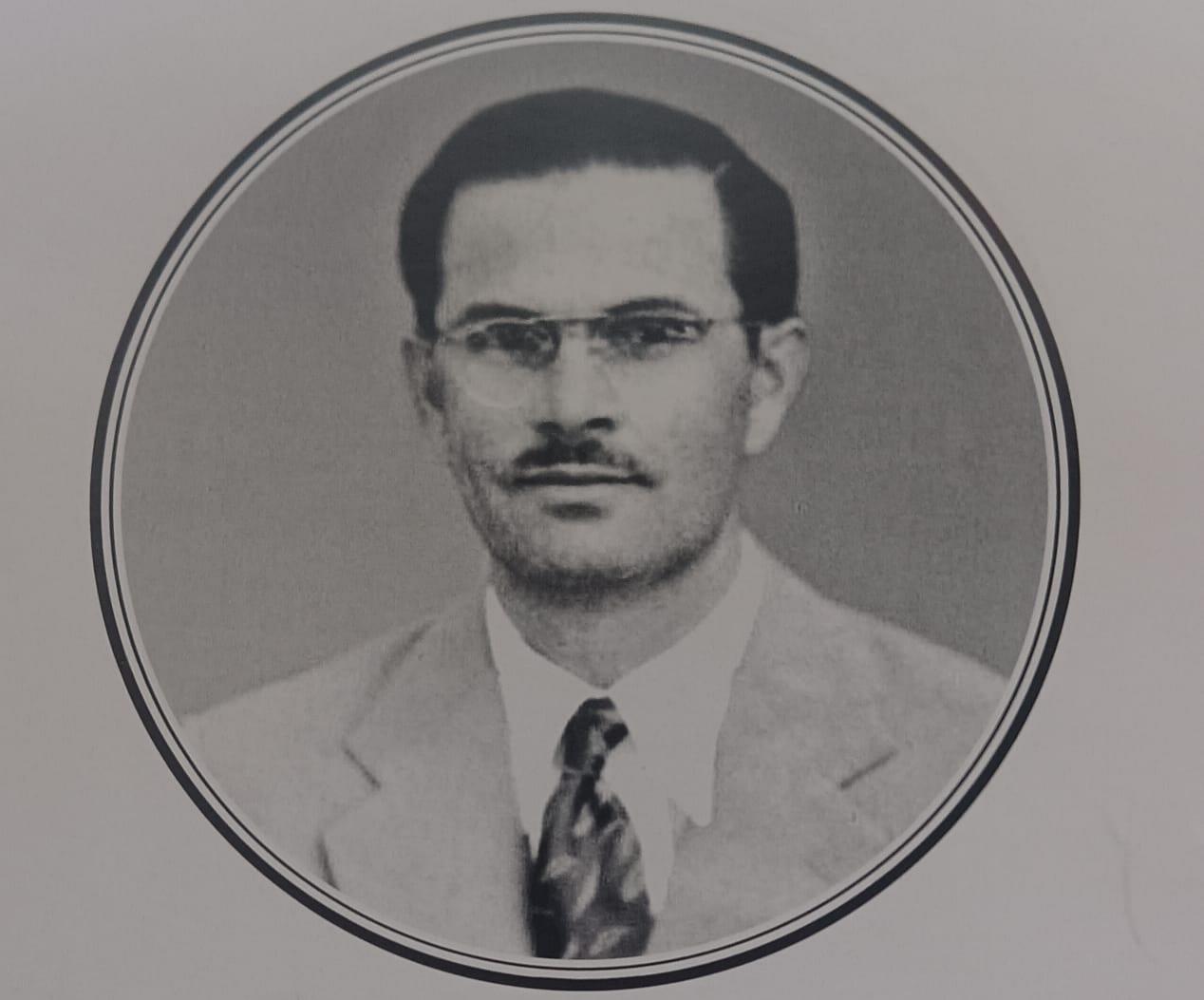
That man was Edulji Burjorji Aibara, better known as Eddie Aibara. Today is his birth anniversary as he was born on April 25, 1914. Over many years, until his death in the year 2000, Aibara’s contributions to Hyderabad cricket were of immense value. It is something that many among the present generation have not heard about.
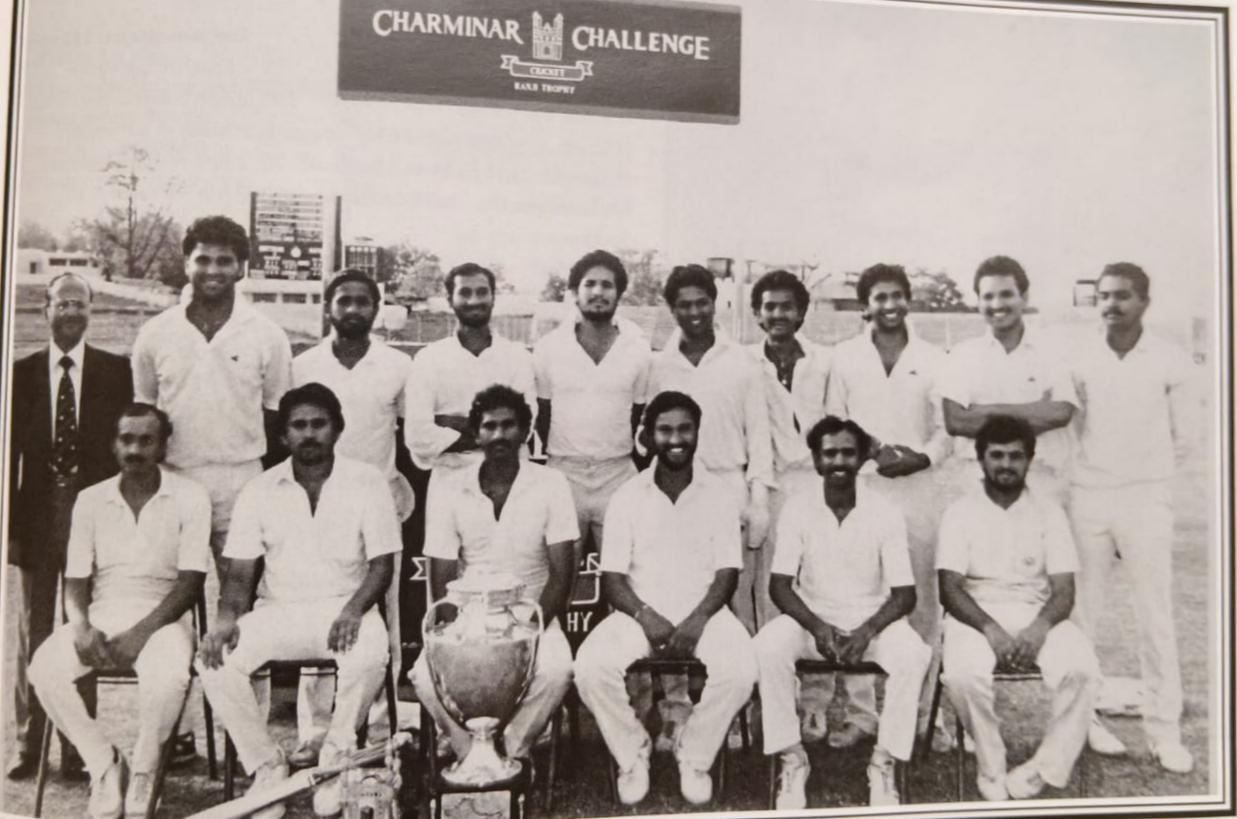
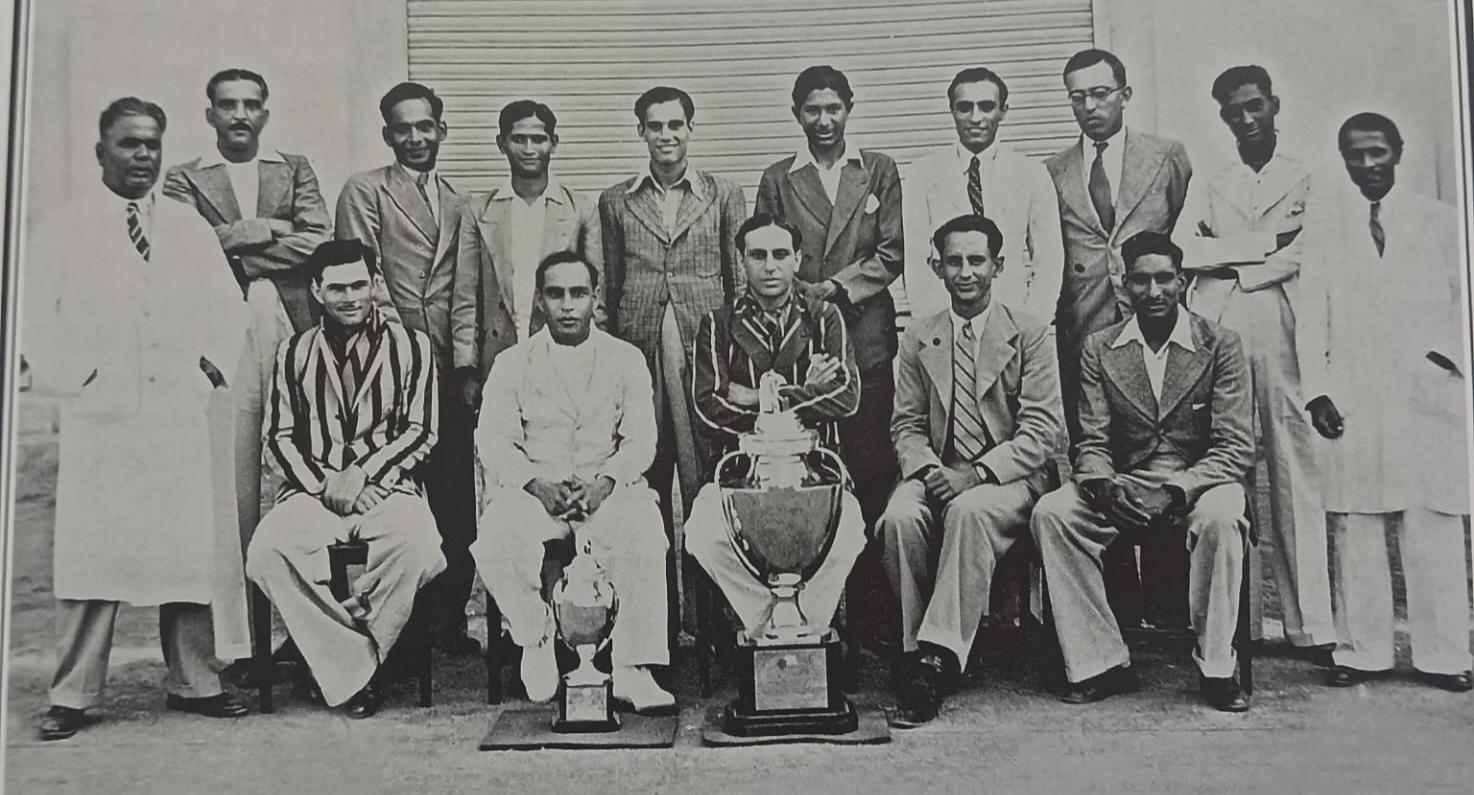
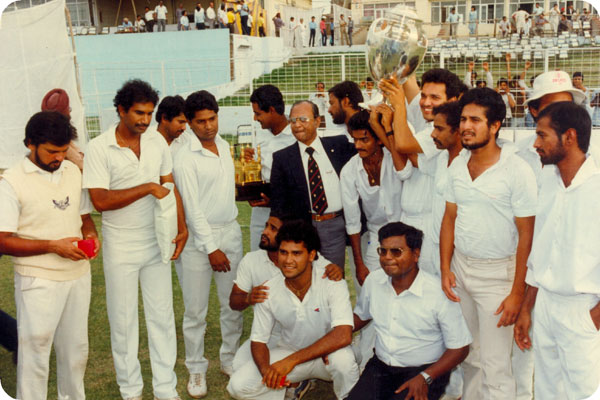
Hyderabad Ranji team which won the trophy in 1986-87. Pics: Cricket Biryani by PR Man Singh
He was the only cricketer to play First Class cricket for 25 consecutive years for a single team and that was Hyderabad. He even captained Hyderabad for several seasons. Therefore, there is a reason to recollect the numerous ways in which he helped Hyderabad as a player and as a coach.
For starters, he was the man who fashioned Hyderabad’s first victory in the Ranji Trophy. In the 1937-38 season, Hyderabad clashed with Nawanagar in the final and Aibara, who was then a 23-year-old middle order batter, guided Hyderabad home with an unbeaten knock of 137. Years later, in the 1986-87 season, many players of Hyderabad’s victorious squad were trained by Aibara and owed their proficiency in the game to the guidance of this quiet Parsi gentleman.
The fact that one single person had influenced the outcome of two key matches that happened about five decades apart, is a marvel that is rarely seen. But Aibara was that sort of man. As a cricketer, as a coach and as a person, he was a miracle worker who could transform the destinies of those around him.
Hyderabad began as underdog against Nawanagar
Going back in time to that fateful match that took place in February 1938, it is interesting to note that Hyderabad began as the underdogs against the strong Nawanagar side. The final match of the Ranji Trophy that year was played at the Brabourne Stadium in Mumbai. The Nawanagar state team does not exist now. Before independence, Nawanagar was a princely state that was ruled for some time by the famous Ranjitsinhji who was the Jamsaheb (ruler) from 1907 until his death in 1933.
Colourful Ranjitsinhji continues to be a legendary figure decades after his death
After India became independent, when Nawanagar merged with the Indian union, the state’s cricket team also ceased to exist. Nawanagar’s capital was Jamnagar which is now a city in the state of Gujarat.
So, the Ranji final was a cricket battle between two well-known kingdoms, or princely states as they were called. One ruled by the 7th Nizam Mir Osman Ali Khan and the other by Jamsaheb Digvijaysinhji, who had succeeded to the throne after Ranji passed away.
Star-studded Nawanagar team
The Nawanagar team had some of the most famous names of Indian cricket in its line-up. They included Vinoo Mankad, who was then one of the world’s leading all-rounders, Sorabji Colah, Amar Singh, Shute Banerjee (all Test cricketers), and the captain was Englishman Bert Wensley of Sussex, an all-rounder of great skill. They also had Abdul Aziz Durrani, father of the legendary Salim Durrani.
In the previous season, Nawanagar had won the Ranji Trophy by defeating Bengal. So, the team was the defending champions too.
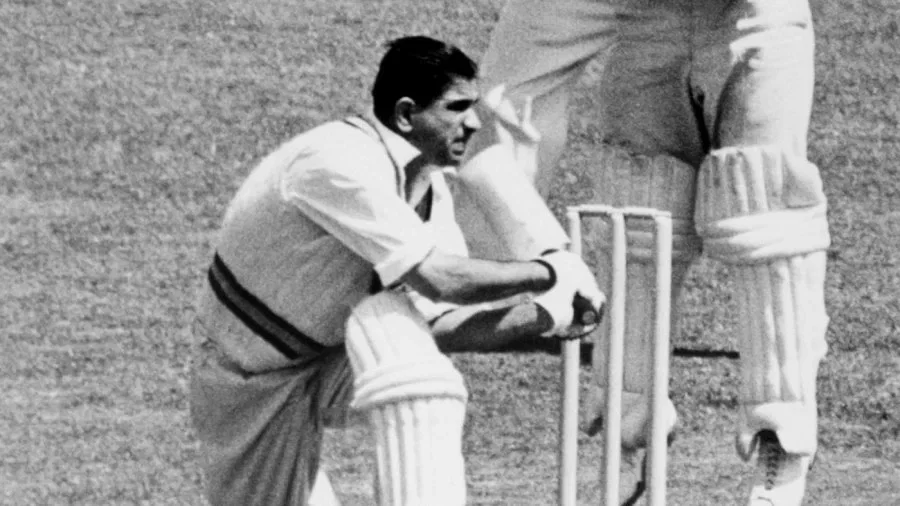
Legendary Vinoo Mankad was part of the star-studded Nawanagar team
Nawanagar won the toss and decided to bat first on a placid wicket. Surprisingly, Hyderabad bowlers restricted the stronger team to a modest 152. New ball bowlers Ibrahim Khan (3/44) and Hyder Ali (4/55) were the main wreckers of Nawanagar. But Hyderabad did not fare well either. They were bundled out for a paltry 113 as medium pacer Shute Banerjee (4/34) ran through the batting order like a knife through butter.
In the second innings Nawanagar fared better to score 270 thereby setting Hyderabad a target of 310 for victory. Faced with a daunting task against the bowling of Amar Singh, Shute Banerjee and Vinoo Mankad, Hyderabad began badly by losing both openers cheaply. But Aibara, at No.4, was determined to pull his team through. He played steadily and piled up the runs by choosing his shots carefully.
Aibara was supported by Hussain, Hyder and Ibrahim
Aibara found good support from his skipper Syed Mohammed Hussain (32) and Hyder Ali (46). But five of Hyderabad’s batters registered single digit scores. But even as wickets kept falling, Hyderabad were inching towards their target thanks to Aibara. All Aibara needed was another sound partner. He found one in the last man, Ibrahim Khan. The medium pace bowler scored only 6 runs but gave Aibara the support that he needed when just one wicket was all that mattered.
Ultimately Hyderabad won by one wicket as Aibara remained unbeaten on 137. Had it not been for Aibara’s lion-hearted effort, Hyderabad would never have won the battle. The quiet and gentle mannered man had shown nerves of steel when it mattered most.
Crowd was thrilled by Hyderabad’s fight
P R Man Singh, former secretary of the HCA has written in his book Cricket Biryani, that few people turned up to watch the match at the beginning. Everyone had expected an easy victory for Nawanagar. But Hyderabad’s great fight had drawn people to the stadium. By the time the match ended, there were thousands of spectators cheering for the winning team. When the team returned to Secunderabad, it was given a rousing reception. Aibara’s name was on everyone’s lips.
During the course of an illustrious career, Aibara played for Hyderabad and South Zone against all visiting international teams. He held the unique record of having scored at least a half-century against all Test playing nations of that time.
The last game he played against a visiting side was in 1958-59 against the West Indies led by Gerry Alexander. The islanders had legendary players. There were Wesley Hall and Roy Gilchrist among the fast bowlers. In the spin department there were Lance Gibbs and Sonny Ramadhin and the great Gary Sobers in seam as well as spin attack. Yet Aibara scored 50 plus against this team when it played a First Class match.
Unlucky not to have played for India
When his name was not included in the Indian team that toured England in 1946-47 and then Australia in 1947-48, there was disappointment throughout Hyderabad’s cricket circles. Everyone felt that Aibara deserved to have been selected and blamed politics for his exclusion.
Aibara played a total of 71 First Class matches for Hyderabad. He scored 3819 runs at an average of 36.72 with 9 centuries and 18 half centuries. His top score was 144. He belonged to a time when players were a hardy bunch. Despite the fact that there was nothing to be earned from the game, they played because they loved the sport.
My generation was fitter and more disciplined: Aibara
In 1984, while talking to this correspondent, Aibara decried the fact that the youngsters who he was seeing now were not as fit as they were when he was a young man in the 1930s. Those players were full of stamina and capable of withstanding extreme hardship to pursue their passion.
“We used to have just one glass of milk for breakfast and play throughout the day without lunch. My generation was more dedicated and disciplined. Although there was no money in the game and job opportunities hardly existed then, we never gave up on our dreams,” he said.
“We used to travel on our cycles to cricket fields that were very far from our homes. Nowadays the young players want to be provided transport to the match venue and good food to keep them going. We were also more disciplined because we never questioned an umpire’s decision. Even if we felt that the umpire had made a mistake, we accepted it as a part of life,” he said.
In the Hyderabad Cricket Association (HCA) league, Aibara played for the Secunderabad Union CC. Man Singh said Aibara looked so relaxed and carefree that it irritated every bowler who bowled to him. He had a wide array of strokes on either side of the wicket.
After a long and fruitful First Class career that lasted 25 years, Aibara retired as a player. But he was not done yet. He took up coaching and was involved in the Rajkumari Amrit Kaur coaching scheme for many years where he assisted Duleepsinhji, nephew of Ranjitsinhji. He then became chief coach at the NIS Patiala and from his camp several players rose up to represent India in Test matches.
Grasp of human psychology came naturally to Aibara
As a coach, his services to Hyderabad cricket were unmatched. He knew how to handle young players and guide them according to their individual capacity. His grasp of human psychology came naturally to him. Yet, he remained a very quiet and humble person. The few times that this correspondent interacted with him, the most striking aspect about his demeanour was his down-to-earth approach to life and the game. Unfortunately, he suffered for several weeks before he passed away in 2000 leaving Hyderabad cricket poorer by his departure from the scene.