Exclusive
Umrigar, 1st Indian to score a double century, would have celebrated a ton of years today

Today (March 28) is Polly Umrigar’s 100th birth anniversary and quite an appropriate day to remember the record-breaking feats of the Mumbaikar and his connection with Hyderabad.
It was a bright and sunny morning in Hyderabad on November 19, 1955, when host India and the visiting New Zealand side clashed on the opening day of the first Test of the series that year. The day was an important one in the annals of Hyderabad cricket for it was the very first Test match being hosted in the city at the bustling Fateh Maidan ground. Incidentally, it was the first Test series between India and New Zealand.
The stadium was later renamed after the former Prime Minister Lal Bahadur Shastri in 1967. But when this particular Test match began, it was known as the Fateh Maidan ground.

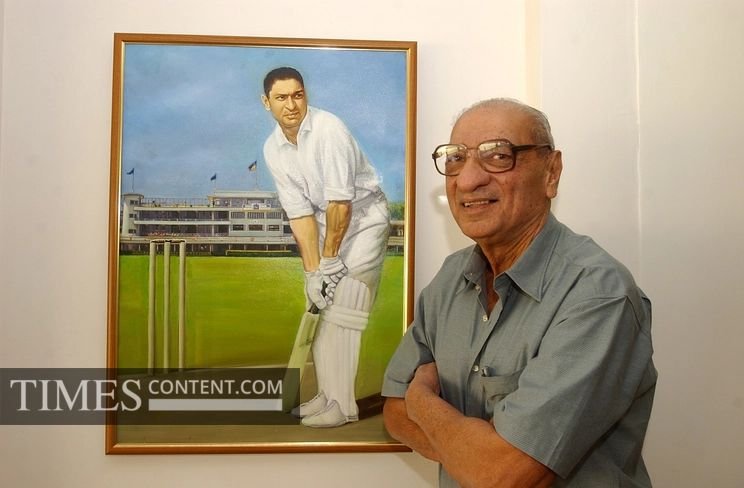
It was during the Hyderabad Test match that Polly Umrigar wrote his name indelibly into the record books. Pic: Facebook-Parsi Zoroastrians Worldwide
India won the toss and decided to bat first. But Kiwi fast bowler Johnny Hayes struck in the very first over. He got opener Pankaj Roy to edge a delivery right into the gloves of wicketkeeper Eric Petrie before the batter had opened his account.
This saw No.3 batter Pahlan Ratanji Umrigar, better known as Polly Umrigar, walk out to the middle. He was a tall and well-built cricketer who had made his debut in 1948 against the West Indies. But it was during the Hyderabad Test match that Umrigar wrote his name indelibly into the record books.
Umrigar scored a double ton at Hyderabad
Batting with great confidence, and blending aggression with judicious caution, Umrigar scored a century and remained unbeaten on 112 at the end of the first day. On the second day, he crossed the double century mark. He thus became the first Indian to score a double hundred in Test cricket. He was eventually caught by Petrie off Hayes after he had scored 223.
Today is Polly Umrigar’s 100th birth anniversary. He was born on March 28, 1926. He belonged to the Parsi community also known as the Zoroastrian community in India. Parsi cricketers dominated Bombay’s cricket in those days. When he was 18 years old, Umrigar made his First-class debut for the Parsis XI in the Bombay Pentangular tournament.

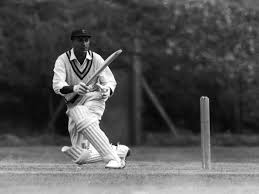
Umrigar was known for his elegant yet powerful batting and he also captained India in two unofficial Tests against the Commonwealth XI and eight official ones against various teams. Pic: Facebook
At the age of 22, he was given his Test cap when the West Indies came to the Indian shores in 1948. In that series he had the privilege of playing alongside legends such as Lala Amarnath, Vijay Hazare, Vinoo Mankad and Ghulam Ahmed. In the opposition were Everton Weekes and Clyde Walcott. Umrigar went on to represent India in Test cricket for 14 long years. During the course of his career in Test cricket, Umrigar was acknowledged as one of India’s most distinguished cricketers in the 1950s and early 1960s.
Umrigar was known for his elegant yet powerful batting and he also captained India in two unofficial Tests against the Commonwealth XI and eight official ones against various teams. He led the team with determination during a formative and crucial phase of Indian cricket. Besides being a sound batter, he also contributed as a handy off spinner. On two occasions he captured five wickets in an innings at the Test level.
Polly had a torrid time against Fred Trueman
But he had his bad days too. In 1952, when India was touring England, Umrigar did well in the county matches but in the Tests, he was all at sea against the ferocious pace of Fred Trueman and Brian Statham.
He scored double hundreds against Oxford University, Lancashire and Kent, but was completely lost when facing the England fast bowlers. He made only 43 runs in seven Test innings, at an average of 6.14. But more than the lack of runs, it was his obvious discomfort against the swinging deliveries that caught the eye.

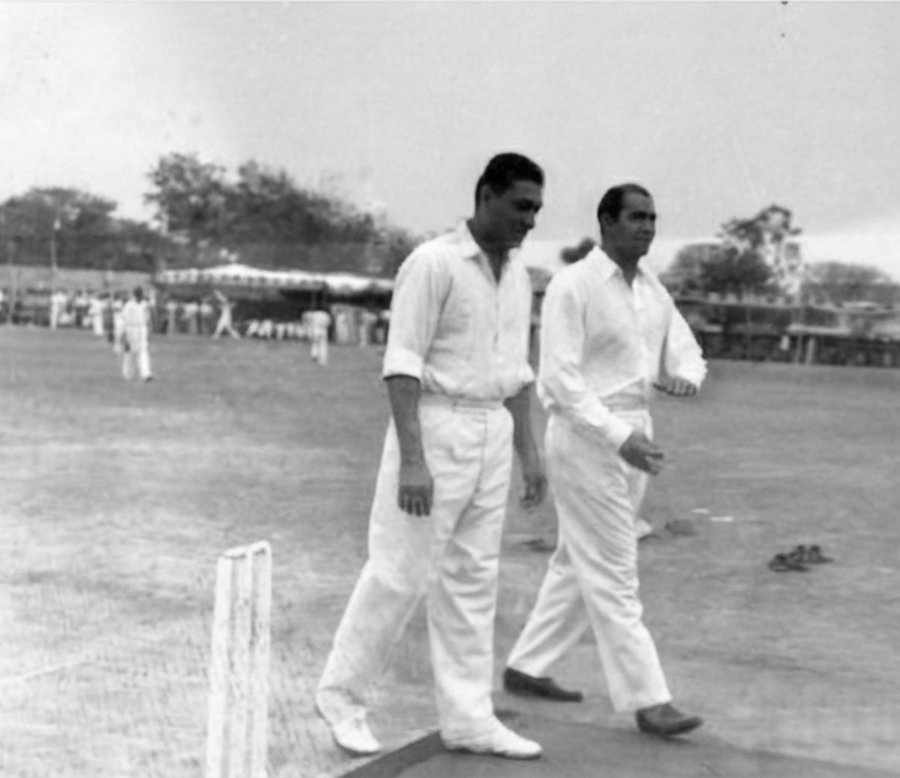
Rival captains, Polly Umrigar of Bombay and Raj Singh Dungarpur of Rajasthan at the Ranji Trophy final in Jaipur in March 1963. Pic: X
While facing Trueman, then hailed as the world’s fastest and most dangerous bowler, Umrigar often backed away towards square leg. He looked like an inexperienced novice. Alec Bedser dismissed him twice and Trueman dismissed him four times in the series.
This was a huge drawback for a batter in the top order and Umrigar knew that he was facing the sack. Undaunted, he went to work on his technique against fast, swinging deliveries and soon managed to cover up all his weaknesses.
He finally overcame the Trueman challenge
Thereafter he had more success in following encounters with fast bowlers. In 1959, he scored a hundred in the Manchester Test where he defeated his old nemesis Fred Trueman and scored 118. Against Cambridge University he scored 252 not out. It was then the highest score by any Indian batter in England.
Here it must be noted that although Duleepsinhji had scored 333 for Sussex against Northamptonshire in 1930 and his uncle Ranji’s highest was 285 for Sussex against Somerset in 1901, the duo never represented India, so Umrigar’s record was the best for India.
Most successful Indian batter against Windies
In 1952-53, Umrigar topped the aggregate for India in the series against West Indies. The islanders at the time had fiery fast bowlers like Wesley Hall, Roy Gilchrst and Charlie Stayers. But Umrigar had by then got over his hesitancy and it was off the bowling of Hall and Stayers that he played one of the finest innings of his career.
He scored a solid 130 at the Queens Park Oval at Port of Spain in Trinidad and Tobago. During that series, Umrigar with 560 runs, was the second highest scorer of the series. Only the great Everton Weekes (716) got more runs than Umrigar.
Totally, Umrigar played 59 Test matches, scored 3631 runs at an average of 42.22 with 12 centuries and 14 half centuries. His top score was the double century in Hyderabad. With his off-spin bowling, he also took 35 wickets at an average of 42.08.

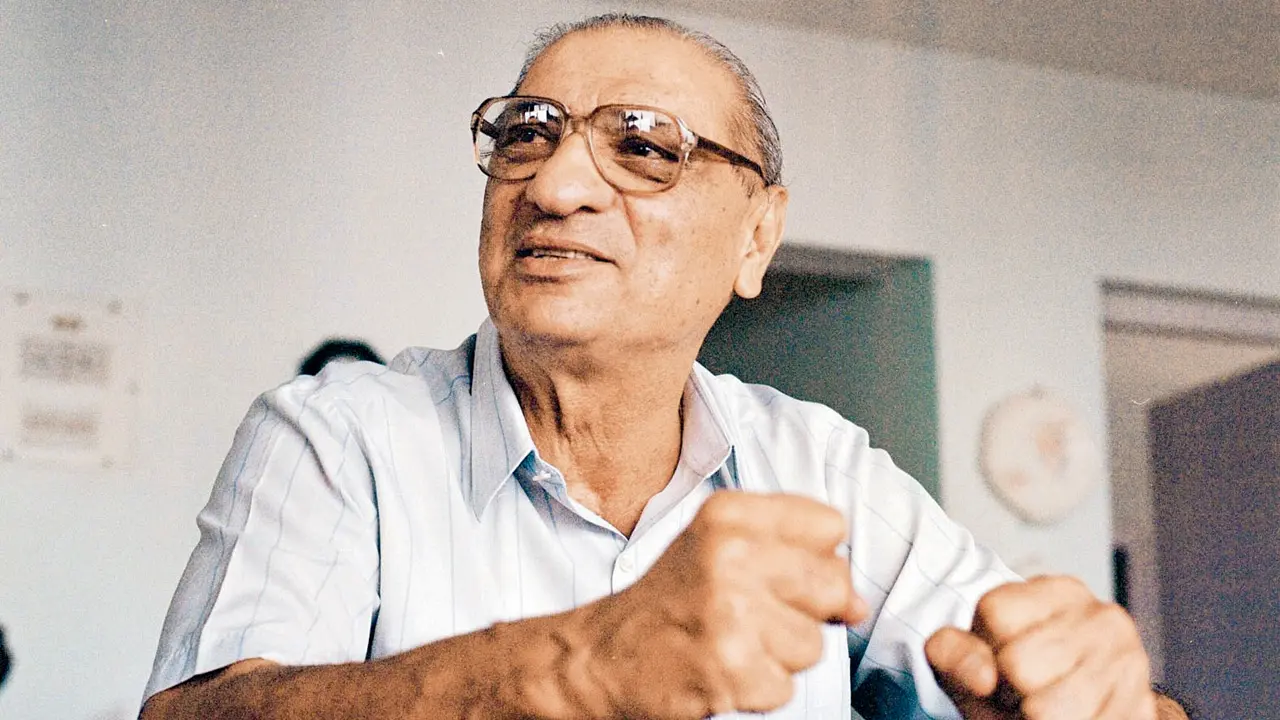
After his retirement, Umrigar served as the chairman of the selection committee, India’s team manager, secretary of the BCCI, and head groundsman at Mumbai’s Wankhede Stadium. In 2006 he died at his home in Mumbai at the age of 80 after he had been diagnosed with lymph cancer a few months prior to his death. Pic: Mid-day
After his retirement, he served as the chairman of the selection committee, India’s team manager, secretary of the BCCI, and head groundsman at Mumbai’s Wankhede Stadium. In 2006 he died at his home in Mumbai at the age of 80 after he had been diagnosed with lymph cancer a few months prior to his death.
Umrigar was awarded the Padma Shri in 1962 and the CK Nayudu trophy in 1998-99 for his contributions to the game. His legacy is honored through the Polly Umrigar Award, given annually to an Indian cricketer for outstanding performance in international cricket.
According to Dilip Vengsarkar, Umrigar had a fantastic cricketing brain and many of Mumbai’s leading players benefitted from his guidance and advice.