Published: July 12, 2026 at 10:32 pm
The Indian government’s decision to not send the Indian men and women’s football teams to the 2026 Asian Games has disappointed fans and players. But the government has a reason to deny the team’s participation. The teams do not meet the Sports Ministry’s eligibility criteria for participation in multi-sport events.
It is ironical that the men and women’s team will miss out on the Asian Games despite qualifying for the continental showpiece. Both the Indian teams were withdrawn from the Aichi-Nagoya 2026 roster after failing to meet the Indian government’s eligibility criteria for team events.
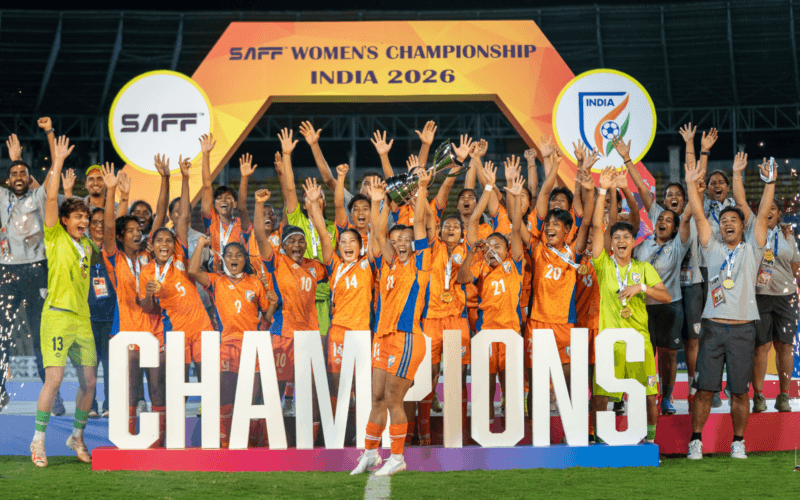
The decision will be tough particularly on the women who won the SAFF Women’s Championship at home last month. Lower-ranked Bangladesh (107 in the world and 19th in Asia), who lost twice to India at the SAFF Championship, will take part in the Asian Games.
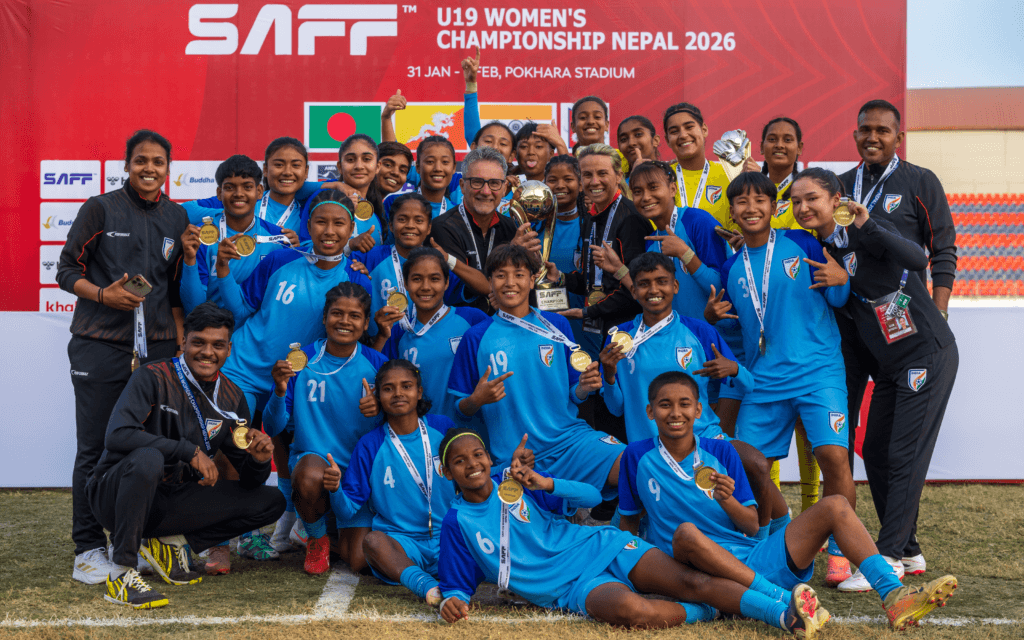
Indian girls had won the SAFF Under-19 Women’s Championship earlier this year. Pics: AIFF
The Sports Ministry’s policy says that, for team sports such as football, only teams that are ranked among the top Asian nations (or have achieved an equivalent recent performance) will normally be cleared to participate. The Indian men’s team is currently ranked well below at 26th in Asia. The women are ranked 12th in Asia.
As per the qualification criteria for the Asian Games 2026 football, 15 of the 16 teams qualified for this year’s AFC Under-23 Asian Cup made the cut for the men’s tournament at Aichi-Nagoya.
1948 Olympics: India’s golden display against France almost resulted in the greatest upset
Similarly, 11 of the 12 teams which played the AFC Women’s Asian Cup held earlier this year qualified for the Asian Games 2026 women’s football tournament.
Australia were not in qualification contention despite featuring in both as they are not part of the Olympic Council of Asia (OCA). India ticked the boxes for both men’s and women’s qualifications.
Asian Games not an exposure tour: Mansukh
Sports minister Mansukh Mandaviya has said that the Asian Games are not an ‘exposure tour’. According to the government, public funds should be used to send athletes and teams that have a realistic chance of winning medals rather than merely participating.
In 2023, the football teams were allowed to participate after a special relaxation of the rules. For 2026, however, the government has decided to enforce the selection criteria much more strictly, and no such exemption has been granted.
The decision has drawn a mixed reaction in Indian football circles. The All India Football Federation (AIFF) argues that playing against Asia’s stronger teams is essential for improving standards and gaining international experience. Critics believe that denying participation may slow the development of Indian football, while supporters of the government’s policy argue that limited resources should be directed toward sports where India has stronger medal prospects.
AIFF disappointed but toes the govt line
The All India Football Federation has responded that it is disappointed but has avoided directly criticizing the Indian government over its decision. According to AIFF deputy secretary general M Satyanarayan, the federation is “disappointed that we are not there at the Asian Games,” but it accepts that Indian football has not yet reached the required standard. The federation said it regrets missing such an important continental competition because the Asian Games provide valuable experience for young players.
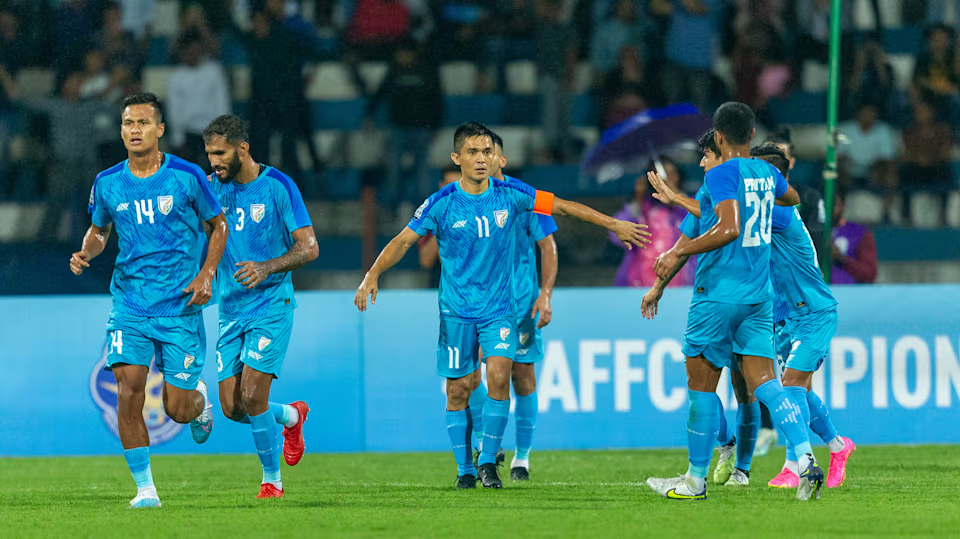
Indian football faces existential crisis. Pic: Olympics.com
Satyanarayan acknowledged that many Asian countries are ahead of India in terms of infrastructure, coaching, player development and overall football standards. He admitted that India has not yet earned a place among Asia’s elite.
However, several other officials believe that competing against stronger Asian teams helps to accelerate development, so the absence from the Asian Games is viewed as a setback for the national team’s progress.
In short, the AIFF has chosen a measured response. Rather than publicly challenging the government’s decision, it has expressed regret, accepted that Indian football currently falls below the required standard, and emphasized the need to improve the country’s football ecosystem so that future teams qualify on merit rather than rely on exceptional approval.
Standard of Indian football has plunged
In recent years Indian football has plunged to unexpected depths. But in the past India had one of the most distinguished early records in men’s football at the Asian Games. Most of its success came during football’s golden era in the 1950s and 1960s. India remains one of the few nations to have won the men’s football gold medal twice.
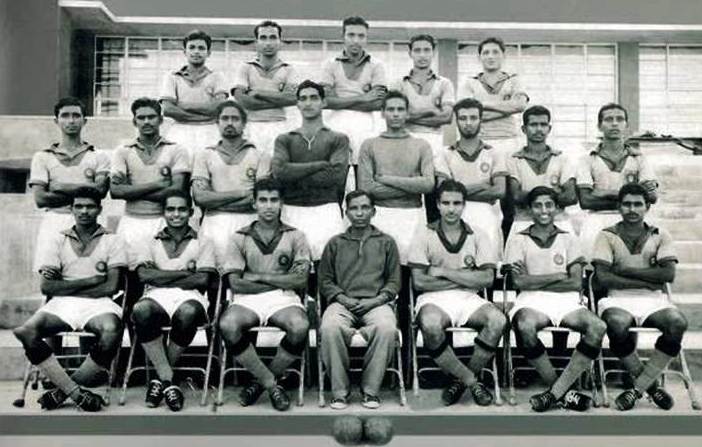
The best of India’s performances came in 1951 at New Delhi when India won the gold medal by defeating Iran 1-0 in the final and again in 1962 when India picked up another gold by beating South Korea 2-1 in the final in Indonesia. The last medal, a bronze, came in 1970 at Bangkok. India’s victories in 1951 and 1962 came under the legendary coach Syed Abdul Rahim, with stars such as Chuni Goswami, P K Banerjee, Tulsidas Balaram, and Jarnail Singh leading what is widely regarded as the greatest generation in Indian football.
Coach SA Rahim took India to glory but was forgotten & unrewarded by the government
From 2002 onward, the men’s football competition became primarily an under-23 tournament, with each team allowed a limited number of over-age players. But after the bronze medal in 1970, India has not returned to the medal podium at the Asian Games. It may take India many more years to come up to a high standard even at the Asian level.