Published: December 12, 2025 at 11:18 am
As is well known, a good captain elevates a team’s performance significantly, turning moderate teams into formidable ones, and good into excellent. According to Englishman Mike Brearley, widely considered to be one of the best captains in the game, a captain’s success requires understanding and motivating different players, by evaluating their personalities. The captain’s contribution is harder to quantify than a players’, but it shapes his team’s culture and morale.
But this brings up the question: Who were India’s best captains?
Here are some of those who were outstanding. Each of the captains listed below had great leadership qualities. They had their own way of doing their task but could motivate the Indian team to put up heroic efforts.
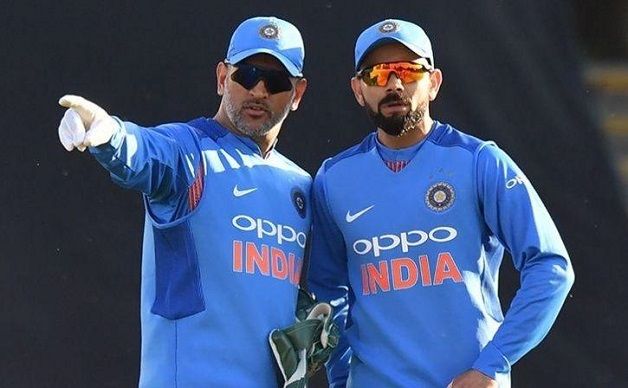
M S DHONI
His calm demeanor under pressure, his strategic brilliance, and moments of sheer genius have left no doubt in anyone’s mind that he belonged to the top drawer when it came to captaincy.
Under MS Dhoni’s leadership, India played 60 Tests, won 27, lost 18, and drew 15. It gave him a win percentage of 45. Although his Test record may not match his success in ODIs and T20Is, it is still outstanding by any standards.
During the T20 World Cup in 2007 Dhoni led India to a maiden victory. In ODI cricket, Dhoni led India to a victory in the 2011 World Cup. He further guided the team to a Champions Trophy triumph in 2013, making him the only captain to win all three ICC trophies in limited-overs cricket.
VIRAT KOHLI
Virat Kohli is by far India’s most successful Test captain. He won 40 out of 68 Tests (many of them being away Tests and 13 more wins than MS Dhoni). Kohli captained India in 25 series. He won 18, lost six and drew one (a washout against Bangladesh). His win record stands at a little over 58 percent and this is nothing less than remarkable. It places him as the fourth most successful captain in Test cricket history.
Under Kohli, India won its first away Border-Gavaskar trophy in 2018–19. He also led India in 11 home Test series and won all of them. What was more, captaincy did not affect his own batting form. Kohli averaged 54.80 as Test captain, scoring 5864 runs. His highest score as a skipper came in 2019, when he slammed an unbeaten 254 against South Africa in Pune.
As a Test captain he scored 5864 runs with 20 centuries at an average of 54.80. Kohli has scored more centuries than any other batter in ODI history and is the only batter to earn 900+ rating points across all 3 formats.
ROHIT SHARMA
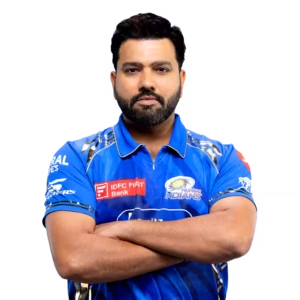
Rohit Sharma is known for leading India to victory in the 2024 Twenty20 International World Cup. In 2017, when Virat Kohli, who was captain of the Indian ODI team at that time, was rested, Sharma was appointed temporary captain in a series against Sri Lanka. He led India to victory and scored his third ODI double hundred.
Sharma was appointed vice captain of the Test team during the 2020 series in Australia and scored critical runs in a series India won. He continued to score heavily in the 2021 twin series against England. In February 2022 he was appointed captain of the Indian team in all three formats.
In the 2023 ODI World Cup, Sharma led the Indian team to a clean sweep in the league phase and, in the process, set a record for the most hundreds and the most sixes in ODI World Cup history.
Sharma led India to its second T20I World Cup victory in 2024 and scored three half-centuries in the tournament. He announced his retirement from the T20I format soon after India won the final match against South Africa by 7 runs. He retired from Tests ahead of India’s tour of England in 2025. As a captain, he also led the Mumbai Indians to five Indian Premier League titles.
MAK PATAUDI
Mansur Ali Khan Pataudi was catapulted into the job at the age of 21 when the team’s captain Nari Contractor suffered a skull fracture while playing in the Caribbeans. At the time Pataudi became the youngest player in the world to lead a national team. Having to lead a team full of seniors was a challenging job but Pataudi did it well.
Over the following years he built confidence in the team and laid the groundwork for all the achievements that followed.
Author Ramachandra Guha once pointed out what made Pataudi a great leader. Guha wrote: “After Nayudu, he was the first non-parochial Indian captain. We have had Mumbai captains, Delhi captains and Madras captains but Pataudi was the first truly pan Indian captain. He stood above provincial considerations.”
AJIT WADEKAR & KAPIL DEV
Ajit Wadekar and Kapil Dev were influential and successful captains too but each had his own approach to the task. Wadekar’s approach was that of an intellectual and he achieved success with a series of well-planned strategies. Under his leadership India defeated the mighty West Indies in a series for the first time. He then repeated the success in England. They were two landmark triumphs that will never be forgotten.
Kapil Dev on the other hand was an action-oriented man who led from the front. His performance in the 1983 World Cup was extraordinary. Nobody can forget his match saving and record-breaking knock against Zimbabwe and his catch of Viv Richards. When he finally held the Prudential Cup aloft after beating the West Indies, he achieved something that no other Indian captain had done before him.
SOURAV GANGULY
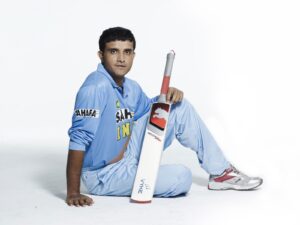
Then there was Sourav Ganguly. He came as a breath of sunshine after the betting scandals had brought darkness to Indian cricket. He was supremely confident and overcame several hurdles such as his highly publicised disagreements with coach Greg Chappell.
Some of his main achievements include winning the 2002 ICC Champions Trophy, winning the Border-Gavaskar Trophy in 2001 and beating England in the 2002 Natwest Trophy finals. He captained India in 195 matches across all formats and secured 97 victories. So, his success rate is almost 50 percent.
In his autobiography, “A Century Is Not Enough” Sourav has written: “Cricket may be a sport to some but to me it was life itself and very close to my heart. It was everything to me”. That about sums up the approach of all India’s successful captains. Their dedication to cricket and their search for higher goals, took India to the pinnacle of glory on many occasions.