Published: June 5, 2026 at 5:05 pm
The first-ever FIFA World Cup was held in 1930 and thereafter the second and third editions were conducted in 1934 and 1938 respectively. Then came the devastating battles of the Second World War which brought all sports activities around the globe to a standstill. After the war ended in 1945, FIFA began exploring the possibility of reviving the world’s greatest football tournament.
At the FIFA congress of 1946, Brazil presented a bid to host the event in 1950. With the economy of most countries lying in shambles after the war, FIFA was only too glad to accept Brazil’s offer without delay. However, it would have to be a shortened event because of financial constraints. It was decided to make it a 16-team competition. Brazil, as the host country, and Italy (the defending champion) qualified automatically, leaving 14 places open. Of these, seven were allotted to Europe, six to the American continent, and only one to Asia.
1948 Olympics: India’s golden display against France almost resulted in the greatest upset
In the Asian continent, the strongest team was Japan but after being hit by two atomic bombs, Japan was in ruins and in no shape to participate. There had been no time to conduct any qualifying matches so FIFA had to go by past performances and rankings. After Japan, the next in line were Philippines, Indonesia, Burma and India. The first three expressed their inability to take part and so India was the only Asian team to be invited to participate in the mega event of world football.
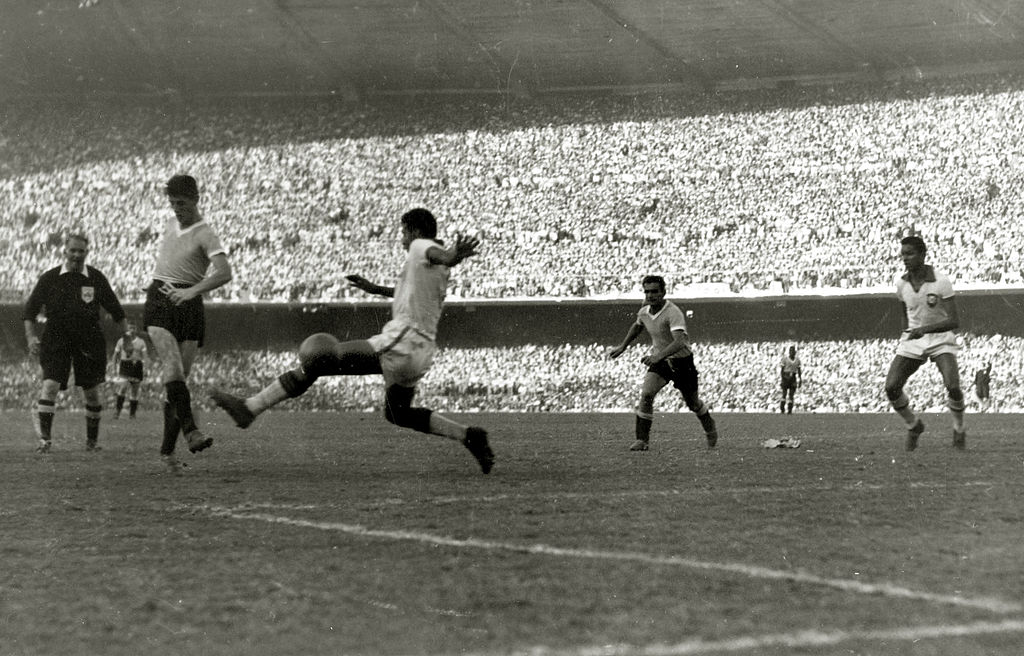
Uruguay won the 1950 World Cup by defeating hosts Brazil 2-1. Pic: X
This was India’s golden chance. Participation in the FIFA World Cup would have given football a major push in the country. And there was a good chance that India would shine because of the limited number of opponents. Indian football and its players would have been in the limelight across the world.
Golden opportunity squandered
But for unspecified reasons, the All India Football Federation (AIFF) turned down the invitation bringing disappointment to millions of fans in India and abroad. India had been slotted in Group 3 along with Sweden, Italy and Paraguay. Definitely India could have beaten Paraguay because at that time the South American nation had not made the advances that it made later. The decision also prevented many of Hyderabad’s legendary players from playing on the biggest stage of world football.
But why did India refuse the offer? The reason remains shrouded in mystery. All the official reasons put forth by the AIFF seemed flimsy. One of the reasons AIFF cited was the cost of travel. But FIFA had agreed to bear a major part of the travel expenses. Then the AIFF also said there was lack of practice time and team selection. But that was the case with other participating countries too.
FIFA had imposed a rule banning barefoot play following the 1948 Olympic Games where India had played barefoot. But Sailen Manna, the Indian captain at the time said that it was not a major issue. The players were ready to wear boots in their matches. So, boots were not the problem either.
Will the world see a reincarnation of Diego Maradona at the 2026 FIFA World Cup?
According to noted football writer, the late Novy Kapadia, the reason could have been that the AIFF did not realise the importance of the World Cup. The national federation felt that the Olympic Games were the biggest event and the FIFA World Cup could be given a miss. As a result, the entire continent of Asia went unrepresented at the World Cup in 1950.
Eventually Uruguay defeated Brazil 2-1 in the final on their home ground at the massive Maracana stadium leaving many Brazilians in tears. One of those who wept inconsolably was a footballer named Joao Ramos do Nascimento – father of Pele. The superstar Pele who was only 10 years old at the time, promised his father that he would win the Cup for Brazil and he kept his promise seven years later. After that Brazil went on to win five times with Pele winning thrice.
Worst decision ever made in Indian football
However, AIFF’s verdict was one of the worst decisions ever made in the history of Indian football. That chance, once rejected, never came back a second time. Till now, India has never taken part in the FIFA World Cup and as matters stand, it doesn’t look like India will reach that level for another two decades at least.
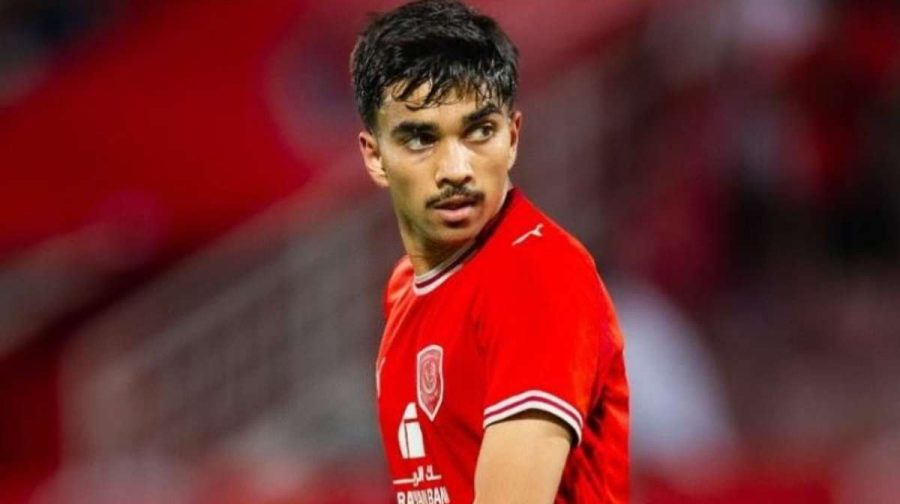
Tahsin Mohammed will represent Qatar at the FIFA World Cup 2026. Pic: Manorama News
As the 2026 edition is ready to begin, it is a pity that the world’s most populated nation will not be there in one of the biggest sports events in the world. According to FIFA estimates, the tournament is expected to be watched by six billion viewers worldwide across traditional broadcasting and streaming platforms. After all, FIFA has 211 member countries, more than even the UNO which has 193 member nations.
The worldwide popularity of the sport is phenomenal. The FIFA World Cup qualifying matches are played over a period of two years. For this edition, 48 national teams have qualified for the mega event. Even small countries such as Curacao (a tiny island in the Caribbeans), Cape Verde (another small island nation in the Atlantic Ocean), Panama and Haiti will be there. But India will be absent. For any football lover, and every patriotic Indian, that sad truth will be difficult to accept and cause immense hurt.
Consolation comes from Indian origin players
However, Indians can take some consolation from the fact that there will be a few players of Indian origin who will be playing for other countries. At least they will give the proceedings an Indian touch. In India football has a fanatical following in pockets like Bengal, Kerala, Goa and the North East region.
Tahsin Jamshid is bound to be popular in Kerala
This time around, Malayalis are sure to follow the fortunes of the Qatari team. Because, the Gulf nation’s squad includes a player from Kerala, namely Tahsin Jamshid who was born in Doha to Malayali parents hailing from Kannur district. Tahsin’s father Jamshid was himself a football player who had also represented Qatar during his playing days.
The 19-year-old Qatari plays as a winger for Al-Duhail SC in the Qatar Stars League and the Qatar national team. Now Tahsin has earned a spot in Qatar’s 26-man squad for the 2026 FIFA World Cup, making him the first Malayali to be named in a FIFA World Cup squad. His team Qatar has been placed in Group B along with joint host Canada, Switzerland and Bosnia-Herzegovina.

Sarpreet Singh will play for New Zealand as an attacking midfielder. Pic: The Sentinel
Sarpreet Singh will represent the All Whites
Apart from Tahsin, there are three more Indian origin players in the fray. Sarpreet Singh is perhaps the best-known among them. The 27-year-old will play for New Zealand as an attacking midfielder. Sarpreet, whose family is from Jalandhar, has been playing for the New Zealand senior team since 2018 and has scored three goals. New Zealand’s football team is called the All Whites while its famous rugby team is called the All Blacks.
Sarpreet who was born in Auckland, plays for Wellington Phoenix, and the New Zealand national team. He spent four seasons with the Wellington Phoenix club, and earned his first international call up for New Zealand in 2018. New Zealand is in Group G along with Belgium, Egypt and Iran.
Samuel will don colours of DR Congo
Then there is Samuel Moutoussamy, a player with Tamil connections, who is in the Democratic Republic of Congo squad. While his mother is Congolese, his father is of Tamil origin. The 29-year-old who was born in Paris, made his debut for Congo in 2019. He plays as a defensive midfielder for Greek Super League club Atromitos.
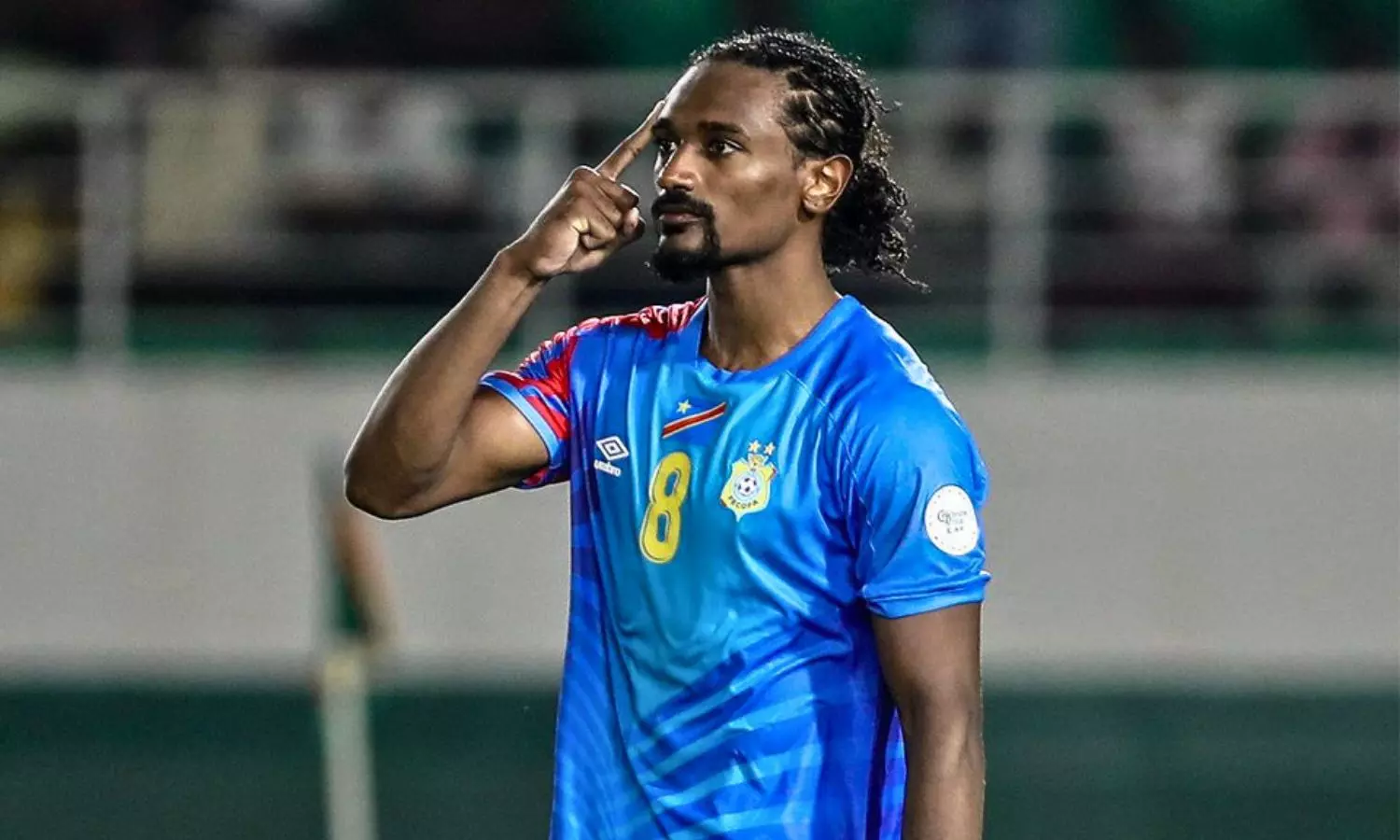
Samuel Moutoussamy is in the Democratic Republic of Congo squad. Pic: Deccan Chronicle
In 2023, Samuel was selected by coach Sebastian Desabre to compete in the 2023 Africa Cup of Nations. In the forthcoming World Cup, DR Congo is in Group K where Portugal is the strongest team. The others are Uzbekistan and Colombia.
Nishan selected for the Socceroos
The fourth Indian origin player is Nishan Velupillay who is part of the Australia team that is called the Socceroos. Nishan’s father is a Malaysian of Tamil heritage, while his mother is an Anglo-Indian. Nishan signed his first professional contract with Melbourne Victory in 2019. He made his senior debut for the club two years later.
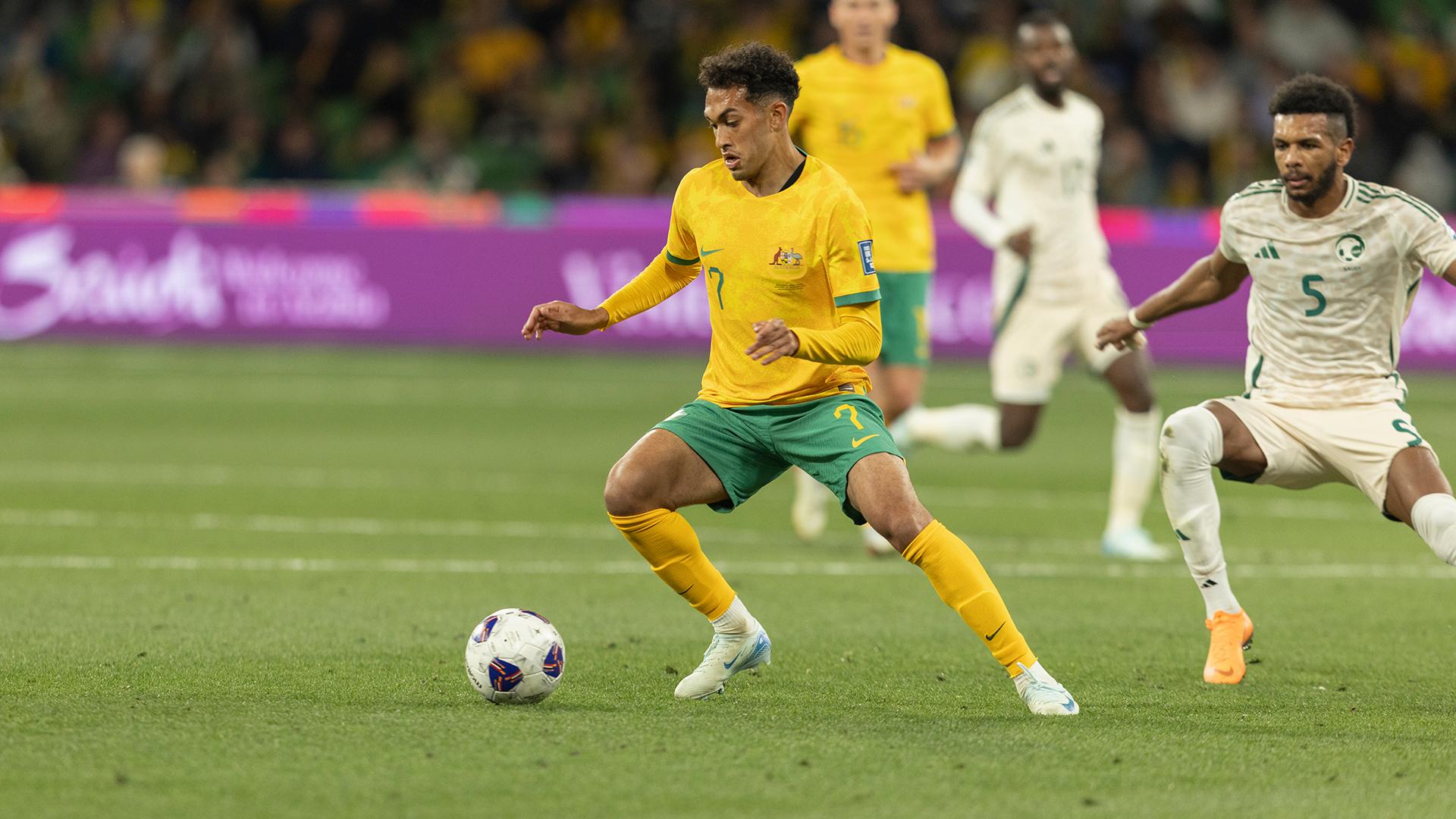
Nishan Velupillay is part of the Australia team. Pic: Socceroos
On 11 December 2021, Nishan scored his first professional goal, netting the winning goal in a 2–1 win over Adelaide United. He followed up with more outstanding performances later. In October 2024, Nishan was called up by coach Tony Popovic ahead of Australia’s 2026 World Cup qualifying matches. Now Australia is placed in Group D along with the co-host USA, Paraguay and Turkey.
Millions of Indian viewers are expected to watch
In the lead-up to the 2026 World Cup, Indian audiences generated 9.7 million pageviews of tournament-related content across the open web. This ranked India as the second biggest football market globally after the United States. In India, football viewers are even more than traditional powerhouses like Brazil and the European nations. To maximize reach, broadcasting networks are planning to provide commentary in multiple regional languages including Hindi, Malayalam, Bengali, Tamil, and Telugu. So, millions of households in India are eagerly awaiting the start of the greatest football show on earth.