Published: January 29, 2026 at 6:44 pm
The game of cricket has seldom seen a character like Dennis Keith Lillee. He was one of the most colourful, controversial, but also hugely talented players ever seen in action across the cricket arenas of the world. His highly combative and charismatic journey began today (January 29) in 1971 in the sixth Test of the Ashes series.
It was a warm, sunny day at Adelaide when England skipper Ray Illingworth won the toss and chose to bat first. For Australia, Alan (Froggy) Thomson bowled the first over and then captain Bill Lawry tossed the ball to a raw 21-year-old tearaway fast bowler named Dennis Lillee. It was a seven-match series and England were leading 1-0 so the Aussies were keenly looking for a victory.
The Australian selectors badly needed to pull out something new. With that in mind, they decided to bring in Lillee although he had not done anything outstanding in recent First-class matches. “I was aware of the media hype that suggested that I was Australia’s answer to John Snow in a bouncer war. I was aghast. I knew I couldn’t win such a war against the great John Snow,” Lillee wrote in his book Dennis Lillee.
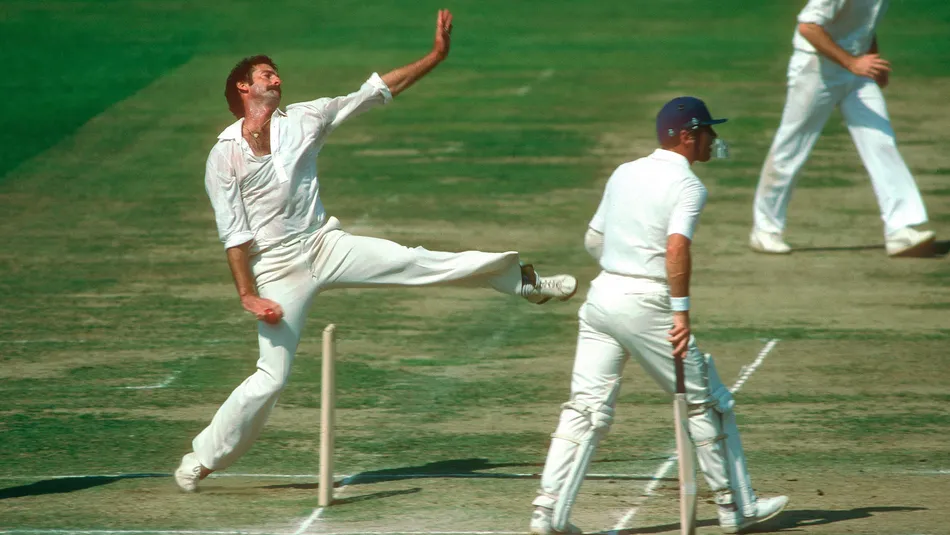
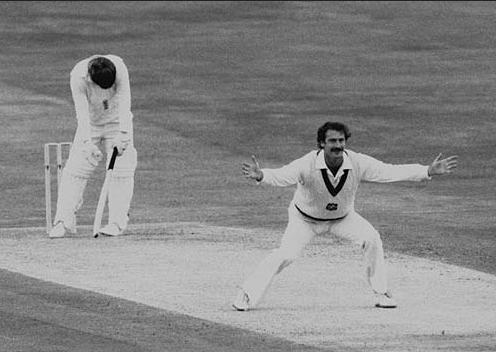
Lillee became the embodiment of aggressive fast bowling – a player who treated every spell like a personal duel and every batter like a victim to be finished off. Pic: Cricket Australia
Bradman’s words had an effect on Lillee
But Sir Don Bradman who was one of the selectors knew what was going on in Lillee’s mind. “He took me aside and told me to bowl as I normally would. Forget the bouncer war. Keep the ball up and I’m sure you will do well,” Lillee has written. Those words helped the young fast bowler to drive away extraneous and irrelevant thoughts and focus on his game.
“On the first day I struggled against a headwind but managed to get opener John Edrich caught by Keith Stackpole in the slip cordon. On the second day, the wind was at my back, and I bowled with more rhythm. I picked up nightwatchman Alan Knott and then Ray Illingworth, John Snow and Bob Willis to finish with 5 for 84,” he wrote.
The young lion’s first taste of blood
Eventually, the match ended in a draw. But the young lion had tasted blood in his first battle and there was no stopping him thereafter. Lillee became the embodiment of aggressive fast bowling – a player who treated every spell like a personal duel and every batter like a victim to be finished off.
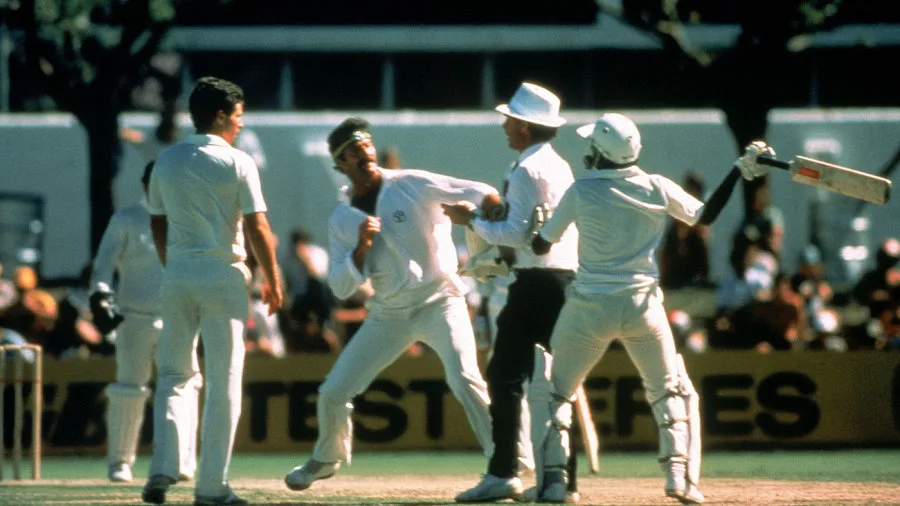
Dennis Lillee and Pakistan’s Javed Miandad ready for a duel at the Perth Test in 1981. Pic: PA Photos
Lillee brought drama and intelligence to the craft of fast bowling and redefined what it meant to be a strike bowler. His bowling style was a blend of classical technique and raw hostility. Lillee had a strong, high action and mastered the art of swinging the ball under different conditions.
But after a serious back injury forced him to change his action, Lillee returned as an even more complete bowler. This evolution made him a more dangerous bowler and extended his career in international cricket. To his teammates, he was an inspirational figure who demanded intensity and commitment from all of them.
Lillee and Thommo became the world’s most feared duo
With Jeff Thomson, Dennis formed one of the most feared fast bowling combinations ever seen in cricket. Thomson had an unusual but highly effective slinging action that he learned from his father. It was written in Wisden that: “It was easy to believe they were the fastest pair ever to have coincided in a cricket team.”
But they did not begin in a spectacular manner. In a chapter titled “Teaming Up With Thommo” Lillee has written: “My first game with Jeff Thomson was eminently forgettable. It was against Pakistan in the 1972-73 season. The selectors decided to hand over the baggy green to the young firebrand from Bankstown who had an unusual action. What would later become a lethal combination almost backfired at the start. We were both far from impressive. I took 1-90 and 2-59 while Thommo went wicketless and even conceded 100 runs from 17 overs in the first innings.”
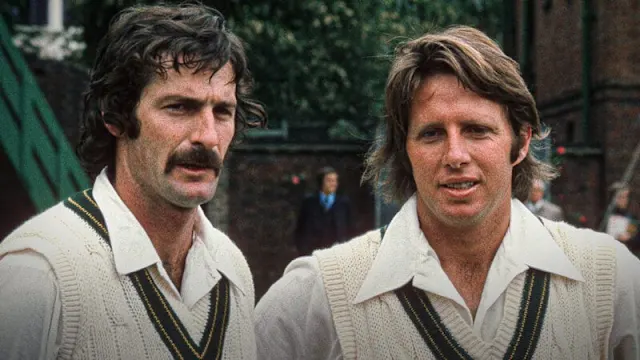
In 26 Test matches together, Lillee and Jeff Thomson captured 217 wickets at an average of just over 27. Pic: BBC
But Thomson retained his place due to excellent performances in the Sheffield Shield and thereafter his confidence as well as his performance levels soared. Lillee and Thomson became the most effective combination in Test cricket from the mid-1970s. The Sunday Telegraph published a cartoon of Lillee and Thomson with the caption: “Ashes to ashes, dust to dust. If Thommo doesn’t get you, Lillee must.” That catchy line became an instant hit with fans across the world.
In 26 Test matches together, Lillee and Thomson captured 217 wickets at an average of just over 27. Between 1974 and 1977, they took 149 wickets in only 15 Tests at an average of just over 25. In the 1974-75 Ashes series, they dismantled England, sharing 58 wickets in six Tests to win the series 4-1. In the 1975-76 series against the West Indies, the duo secured a 5-1 win by taking 56 wickets in six Tests.
Lillee’s effective partnership with Rod Marsh
Another great friend and partner for Lillee was wicketkeeper Rodney Marsh. Throughout their career, whilst playing for both Australia and Western Australia, Lillee and Marsh accounted for numerous scalps. The scoreboard entry: ‘c Marsh b Lillee’ appeared 95 times in Test cricket. It was a partnership record between wicketkeeper and bowler.
Quite coincidentally, both players ended their careers with 355 Test dismissals. Rod Marsh took 343 catches and had 12 stumpings for a total tally of 355 victims. Lillee too ended up with a total of 355 Test wickets. In 1988 the Western Australian Cricket Association jointly honoured the two players by naming a new grandstand at the WACA ground as the Lillee-Marsh stand.
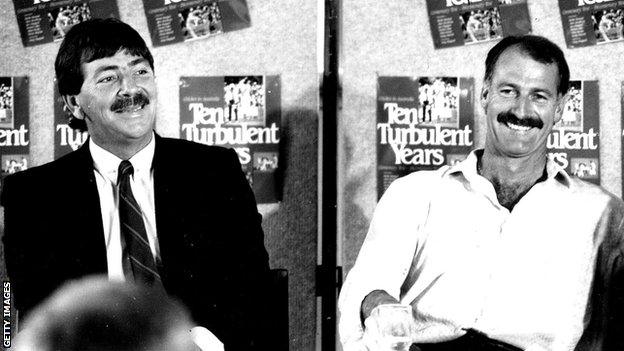
Another great friend and partner for Lillee was wicketkeeper Rodney Marsh. Pic: Getty Images
As a player, Dennis Lillee was a larger-than-life personality. His accomplishments, controversies and the anecdotes surrounding his playing career, cannot be covered in one article. Indeed, it is doubtful that one single book can do the job either. He had a massive impact on world cricket and that journey began today, exactly 55 years ago.