Published: April 2, 2026 at 4:26 pm
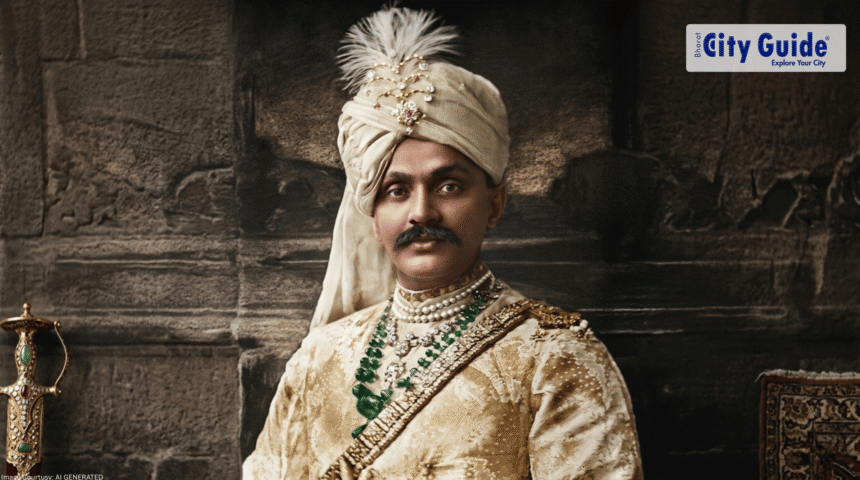
The legend of K S Ranjitsinhji (better known in cricket as Ranji) is just as absorbing as it was when he first enthralled the cricket lovers of England with his wristy shots as a batter. Ranjitsinhji passed away on April 2, 1933, but even though so many years have passed, the story of his life remains an extraordinary one.
Ranji was completely unlike the other batters in England. While players of those days like W G Grace, C B Fry and Stanley Jackson played mainly on the front foot and scored runs by driving the ball in front of the wicket, Ranji preferred to use unorthodox shots like the leg glance and wristy deflections to place the ball in the gaps. These tactics suited his light physique and good hand-eye coordination.
But we can guess what hurdles he must have had to overcome while studying at Cambridge University and at the Sussex team which he represented and later captained for almost five years. He was a brown-skinned man in a white man’s world playing a white man’s game. No doubt there must have been some amount of prejudice.
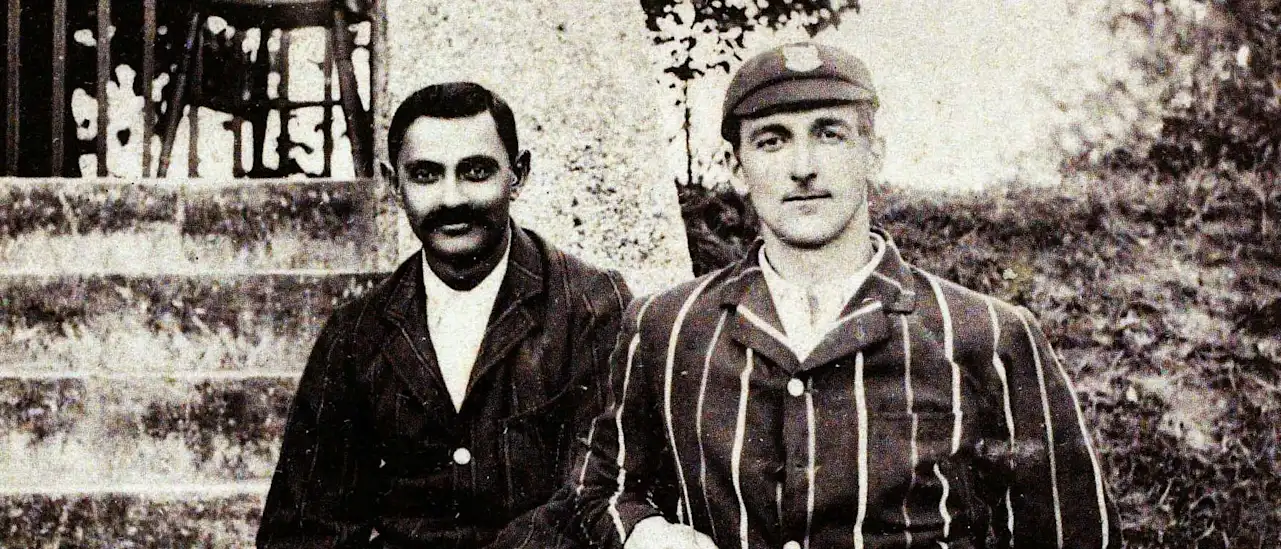
Ranjitsinhji and CB Fry. Pic: ICC
But Ranji himself was a sportsman and never mentioned it. There is no record of him ever having complained about any ill-treatment by any of his English associates. On the contrary, there are instances when he was helped by his fellow players. One was Fry, who provided him a lot of encouragement.
According to English writer Alan Ross, Ranjitsinhji may have been lonely in his first few years at Cambridge University and probably encountered many difficulties in socialising with his peers. Ranji often threw lavish parties and Ross believes that this may have been his way of attracting friends and becoming popular. But this also landed him in debts and his spending habits became talked about.
But while his debts continued to mount, his cricketing career prospered. Ranji made his Test debut for England on July 16, 1896 and this led to some amount of controversy. He was the first Indian to represent England. Some felt that he was selected on merit which was good. But others wrote articles that it was not right for an Indian to be selected in England’s team. But when he scored a century, public and media opinion turned in his favour.
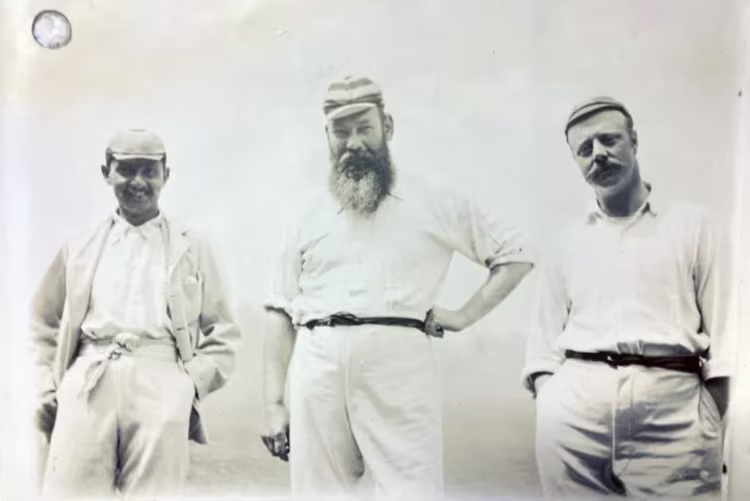
Ranjitsinhji, WG Grace and WL Murdoch. Pic: UK National Archives
Ranjitsinhji’s life outside cricket
But what was his life like outside the cricket field? Here the picture is not so rosy. It involves dark deeds, conspiracies and suspicious deaths among persons connected with the ruling family of Nawanagar. Ranji was engaged in a long legal battle to be recognised as the ruler of Nawanagar. Much of his youth was spent in attending courts, sending petitions to the British authorities and seeking justice.
There were three main players in this drama. One was the ruler of Nawanagar named Ranmalji Vibhaji. Second was Ranji himself and the third was a son of Vibhaji named Jaswantsinhji (also called Jassaji). Ranji was not born as the son of the ruler. He was the son of a wealthy farmer, who was related to the ruling family. He was born on September 10, 1872 in Sadodar, Jamnagar.
What happened was that the ruler’s first-born son Kaluba possessed a character that the father found unsuitable. The lad even tried to poison his own father to grab the throne. That was when the ruler disinherited his son and adopted another boy from among his relatives. That boy died early under suspicious circumstances. Some say that he was poisoned by Kaluba’s supporters.
Why Ranji was chosen as heir to the throne
Thereafter the choice fell on Ranji who was related to him because Ranji’s biological father was a distant relative of the ruler. The boy was given the name of Ranjitsinhji Vibhaji to establish his credentials as the heir to the throne. The British administration agreed to the adoption and following this agreement, Ranji was sent to Rajkumar College for his further education.
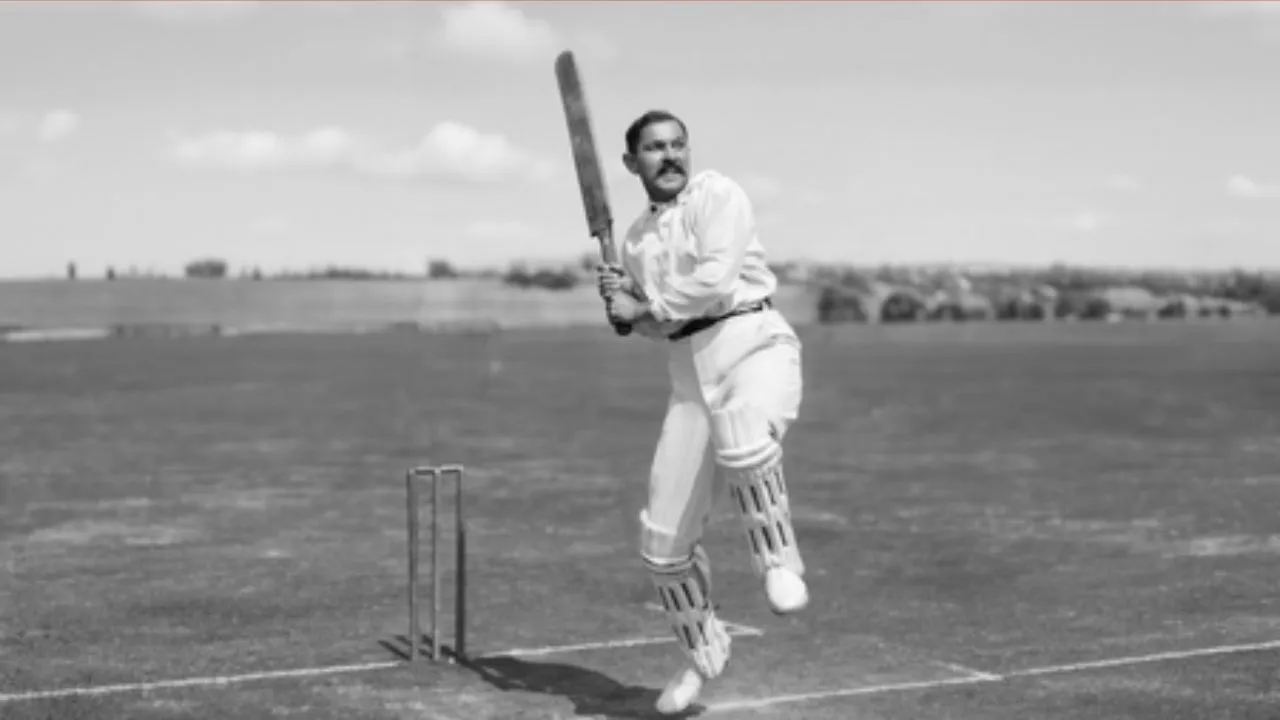
Ranjitsinhji stepping out to hit a delivery. Pic: IANS
But the matter became complicated when a son was born to one of the wives of the ruler. The boy, Jaswantsinhji (Jassaji), thus became the natural heir to the throne and the ruler now changed his mind. He now wanted his natural-born son as his successor and ignored the claims of the adopted son Ranji.
The British authorities were not in favour of such a move. They were firstly, unhappy to discover Ranjitsinhji was not adopted as per the legal procedures laid down by British laws. But they were impressed by Ranji’s potential at the college and so they initially tried to persuade Vibhaji to retain Ranjitsinhji as his heir.
But the Jam Sahib insisted Jaswantsinhji should succeed him. In October 1884, having no other option, the British run Government of India recognised Jaswantsinhji as Vibhaji’s heir. However, the Viceroy, Lord Rippon, decreed that Ranjitsinhji should be compensated for losing his position as the heir.
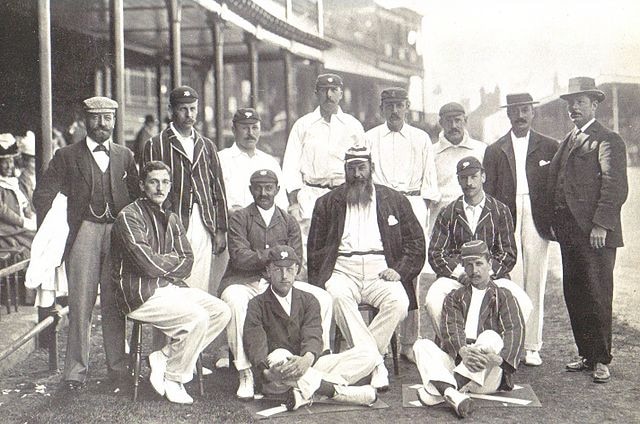
Ranjitsinhji and the England cricket team. Pic: India Today
Despite all these complexities and legal hassles, the ruler Vibhaji continued to support Ranji’s education and eventually Ranji graduated from Rajkumar College and was sent to Cambridge University for higher studies. There his cricket career flourished but other problems remained. In 1898 he returned to India and tried to stake his hold firmly on the throne.
How Ranji finally got the crown
He wrote to the influential British administrators asking for justice. They were sympathetic but could not help him. It was many years later, after Jassaji died, that Ranji’s efforts at last bore fruit and he was officially acknowledged as the Jam Sahib of Nawanagar on 11th March 1907. He ruled his kingdom till his own death in 1933.
His administration had many plus and minus points. There were areas in which he failed but he succeeded in improving roads, railways and agriculture. He was also appointed Chancellor of the Indian Chamber of Princes and represented India at the League of Nations. He passed away on April 2, 1933, after a brief illness.
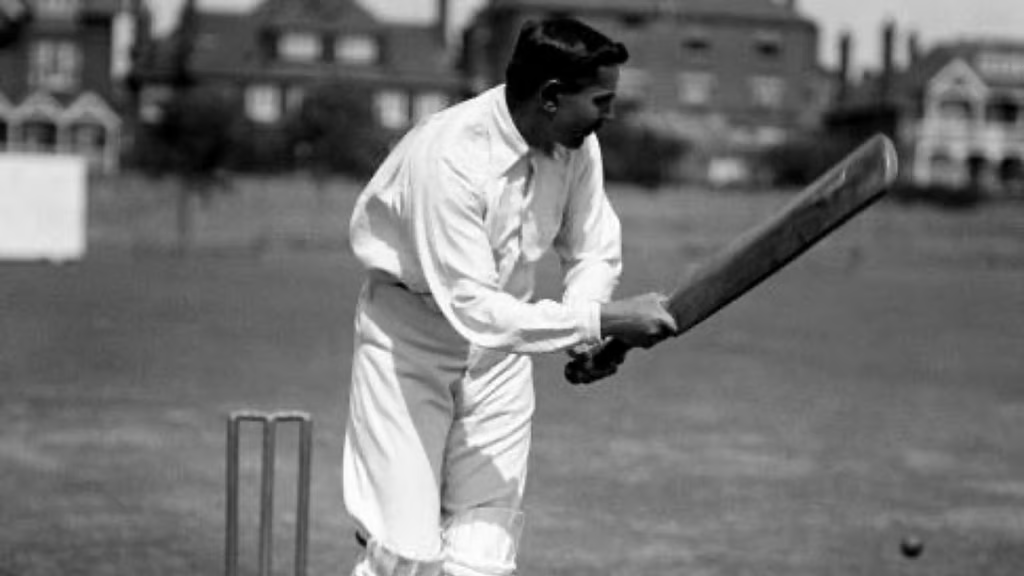
Ranjitsinhji’s innovative shots such as the leg glance opened the eyes of the English players of the time who only scored runs by driving in front of the wicket
While none can question his skills as a cricketer, some have criticised him for his lack of interest in developing Indian cricket. But he raised the image of Indian players across the world and in 1934 the BCCI decided to honour him by naming the national championship after him. The trophy donated by Maharaja Bhupinder Singh of Patiala is still the coveted trophy for which all Indian state teams fight for every year.
https://x.com/CricketopiaCom/status/1965666377139978759?s=20
He played 15 Tests (all for England), scored 989 runs with two centuries (top score 175) and had an average of 44.95. In First-class cricket, he played 307 matches, scored 24,692 runs at an average of 56.37 and chalked up no less than 72 centuries. He also captured 133 wickets at an average of 34.59 and took 5 wickets in an innings on four occasions. His First-class record while playing for Cambridge University and Sussex, was very impressive.
His innovative shots such as the leg glance opened the eyes of the English players of the time who only scored runs by driving in front of the wicket. It was Ranji’s success at cricket that earned him acceptance into the high society in England. It also helped to create a positive image of Indians in the minds of the Englishmen.