Published: April 1, 2026 at 10:35 pm
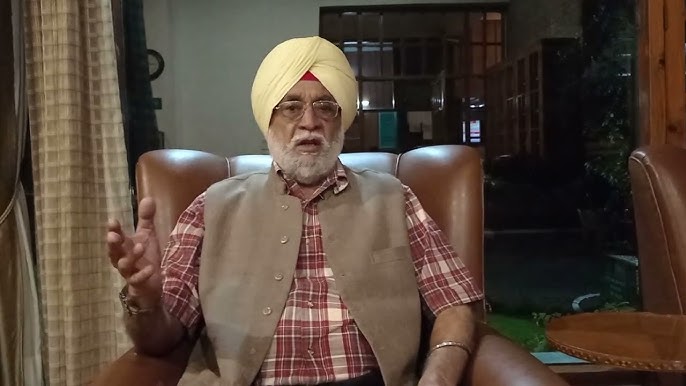
“Keep your goals high but always keep your temper low,” is former hockey captain Ajitpal Singh’s trademark line to the glory seeking youth of today. The legendary star celebrates his 79th birthday on April 1 and what better time to revisit his story, which starts with a village in the heart of Punjab.
Deep in the heart of Punjab lies a village called Sansarpur in Jalandhar district. In the last all-India census carried out in 2011, the village had a population of only 4,657 people. On the surface, there is nothing remarkable about this little collection of humble dwellings. But in the history of Indian hockey, this place has immense significance. Its tiny population has cause for pride because they have produced some of the greatest names of Indian hockey.
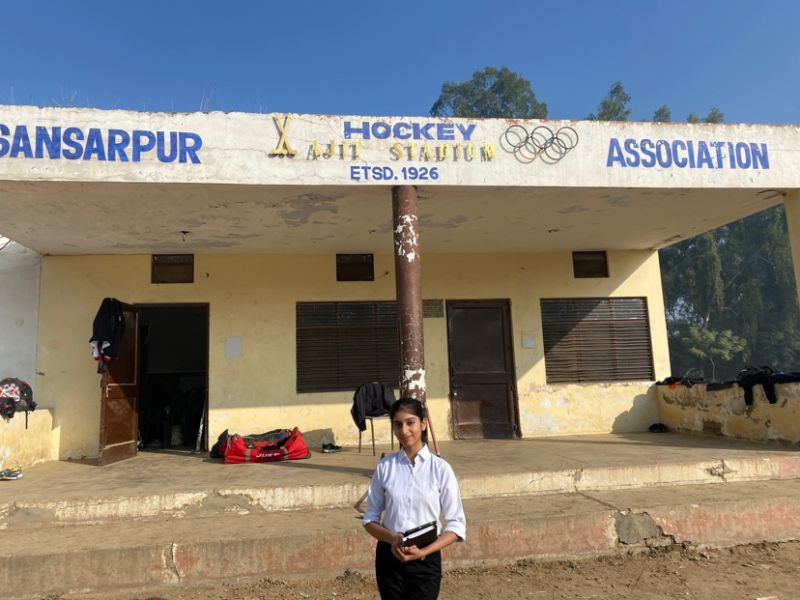
Over several decades, Sansarpur has given to India, more than 306 international and national level hockey players out of which more than 200 belong to one extended family of the village by the name of Kullar (in some cases it is also spelt Kular). Pic: LinkedIn
Over several decades, the village has given to India, more than 306 international and national level hockey players out of which more than 200 belong to one extended family of the village by the name of Kullar (in some cases it is also spelt Kular).
The family includes the legendary Udham Singh Kular, who took part in four Olympic Games and won three gold and one silver medal. He is one of the most celebrated and decorated hockey players in India’s history.
Among dozens of famous names of Sansarpur is also that of Ajitpal Singh, the man who led India to its solitary World Cup triumph in 1975. Under the leadership of Ajitpal, India defeated Pakistan 2-1 in the final at Kuala Lumpur. Today (April 1) the victorious captain Ajitpal Singh is celebrating his 79th birthday.
Ajitpal was born just before independence
Ajitpal was born on April 1, 1947, a few months before India gained independence. When he was a little boy, just 7 or 8 years old, his uncle handed him his first hockey stick just like all the boys of the village. He began playing hockey with the other boys and developed a deep attachment for the game.
https://x.com/TheHockeyIndia/status/2039267337824784664?s=20
His parents enrolled him at the Cantonment Board Higher Secondary School, Jalandhar Cantonment. When he was 16, he represented the Punjab State Schools Hockey team. During those days Ajitpal used to play in the full back position and it was much later, when he was in his twenties, that he found his best spot in the half line.
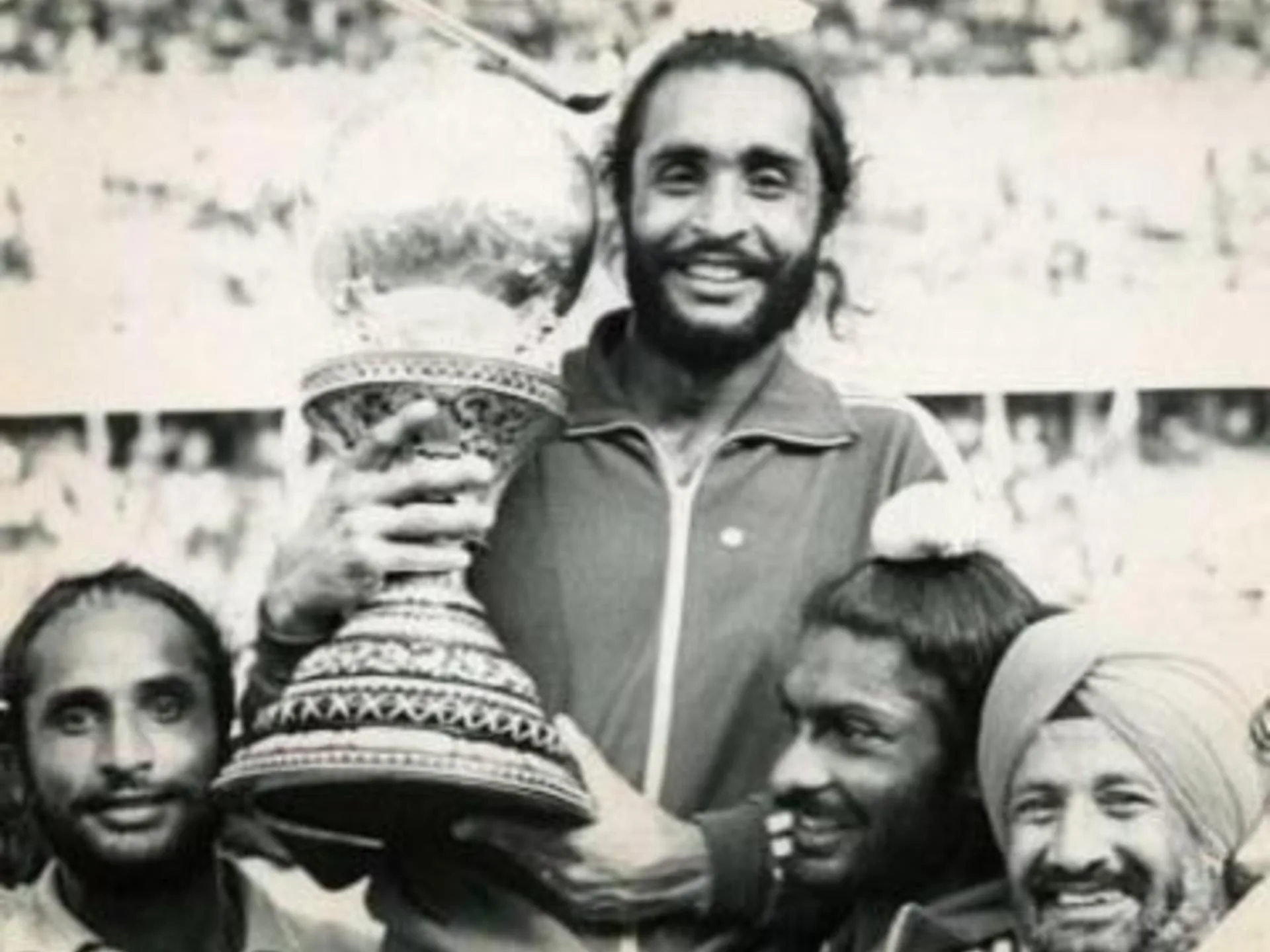
After finishing school, he moved to the Lyallpur Khalsa college in the bigger city of Jalandhar. But more than academics he shone in hockey. He led the college to 3 victories in the Punjab University Inter College tournaments. It was at this time Ajitpal shifted from full back to center-half which best suited his mentality and physical skills.
Ajitpal joined BSF after college
In 1996, he was named the captain of Punjab University Hockey team and then he represented the Indian Universities’ Hockey team in 1968. After higher studies, he joined the Border Security Force (BSF) which had its base at Jalandhar. BSF Jalandhar was a famous name in football too and in the 1970s and 80s, BSF was a team that the big clubs of Kolkata were apprehensive of facing.
Ajitpal captained the hockey team of BSF and under his captaincy BSF hockey team lifted the Nehru Trophy in 1975. He rose to the rank of Assistant Commandant in the BSF.
https://x.com/sportstarweb/status/1627928626862895105?s=20
But his hockey career was destined for even greater glory. In 1966, he was selected in the Indian Hockey team that toured Japan and he also participated in the pre-Olympic tournament held in London the next year. India qualified for the Olympics that were to be held in Mexico City in 1968.
Unusual step of naming two captains
For that Olympic Games, there was a political tussle within the federation, and two sides wanted their own player to be the captain. Finally, a compromise was arrived at and two players namely the penalty corner expert Prithipal Singh and the mercurial forward Gurbux Singh were named joint captains of India. Balkishan Singh was the coach-cum-manager.
Ajitpal delivered a brilliant performance, but the team fared below expectations. Pakistan won the gold medal, Australia took the silver and India had to be satisfied with the bronze medal after defeating Germany in the third place play off.
Later Ajitpal represented India at Bangkok Asian Games 1970 and was named the captain of the Indian squad that played at Post Shuan Tournament held at Singapore in 1971, and Tehran Asian Games 1974. The Indian team managed to grab a silver medal at both the events.
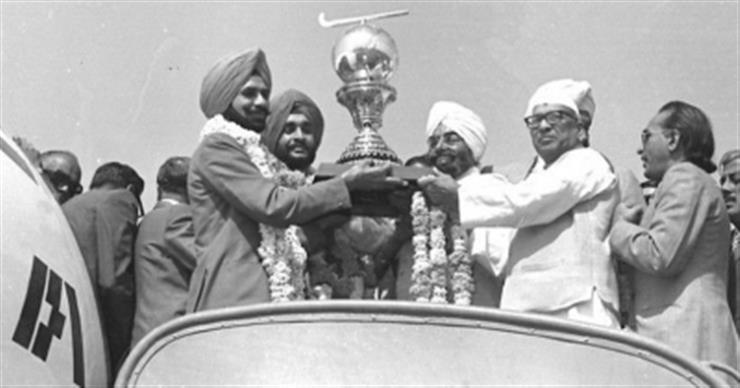
He took part in the Munich Olympic Games in 1972, where the team finished with another bronze medal. Those were the days when the Indian hockey team had begun sliding downwards for a variety of reasons including the lack of astro-turf grounds in India. Around this period of time, he also got married to Kiran Grewal, a national level basketball player.
1975 remains the highest point of his career
But in 1975, India overcame all the hurdles and disappointments to lift the FIH Men’s World Cup. This was the highest point of Ajitpal’s career.
In the course of the tournament, India beat England 2-1 in a Pool B league match before drawing with Australia 1-1. Thereafter, India coasted to an easy win over Ghana 7-0. But in the next match, India went down to a shock defeat when they lost to Argentina 2-1. The last league match was a must win game. India had to beat Germany to enter the semifinals. But India did win comfortably by 3-1 and the semifinal spot was assured.
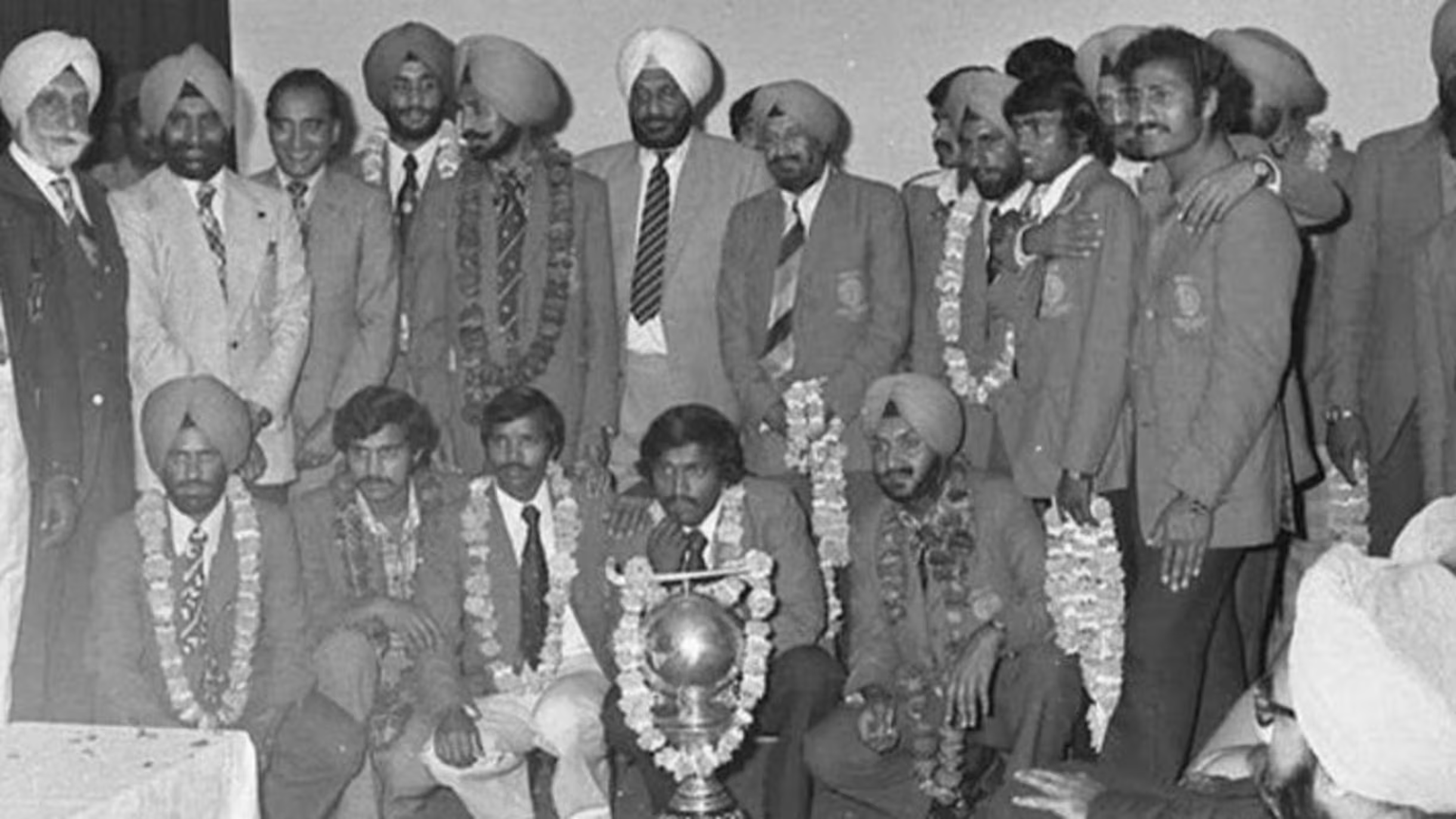
In the semifinal, India defeated Malaysia 3-2. Harcharan Singh, Aslam Sher Khan and Pawar scored for India. So that took India into the final where Pakistan had come up from the other side by beating Germany.
A fast paced and exciting final
The final was an extremely fast paced game. Traditionally Pakistan has always had a very strong front line and this time too they were outstanding. But India’s defenders played a do or die game and thwarted every move that they made.
Navneet & Hardik named Players of the Year; Zafar gets Major Dhyan Chand Award
Nevertheless, the rampaging Pak forwards sneaked through in the 17th minute and scored the first goal through Muhammed Zahid Shaikh. But Indian forwards proved that they were no less. They attacked with great determination and did not have to wait long for the equaliser.
It came when Surjit Singh Randhawa banged the ball home in the 44th minute. Barely 7 minutes later, the fast-moving little pocket dynamo, Ashok Kumar, son of the legendary Dhyan Chand, dribbled his way through the Pak defence to give India the all-important match winner.
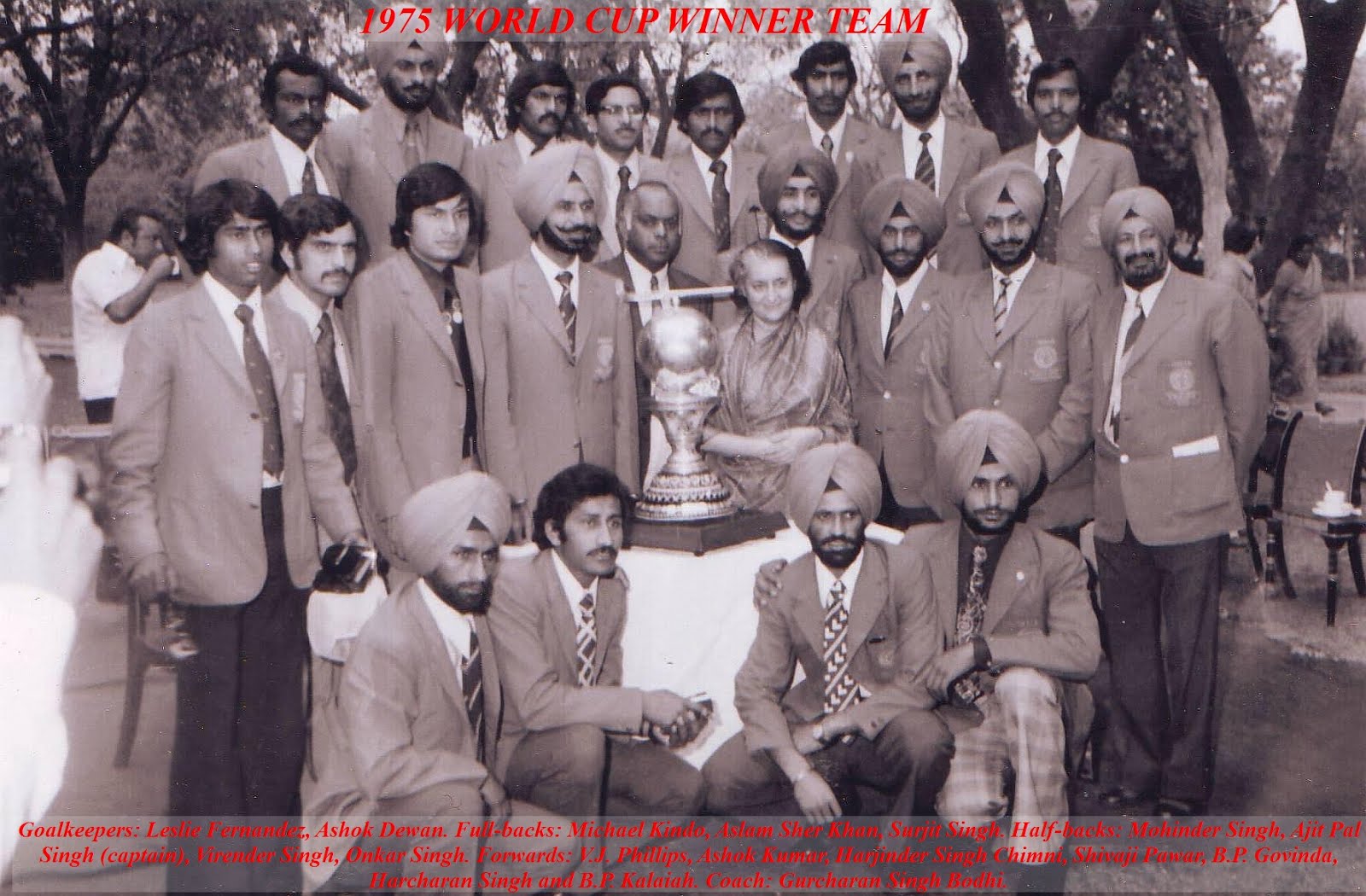
1975 Indian hockey team with former Prime Minister Indira Gandhi
Thereafter the victory celebrations continued for several months. The Indian team was invited to play exhibition matches in many cities and feted generously. So much so that they had little time for practice. It all resulted in a harsh collapse and the death of many dreams a year later.
Debacle at Montreal Olympics shattered dreams
In 1976, at the Montreal Olympics the Indian team fared really badly and finished 7th. It was one of India’s worst performances. Coming as it did a year after the Word Cup triumph; it shattered the hopes of the hockey lovers. After this debacle, Ajitpal Singh retired from International Hockey, although he participated in his last International Hockey event in 1980 at Champions Trophy Tournament, Karachi. However, even after his retirement from International Hockey, Ajitpal continued to play for BSF Jalandhar in domestic tournaments.
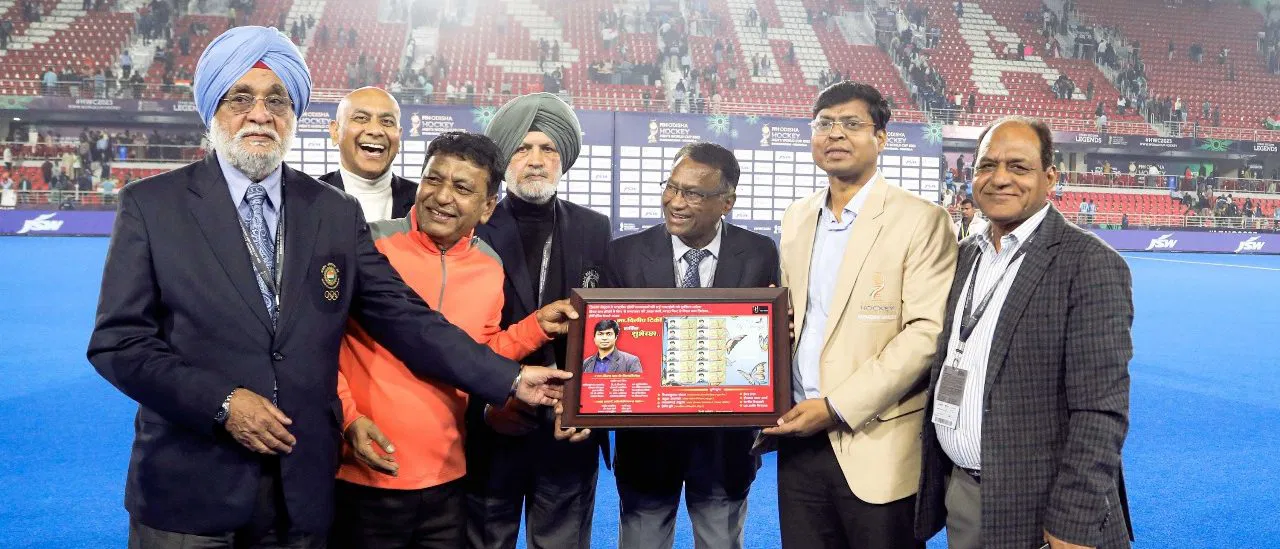
His wide-ranging experience makes him an ideal person to go to for advice which many youngsters do. Throughout his career he was known for his cool and calm approach. He never lost his temper even when provoked by rival players. He advises the present generation of players to adopt the same approach. He wants them to remain calm even under provocation. “Keep your goals high but always keep your temper low,” is his trademark line to the glory seeking youth of today.