Football
Champions League: PSG hold their nerve to outplay Arsenal 4-3 in a thrilling shoot-out

Paris Saint-Germain (PSG) successfully defended their title as the prestigious Champions League 2026 football tournament came to an end at the Puskas Arena in Budapest, Hungary, on Saturday. The Parisians edged out English champions Arsenal 4-3 in a penalty shootout following a tense 1-1 draw in the final watched by a massive crowd of 61,000 fans.
Paris are now only the second side to have defended the title in the UEFA Champions League era. Real Madrid had become the first club to complete back-to-back Champions League title wins in 2017, and they repeated the feat 12 months later for good measure. Paris were already the first holders to reach the final since Madrid in 2017-18, and Luis Enrique’s men duly went one step further in Budapest, in the process avoiding becoming the first defending champions to finish as runners-up since Manchester United lost the 2008-09 final to Barcelona.
PSG started on the backfoot
When the contest began, it looked like Arsenal may topple their famous rival. Arsenal had a bright start and took the lead in the 5th minute through Kai Havertz, who charged up the left flank before blasting in a rising shot beyond the reach of PSG goalkeeper Matvey Safonov. Thereafter, the match seemed to be following Arsenal’s script. The Englishmen had a well-organized defence, compact midfield and controlled the ball possession.
Havertz had also scored the only goal for Chelsea in their final victory over Manchester City in 2021. That makes him one of only three players to have found the net for two different clubs in a Champions League final. Cristiano Ronaldo is the only player to have scored in three finals, having struck for Manchester United in 2008 and then Real Madrid in both 2014 and 2017.
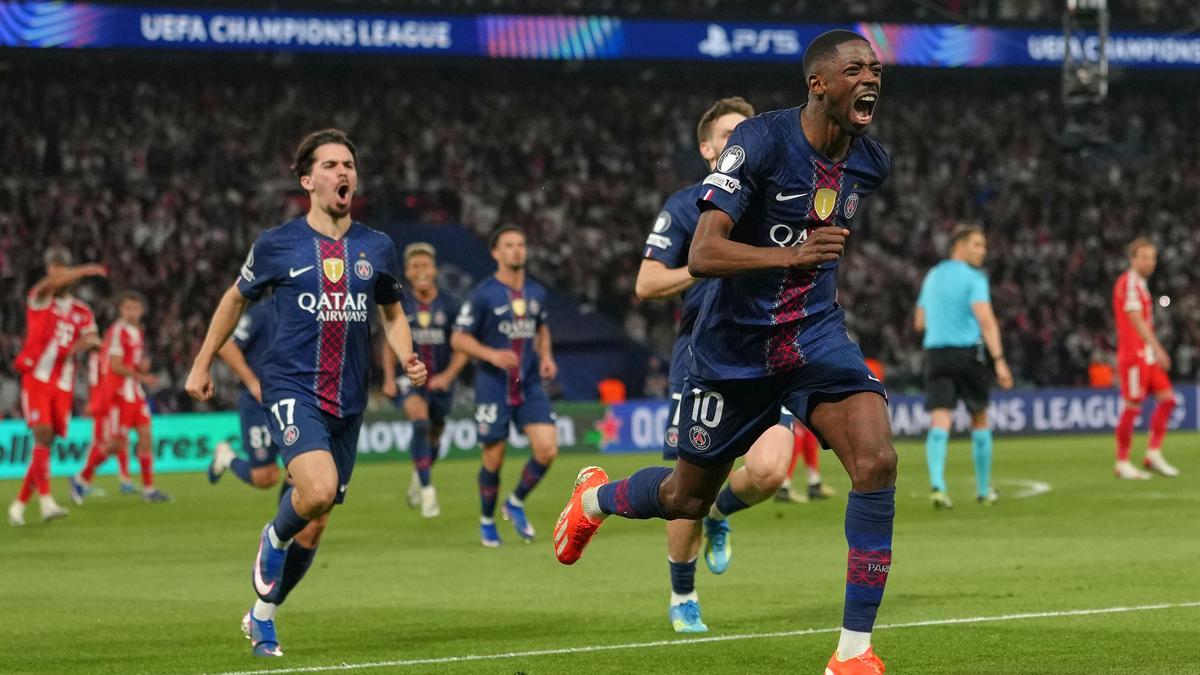

However, the Parisians did not panic. They continued to move the ball patiently and increased pressure in the second half. PSG owed a lot to the influence exerted in midfield by Portuguese midfielder, the brilliant 21-year-old Joao Neves. While he may not have produced the headline creating moments, his work in recovering possession, maintaining the passing rhythm and linking defence with attack helped PSG gradually take charge of the game.
PSG seem to have mastered the art of surviving under pressure. They waited for momentum shifts and attacked when Arsenal let their guard down even for a fraction of a second.
Finally, star scorer Ousmane Dembele got the equaliser when he converted a penalty in the 65th minute. This was after Arsenal defender Cristhian Mosquera brought down PSG’s Khvicha Kvaratskhelia inside the box. But no further goals were seen till the end of regulation time and also extra time. So, the final went into the shootout.
Luis Enrique’s plan worked
When it comes to penalties, PSG have developed a reputation under Luis Enrique for handling high-pressure shootouts exceptionally well. In statistical terms, this was PSG’s sixth consecutive shootout victory under Enrique. He has planned out this nail-biting aspect of the game very well in his mind. And he has drilled his players to perfection. That experience appeared evident in how composed PSG remained during extra-time and the penalty shootout.
“For the penalties, we wanted to go into it with a clear head. It was a hard game. We were against the strongest set-piece team in Europe, but I think we were able to dominate. We deserve the trophy, our second Champions League win,” Enrique said.

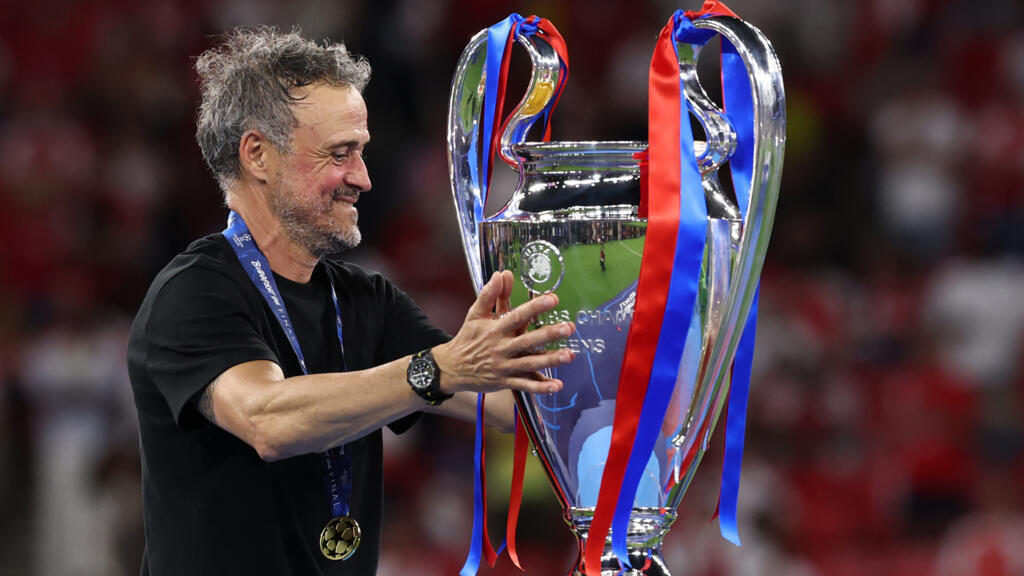
Luis Enrique planned out this nail-biting aspect of the game very well in his mind. And he has drilled his players to perfection. Pic: AFP
“This back-to-back is incredible, it’s really difficult, but we are very proud of our supporters and everyone who’s behind the club. We are very happy and it’s time to party,” he added.
In the shootout, the psychological difference between the two sides was that PSG players seemed prepared for pressure while Arsenal seemed scared of failure. PSG converted four of their five penalties, while Arsenal missed crucial attempts. In a contest where the margins were extremely small, PSG’s superior nerve and technical execution in the shootout proved decisive.
Arsenal had their own strengths
But Arsenal were not comprehensively outplayed. They defended bravely, led for much of the match and pushed the holders all the way to penalties. But after the first goal, Arsenal’s plans went awry.
However, Arsenal should not be disappointed. For the superbly skilled English club, it was a case of so near but yet so far. They were defeated but not disgraced. Arsenal started exactly how a champion should start. Aggressive pressing, and compact moves were the hallmark of their game. Their attacks forced PSG backward into their own territory. The opening stages showed why Arsenal reached this stage. The team had a structured build-up, intelligent spacing, and established good midfield control.
Technically, Arsenal’s biggest problem was game management. After taking the lead, Arsenal became reactive instead of proactive. Their controlled midfield began to deteriorate. The distance between defence and midfield became larger thus leaving big gaps. Suddenly PSG began to find space between the lines.
Experienced players were ineffective
Arsenal also suffered because the fullbacks, namely Spaniard Christhian Mosquera and Ecuadorian Piero Hincapie were not able to influence the contest. Instead of stretching PSG horizontally, Arsenal’s positioning became narrower. PSG’s midfield rotations started pulling Arsenal out of shape, especially when it came to quick switches and change of lines.
At this stage Arsenal needed someone to slow the game down, calm the team and reset the rhythm. That move didn’t emerge – neither from the experienced players like Martin Odegaard and Declan Rice, nor from the manager Mikel Arteta.

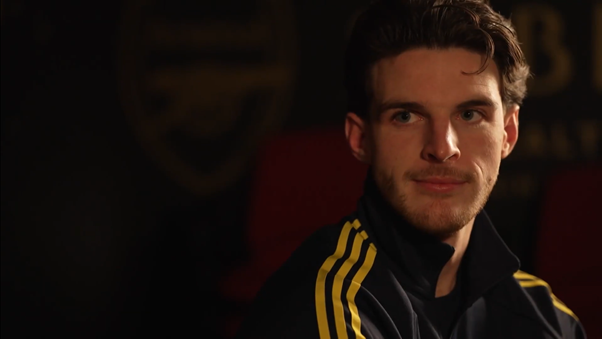
At this stage Arsenal needed someone to slow the game down, calm the team and reset the rhythm. That move didn’t emerge – neither from the experienced players like Martin Odegaard and Declan Rice, nor from the manager Mikel Arteta
“First of all, I will take a few days with my family, and then we will start the process to review what we’ve done and make some very important decisions if we want to reach another level. We have to show that ambition because we are more than capable of doing it. We’ll have to be very ambitious, very fast and very smart,” Arteta said.
Arsenal’s entire European season showed the team’s strengths and weaknesses. Admittedly, there was more of the former than the latter. This team defended stoutly, passed brilliantly and adapted to changing situations. They reached the final because they earned it. But throughout the campaign, one question was unanswered. When chaos arrives, can Arsenal still control matches? On Saturday night, we finally got the answer. And it was sadly, a big NO.
Victor Amalraj’s point of view
Victor Amalraj of Hyderabad, who had led the Indian team as well as the big three clubs of Kolkata during his playing days, watched the Champions League battle from start to finish. He felt that Arsenal were not dominant during the match.
“After conceding a goal, PSG fought back well to equalize and make it 1–1. Moreover, PSG controlled most phases of the game, created the better chances, and looked the stronger side overall. Based on their performance throughout the match, PSG deserved to win the UEFA Champions League title. Congratulations to PSG on a well-earned victory, ” said Amalraj.