Exclusive
Outside noise: It’s criticism by cricketers, past & present, that players cannot get over quickly

‘Outside noise’. The words came up several times during Player of the Match Varun Chakravarthy’s press conference at the Eden Gardens last Sunday after the Kolkata Knight Riders versus Rajasthan Royals clash. Kolkata Knight Riders had just won their first match in Indian Premier League (IPL) 2026, ending a six-match drought that lasted three disturbing weeks. Moist eyes in the dressing room amidst the celebrations were a measure of the relief and release of pent-up frustration.
There was no missing the edge in the retorts as Chakravarthy went about putting things in perspective – that “it’s the nature of the beast” which sees bowlers being bashed every now and then, and that he was “not about to make a sweeping statement just because I got three wickets today”; that too much shouldn’t be read into 15-year-old Vaibhav Sooryavanshi hitting Jasprit Bumrah’s first ball for a six the other day…
https://x.com/Cricsam01/status/2045818225922044185?s=20
Defeats and disappointments are a part and parcel of sport, but they now have a tendency to be driven towards trauma at big-ticket events, where the stakes are high and the difference between a win and a loss is mostly measured in money. All this has spawned an echo-system in this ‘cricket crazy’ country where both celebration of success and denouncement of defeat are loud and, sometimes, ludicrous.
Outside noise comes through several windows
The media has been around for centuries, reporting and analysing; it’s doing the same job now, only that it is louder and more scathing in its conclusions. Technology has widened the spectrum and the “outside noise” comes in through several windows and has grown exponentially. If television has brought its own experts and anchors who are desperate to be heard, social media has had literally everyone jumping aboard, with the steady stream of no-holds-bar comments increasing the capacity to hurt manifold. While trolls and trauma have been holding hands for quite some time now, it is the criticism by cricketers, past and present, that players cannot get over quickly.

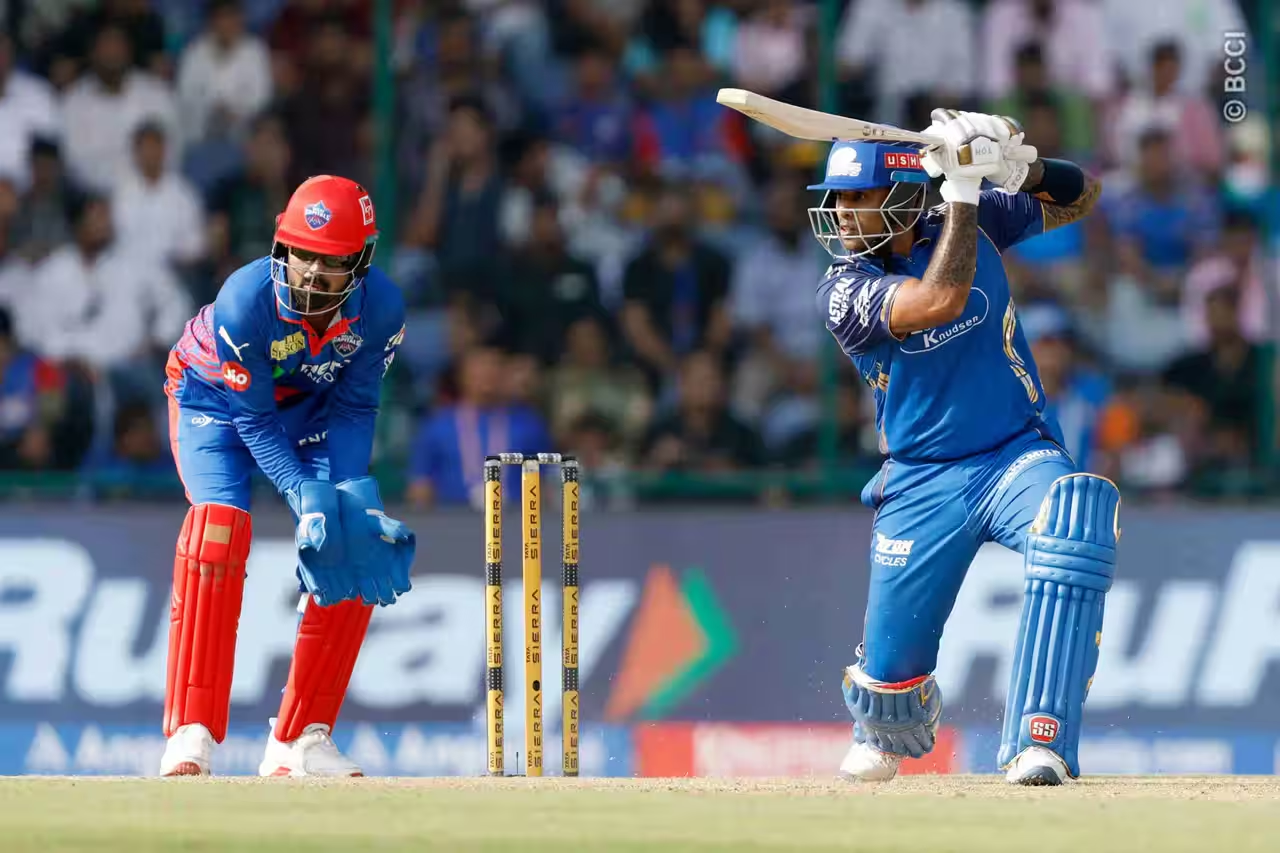
Mumbai Indians’ Suryakumar Yadav too has come under the radar because of his indifferent form in IPL 2026. Pics: BCCI
So, how does a struggling team cope, both collectively and as individuals, with all the “outside noise”? Among the many things, it is important to address this aspect because it is only the uncluttered mind that can deliver on the demands of a fast-moving top-tier sport.
Life in a bubble can be stressful
Insulation seems an obvious solution and has been tried in the past, but it can bring its own problems, not least that claustrophobic feeling of being cut off from the rest of society. Life in a bubble can be stressful. So, since quite some time now, teams have gone the other way, putting in place a system where the “outside noise” is allowed in but falls short of affecting players.
Team bonding ensures a hand on the shoulders of the struggling individual from fellow players and the support staff with words of encouragement that boost self-belief and reiterate the fact that poor form is but a passing phase.
That is why Chakravarty, woefully out of success over a long period, credits KKR’s coaching staff for keeping him on track. “They didn’t let the outside noise affect us, because there were too many people floating around with judgements, which were totally baseless. At such times, you need a strong core that supports you, and we have a very strong core that supports us,” Chakravarthy said.
It’s mind over matter. Always.