Exclusive
1948 Olympics: India’s golden display against France almost resulted in the greatest upset

At the 1948 Olympic Games in London, the Indian football team took part as a team from Independent India for the first time in history. As the eleven white shirted Indian players stepped onto the green grass of the Cricklefield Stadium in front of 17,000 spectators, they received a warm welcome from the Indians of UK, who had gathered there in large numbers to encourage the national squad. India’s first match was against France.
A total of 18 teams took part in the tournament which was conducted on a knock-out basis. Sweden eventually won the gold, Yugoslavia silver and Great Britain took the bronze.
The Indian team led by the legendary Talimeren Ao, India’s first captain who was a medical practitioner from Nagaland, was coached by Balaidas Chatterjee. In its warm up matches, the Indian team had won all the contests. It had beaten the London Metropolitan Police XI by a margin of 3-1 and then Pinner FC 9-1, Hayes FC 4-1 and Alexandra Park FC 8-2. So, expectations were high when India entered to battle against France in its first match of the Olympic Games.
Indians played barefoot
But the Indian players preferred to play barefoot because that is what they were accustomed to, in India. Only three players wore boots and among them was K P Dhanraj of Hyderabad. The other two were Taj Mohammed, who was born in Quetta but had his football career with Bhawanipore Club in Calcutta, and T Verghese who represented Tata Sports Club in Mumbai.

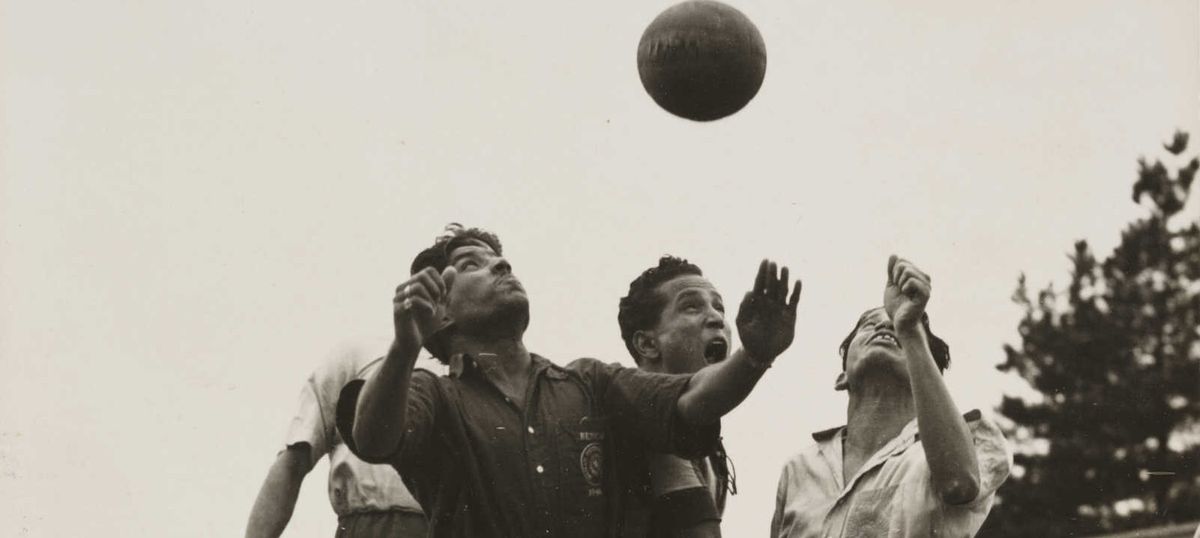
Stung by the setback, Indians fought with great determination and began attacking the French citadel with renewed vigour in their opening match of the 1948 Olympic Games. Pic: National Media Museum
Facing the barefooted Indians was France, one of the best teams in Europe. From the kick off, the French forwards made swift forays into the Indian territory but the Indian defence held firm. But in the 29th minute Rene Courbin (also known as Raoul Corbin) banged home the first goal for France.
Stung by the setback, Indians fought with great determination and began attacking the French citadel with renewed vigour. Now France was under pressure. The action swung from one end to another and France began to get desperate. In an effort to thwart the marauding Indian attackers, the Europeans resorted to rough play. Finally, following one such rough tackle within the penalty box, the Swedish referee Gunnar Dahlner awarded a penalty kick to India.
A good opportunity wasted
It was India’s golden moment. The Indian spectators stood up in eager anticipation of a goal. It was a historic moment unfolding before their eyes. Newly independent India was about to score its first goal in the Olympic Games. The task to take the kick was assigned to one of India’s greatest football legends – Sailen Manna. But perhaps the great man was a little overawed by the occasion. He shot powerfully but it was too high and went over the crossbar. The French players heaved a sigh of relief.

The famous Bangalore frontliner Ahmed Khan created an opening, by combining with B Vajravelu in a tricky move that crashed through the French defence. Pic: The Times of India
At half-time the score was still 1-0 in favour of France. But in the second half, India was in a confident mood. They knew they could pull off one of the greatest upsets of the Games. They continued to attack France relentlessly. In the 70th minute, success came at last. The famous Bangalore frontliner Ahmed Khan created an opening, by combining with B Vajravelu in a tricky move that crashed through the French defence. Khan then passed to Sarangapani Raman who banged the ball into the net without giving the goalkeeper any chance.
History had been created! That goal is still talked about whenever the great moments of Indian football are discussed. But more was to come. India continued to mount pressure on France. The strongly built Europeans were hard pressed to contain India’s fast moving front line. India had too many tricks up its sleeve and the Frenchmen, who were accustomed to play with European tactics, were all at sea.
Indians employed unusual techniques
The fact that Indian players were playing barefoot enabled them to flick the ball at unusual angles which the Frenchmen had never encountered. It was football’s equivalent of the wristy flicks that many Indian batters are expert at executing. Just as Indian batters use the pace of rival fast bowlers against themselves by flicking the ball stylishly by using their wrists, the footballers were doing it with their ankles.

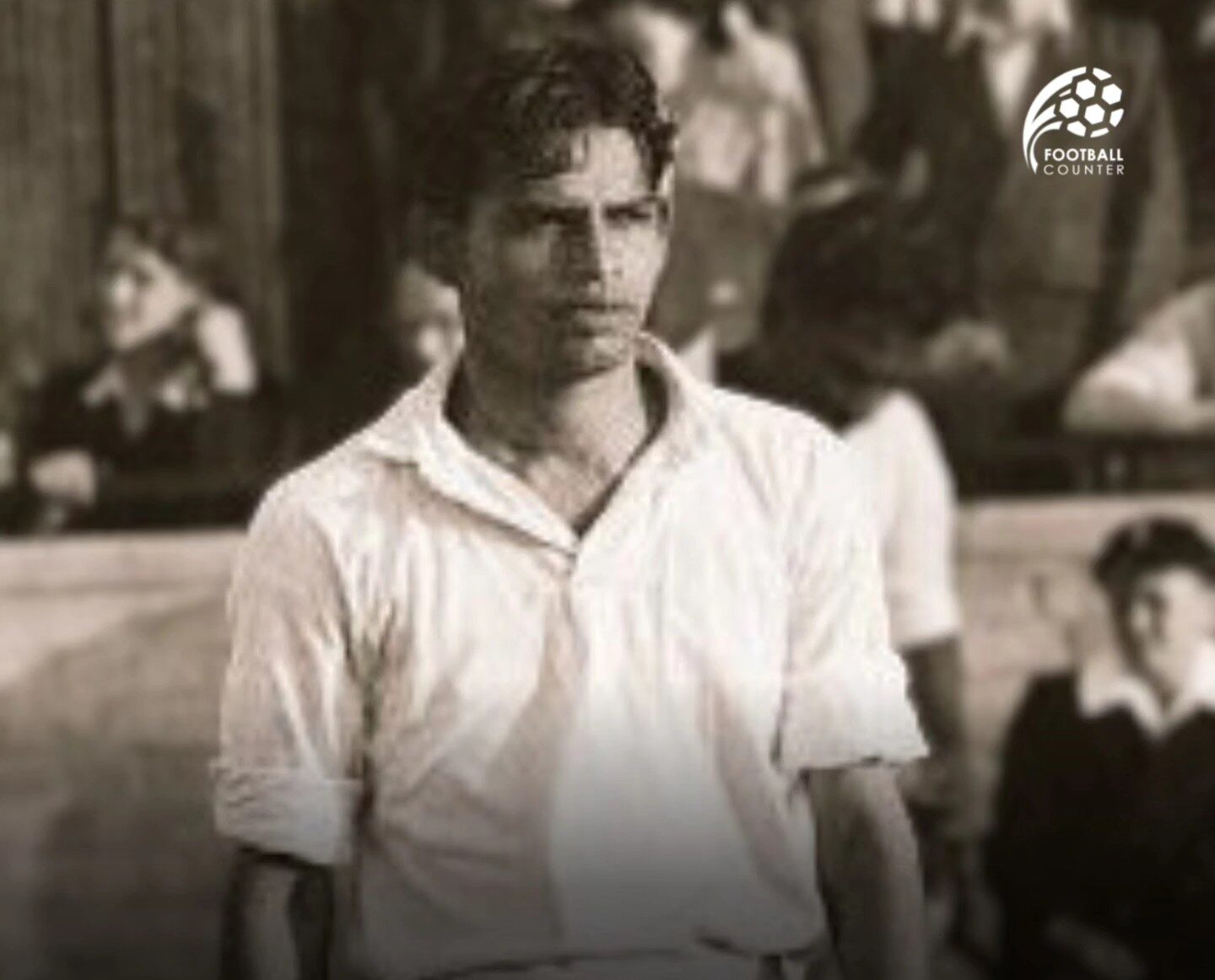
Sarangapani Raman scored the only goal for India against France
Such was the speed and precision of India’s short passing game that soon the entire crowd was on its feet. The atmosphere was electrifying. The Indian spectators were roaring and along with them the Englishmen too became excited. They were witnessing a brand of football that they had never seen before. Indian players were dancing circles around the leaden footed French defenders. Everyone wanted India to win because it would be a victory for an underrated team that was exhibiting extraordinary skill.
The French players ran helter-skelter from left to right and committed one foul after another in their desperation. They had no idea about how to counter the unfamiliar moves and unusual tactics of the Indian players who fashioned their techniques on the maidans of Calcutta (Kolkata). France’s ragged game and awkward attempts, soon resulted in one more penalty being awarded to India.
Indians waste another penalty
This time the skipper pointed to Mahabir Prasad and told him to take the shot. Mahabir Prasad, from Bihar, had been a member of the victorious East Bengal team that won the IFA Shield in 1946. He had also represented Bengal which won the Santosh Trophy in 1945-46. Skipper Ao felt that surely Prasad was a safe bet to convert the penalty.
But perhaps Prasad had in mind Sailen Manna’s error earlier in the match. Prasad was determined to keep his shot low. But what happened was that his shot was too low and goalkeeper Guy Rouxel grabbed the ball which was within his reach. The Indian players raised their hands in despair toward heaven as yet another fine opportunity went to waste. The crowd too was extremely disappointed and fell silent.
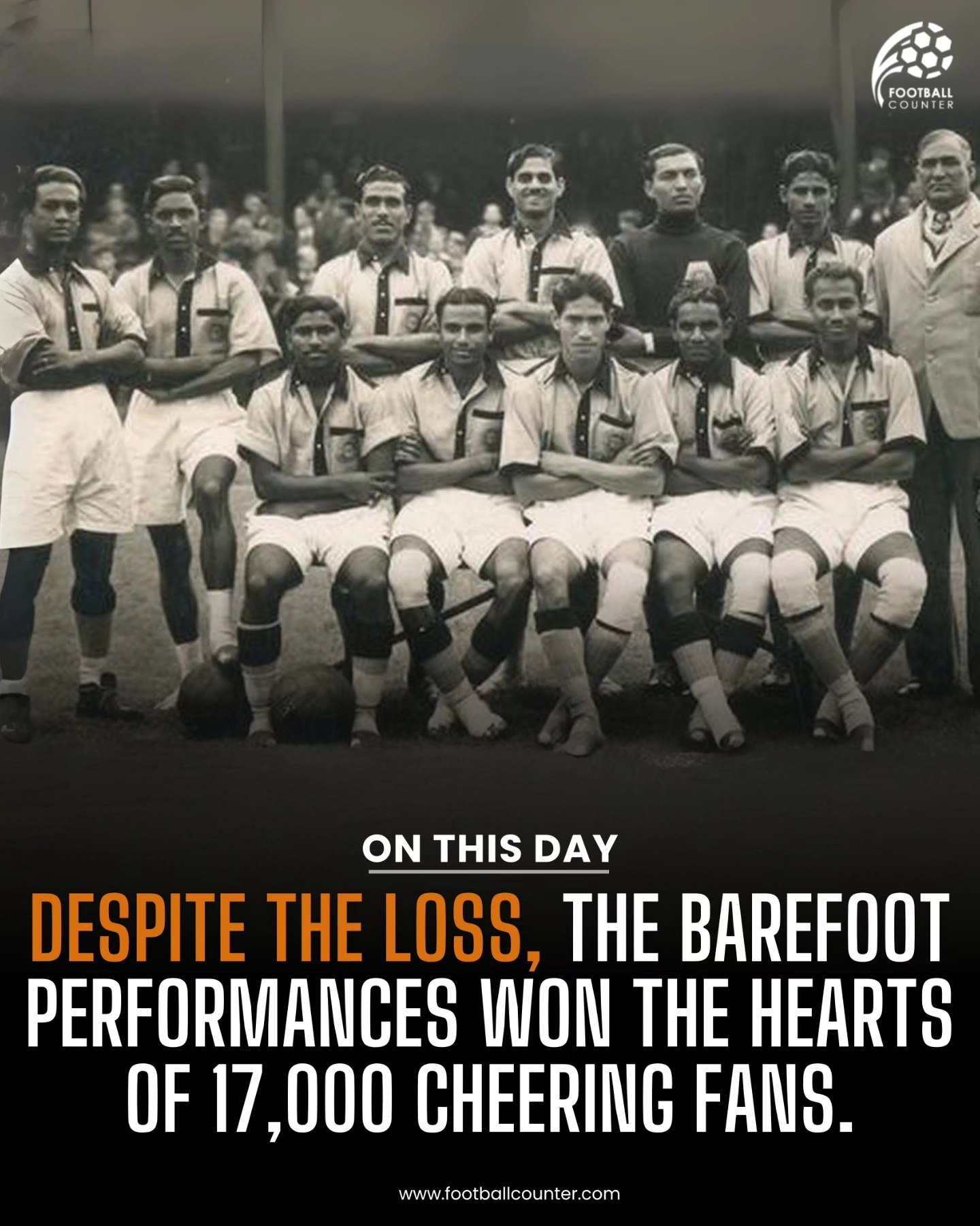

And as so often happens in such situations, it was France which got a chance late in the battle. As Indians pressed once again into the attack, even the defenders came forward to seek the goal that was eluding India. Under such circumstances, France found an opening and rushed through. It was Rene Persillon who got a clear shot at the goal. He beat the Indian goalie – the tall and strapping Varadaraj – with a deftly placed shot that entered the goal.
After that, there was no time left for India to draw level once again. India bowed out with a 1-2 loss. But had the two penalties been converted, it would have been 3-2 in favour of India.
India came to be known as the Brazil of Asia
However, the brilliance of the Indian players did not go unnoticed. Princess Margaret, sister of Elizabeth who later became Queen Elizabeth II, lavished praise on the Indian team. The reigning monarch, King George VI, invited the players to Buckingham palace. The English media was so enthralled by the display that they quickly dubbed India as the Brazil of Asia.
FIFA World Cup 2026: Argentina marching confidently but Brazil sadly in decline
The details of the extraordinary match were related by Hyderabad born K P Dhanraj to this correspondent when the famous player was alive. Dhanraj passed away in 1997. During his playing career in Calcutta, Dhanraj was one of the five great East Bengal players who were called the Pancha Pandavas. The others were Ahmed Khan, Appa Rao, Venkatesh and P B Saleh. Incidentally the entire group was from south India.
For the 1948 Olympic Games, two players from Hyderabad had been picked initially. One was Dhanraj and the other was Norbert Fruvall, coach and captain of Hyderabad City Police. But the players were told that they would have to generate funds on their own.

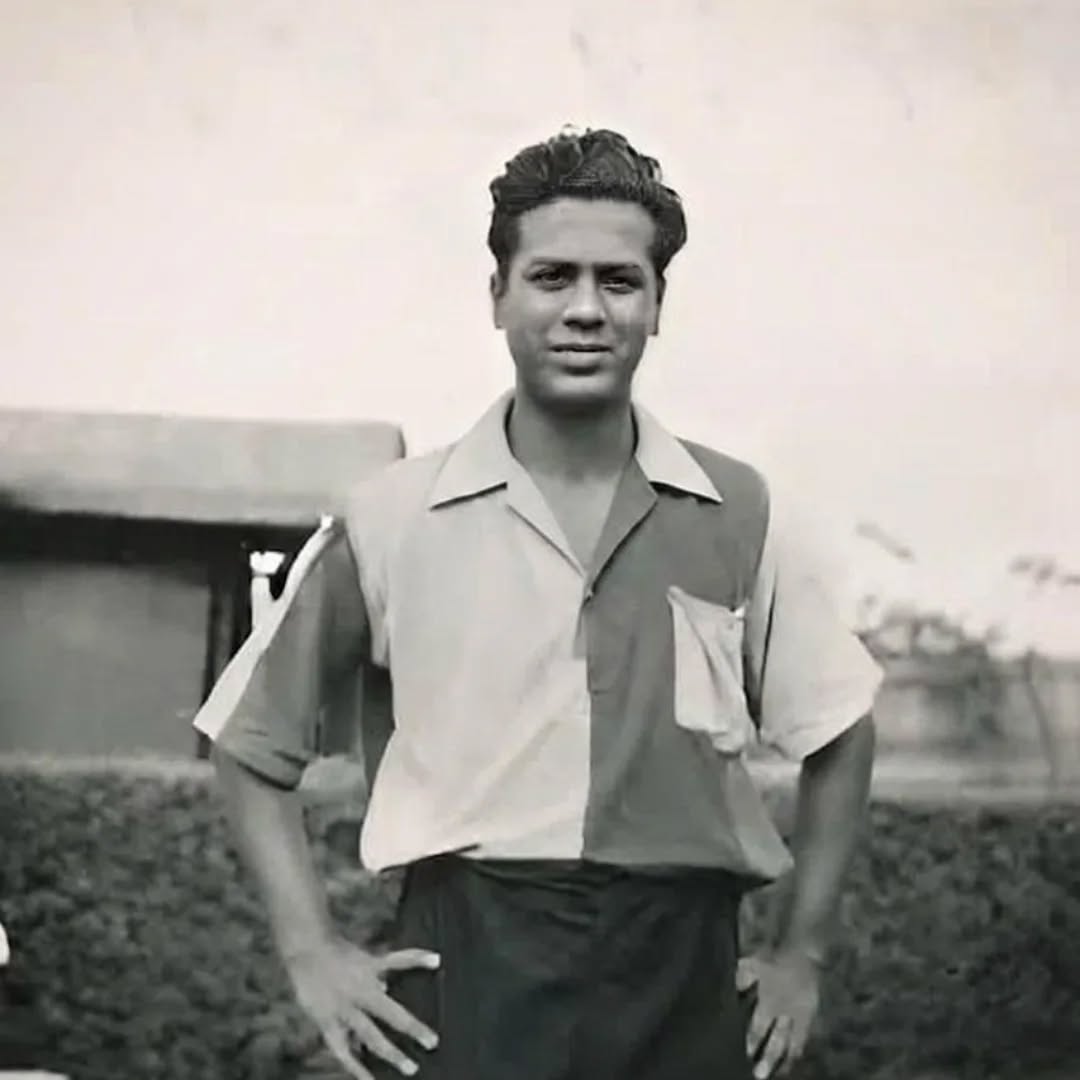
Hyderabad footballer KP Dhanraj
There was a grave shortage of finances at the time and many athletes had to arrange their own money to take part in international events. Dhanraj managed to procure some funds from various quarters, but Norbert Fruvall was not able to do so. Therefore, with a heavy heart, he had to pull out of the squad.
Many years later, his son Conrad Fruvall became a good cricketer and was selected for the Indian school boys’ team in 1973. He also played in several Moin Ud Dowla Gold Cup matches in Hyderabad before moving to Australia.
Following were members of the famous 1948 squad: Talimeren Ao (captain), K V Varadaraj, Sailen Manna, Sahu Mewalal, Ahmed Khan, Mahabir Prasad, Sarangapani Raman, K P Dhanaj, Anil Nandy, B Vajravelu, Santosh Nandy, Robi Das, Taj Mohammed, Sattar Basheer, Ramachandra Parab, S M Kaiser, T Verghese, Sanjeeva Uchil. Coach: Balaidas Chatterjee.