Published: April 1, 2026 at 6:22 pm
Today, April 1st, marks the 85th birth anniversary of one of India’s most successful cricket captains, Ajit Laxman Wadekar. His greatest achievements were the two victories that India chalked up in 1971, the first in the West Indies and the second one in England. As a top order batter, he was an elegant left hander who played 37 Tests, scoring 2113 runs with a century at an average of 31.07.
His batting statistics may have been modest, but it was his captaincy that made a big difference. As a captain, Wadekar’s tenure was a glorious albeit brief one. He led India in 16 Test matches and gave the team a new direction.
Hyderabad’s Famous Five who helped India defeat West Indies and create history
The first of his outstanding feats, beating the mighty West Indies on their home ground, gave immense pride and confidence not only to the team members but also to the millions of cricket lovers back home. On that occasion, the team was on tour in the Caribbeans when Wadekar’s birthday came up.
The West Indians celebrated his birthday
The fourth Test of the series, at the Kensington Oval in Barbados, began on Wadekar’s birthday. The fun-loving West Indians decided that they would celebrate Wadekar’s birthday in style. Before the start of play, West Indies skipper Gary Sobers brought a cake onto the ground and asked the Indian captain to cut the cake while they all sang and clapped. “I can never forget that gesture. It was a pleasant surprise from the opposition team captain,” recalled Wadekar many years later.
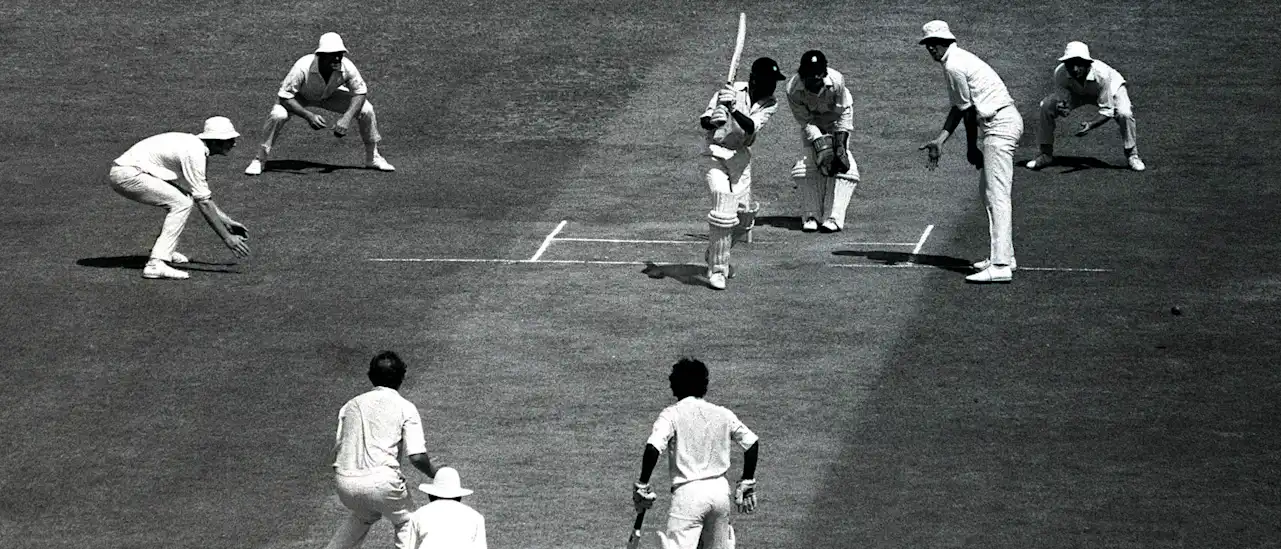
Ajit Wadekar’s batting statistics may have been modest, but it was his captaincy that made a big difference. As a captain, Wadekar’s tenure was a glorious albeit brief one. He led India in 16 Test matches and gave the team a new direction. Pic: ICC
The series can be deemed a landmark in Indian cricket in many ways. It was India’s first-ever Test victory and Test series win over the West Indies. The series marked the international debut for Sunil Gavaskar, who went on to be recognised as one of the greatest batters in India’s cricket history. The Little Master as he was called, scored heavily in this series, and chalked up four Test centuries and a double century. He topped the scorers list on both sides with an aggregate of 774 runs.
Vijay Merchant’s casting vote changed history
But before it all began, there was a controversy that threatened to cause friction within the Indian team. With the selection committee divided over the post of captaincy, chairman of the selectors, Vijay Merchant’s casting vote was decisive in appointing Wadekar, instead of retaining the previous captain MAK Pataudi. However, despite initial doubts about his leadership qualities, Wadekar proved to be the right choice.
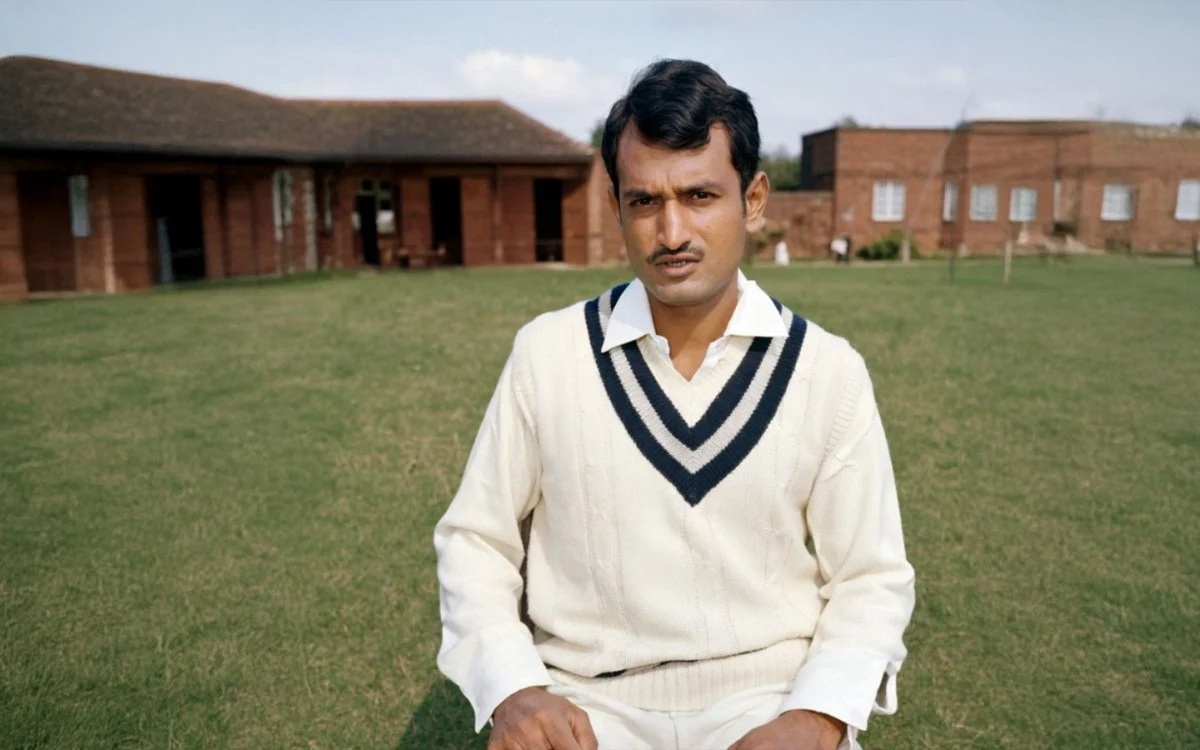
Celebrated cricket writer Suresh Menon once wrote that Ajit Wadekar gave the finishing touches to the team that was built by MAK Pataudi. Wadekar went from being a quiet, soft-spoken left-hander to a captain celebrated across India. Pic: IANS
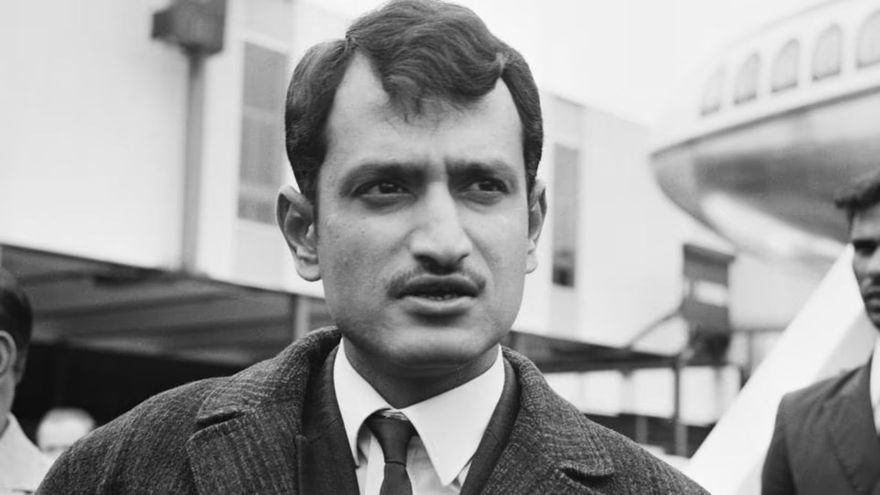
Celebrated cricket writer Suresh Menon once wrote that Wadekar gave the finishing touches to the team that was built by MAK Pataudi. Wadekar went from being a quiet, soft-spoken left-hander to a captain celebrated across India. It was Wadekar, who insisted on the inclusion of Dilip Sardesai in the team, against the wishes of chairman Vijay Merchant.
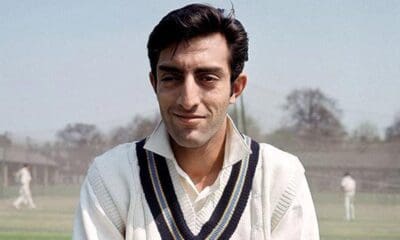
In retrospect, Wadekar’s decision turned out to be the right one. Sardesai made 642 runs and along with Gavaskar’s 774 runs, formed the rock on which the India batting stood. Wadekar understood the importance of mixing experience with youth. So, he turned to guidance from the legendary Hyderabadi M L Jaisimha and Salim Durrani.
Salim Durrani’s keeps his promise
There is a famous story about a conversation between Wadekar and Durrani during the crucial second Test which India won. After gaining a good first innings lead of 138, the visitors badly needed to restrict the flamboyant West Indies batters in the second innings. After the third day’s play had ended and the players were planning strategy for the next day, Durrani approached Wadekar and said: “Skipper, if you allow me to bowl tomorrow, I promise I will get you the wickets of Clive Lloyd and Gary Sobers.”
https://x.com/CricketopiaCom/status/2039175000239046715?s=20
Everyone laughed. But little did they know that Durrani meant it very seriously. The next day he did pull off the unbelievable double strike that shattered the spine of the West Indies batting. After dismissing the dreaded duo, Durrani handed the ball back to Wadekar and said: “No more bowling for me captain. I’ve done what I had promised I would do.”
For the rest of the series, India managed to hang on to that solitary one-match lead and finally returned to India with a historic triumph under their belt.
The historic win in England but Govindraj ignored
Later that year, India set off on a tour of England. At Wadekar’s insistence EAS Prasanna was omitted from the side. The move led to criticism from different quarters and heartbreak for Prasanna, who till then had been the spearhead of the Indian attack with 100 wickets in his first 20 Tests.
Instead, Wadekar’s kingpin in England was B S Chandrasekhar. In support were S Venkataraghavan and Bishan Singh Bedi. However, why Wadekar ignored the claims of Hyderabad’s best pacer D Govindaraj both in the West Indies as well as in England, has remained a mystery. He was in the squad but not selected in the eleven. It was a time when India badly needed fast bowlers and Govindaraj could have been very useful to the team.
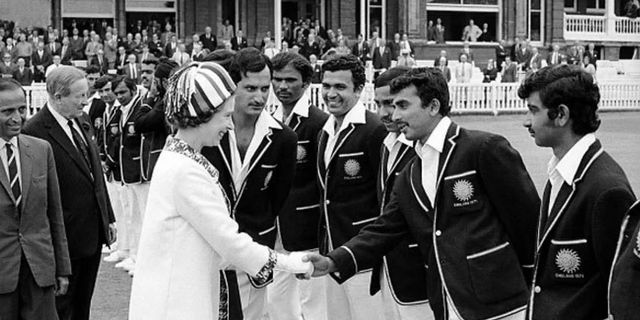
Indian captain Ajit Wadekar introducing his team to Queen of England during the 1971 tour to England
But when India won the three-match series 1-0 with a historic win at The Oval, all was forgotten and forgiven. After the first two matches had been drawn, India won the third and final Test to seal the win. In England’s second innings, Chandrasekhar’s magnificent 6 wicket haul for 38 runs put India in the driver’s seat and the next day India duly went on to win. It did so with a flourish as another Hyderabadi Abid Ali banged a delivery from Brian Luckhurst to the fence.
Thereafter England, under the captaincy of Tony Lewis, toured India and lost a five match Test series by 2-1 to Wadekar’s Indian side. It was a continuation of the success that the team had achieved earlier. Farokh Engineer with 415 runs and B S Chandrasekhar with 35 wickets were the top performers for India. Indian fans were enthralled and felt that nothing could go wrong with this side.
1974 debacle turns Ajit from hero into a villain
But all the euphoria and high spirits came crashing down in 1974 when India toured England. India played three Test matches and two ODI matches and lost every one of them. In many ways, the tour was a disaster. The reasons for this sudden turn-around in India’s fortunes and performances have been attributed to many causes.

The ignominy of that resounding defeat (later termed as The Summer Of ’42 after a Hollywood film), sparked off calls to sack skipper Wadekar. Those who had hailed him as a messiah in 1971, began to look upon him as the repository of all evils. Pic: First Post
For one thing, India toured in the early part of the English summer in April and May when it was cold and wet. The damp conditions were unsuitable for the spinners Bedi, Chandra, Prasanna and Venkat. The ball moved excessively off the seam and through the air, favoring England’s pace attack. India’s spin quartet, which accounted for 37 wickets in 1971, this time managed to take only 15 wickets at 67.46 in 1974.
Then, the Indian batters struggled to cope with the seam movement. In the second Test at Lord’s, after conceding a massive 629, the batsmen crumbled to 42 all out in 17 overs, a total that was at the time the lowest in a Lord’s Test. The ignominy of that resounding defeat (later termed as The Summer Of ’42 after a Hollywood film), sparked off calls to sack skipper Wadekar. Those who had hailed him as a messiah in 1971, began to look upon him as the repository of all evils.
Mike Brearley’s theory on captaincy
Former England captain Mike Brearley who is widely considered one of the greatest captains in cricket history, has written in his book ‘On Form’ that a captain may be in or out of form from one series to another, just like a batsman or a bowler. Sometimes every decision goes right and sometimes they all go wrong. That’s what seems to have happened with Wadekar.
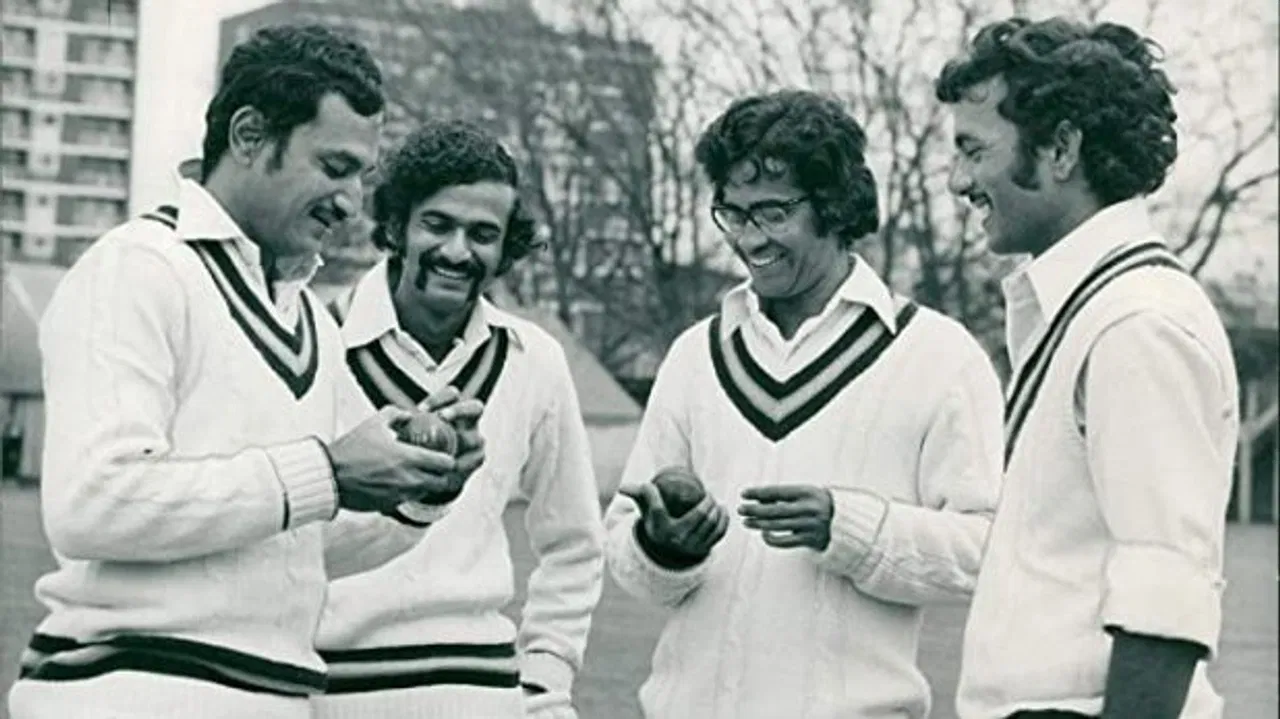
In 1974 Ajit Wadekar had a run of bad luck when everything went against him. He was a calm and astute leader who brought about a family-like atmosphere in the team. He utilized his spin quartet very effectively
After this disastrous tour, Wadekar decided to resign. But to be fair to him, Wadekar was a good captain. In 1974 he had a run of bad luck when everything went against him. He was a calm and astute leader who brought about a family-like atmosphere in the team. He utilized his spin quartet very effectively. Above all, he instilled the Mumbai cricket culture of stubbornness and resilience, which was pivotal in fighting back in difficult overseas conditions. History will remember him as a soft-spoken gentlemanly captain who gave India two victories that will never be forgotten.