Published: January 14, 2026 at 12:42 pm
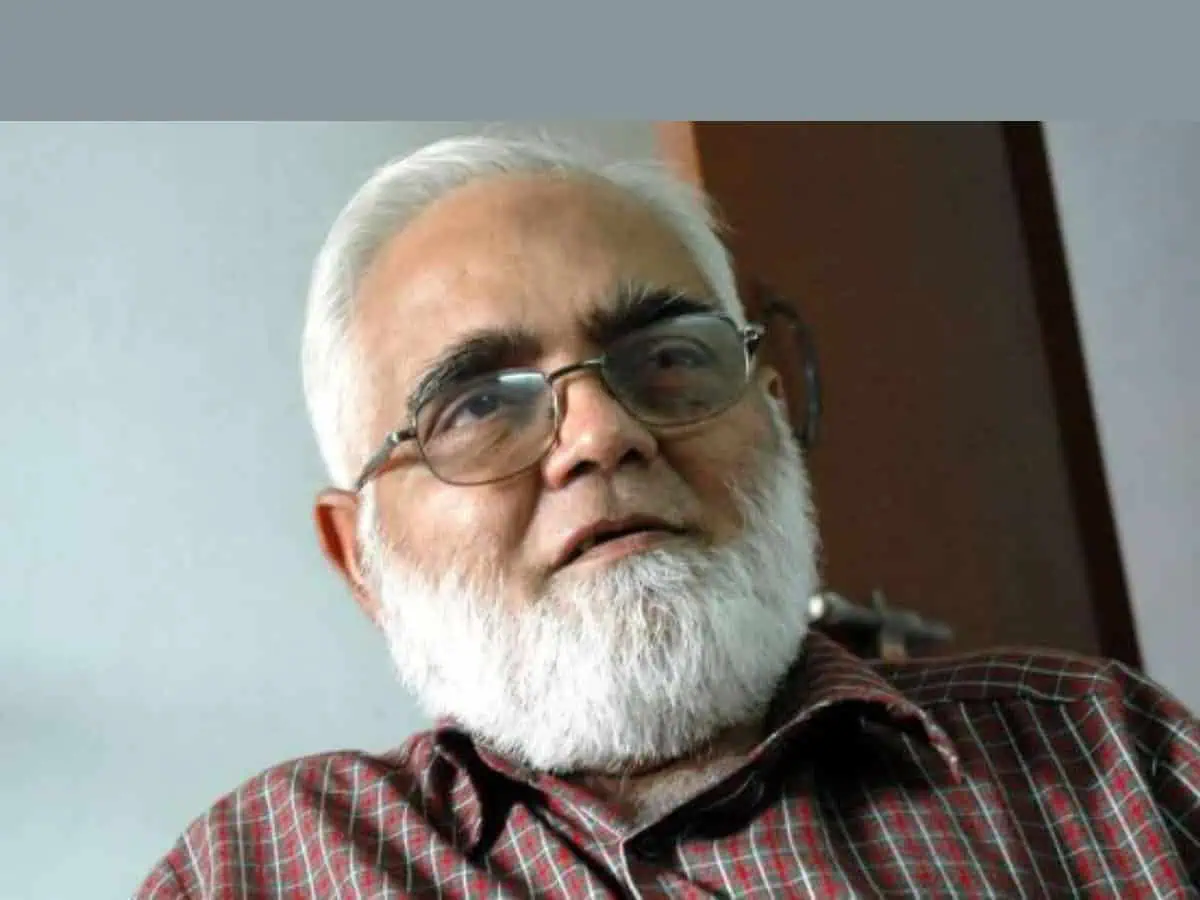
Nowadays when India’s chess players are on top of the world, it is the right time to remember the services of Nasiruddin Ghalib, who was one of the pioneers in developing and popularising chess in the twin cities of Hyderabad and the Telangana region. Ghalib was widely acknowledged as a master of end game strategy. He was also a one-time mentor for Viswanathan Anand during the chess champion’s formative years.
If players from the two Telugu speaking states such as D Gukesh, Arjun Erigiasi, Koneru Humpy, P Harikrishna and D Harika have reached the top, it’s because the foundation was laid long ago by Ghalib and his contemporaries.
The grey haired and bearded Ghalib was an affable, friendly and polite person. Despite being one of the leading names in the Indian chess scene during his heyday, he had no airs. He lived only for chess. As long as he could play and teach others the intricacies of the game, he was happy. Nothing gave him greater pleasure than discussing the latest developments in world chess.
When he served as the secretary of the All India Chess Federation, he was respected by the entire chess fraternity for his integrity and vast knowledge of the game.
It is said that Ghalib’s forefathers were patronized by the Nizam himself because they had financed several projects within the dominion of Hyderabad state. The family had business dealings with the immensely wealthy Sultan of Brunei and the Agha Khan.
Ghalib’s early life in the old city
Ghalib’s earliest study of the game of chess came at the hands of Hakeem Nasir Ahmed, a famous chess player of his days. He did B. Com from Anwar-ul Uloom College but during his college days he spent most of his time in libraries and book shops digging out books on chess and reading about its intricate moves. In the evenings he spent hours with his friends, again engaged in chess discussions, at the Mohammadia Hotel in Hussaini Alam locality of the city.
He first qualified to play in the national championship in 1961 but was prevented from doing so by the then AICF officials who ruled that he was underage. But the next year he entered the national championship and rose to the top. Between 1969 and 1978 he was at his best. He consistently placed among the top five in India.
Ghalib shared rare bond with Anand
Later, he coached the famous Khadilkar sisters. The three sisters named Jayashree, Vasanti, and Rohini, dominated the Indian women’s chess championships for one whole decade and won all the titles. In 1984 Vasanti won the British Ladies championship in England. Much of her success was due to the coaching that she received from Ghalib.
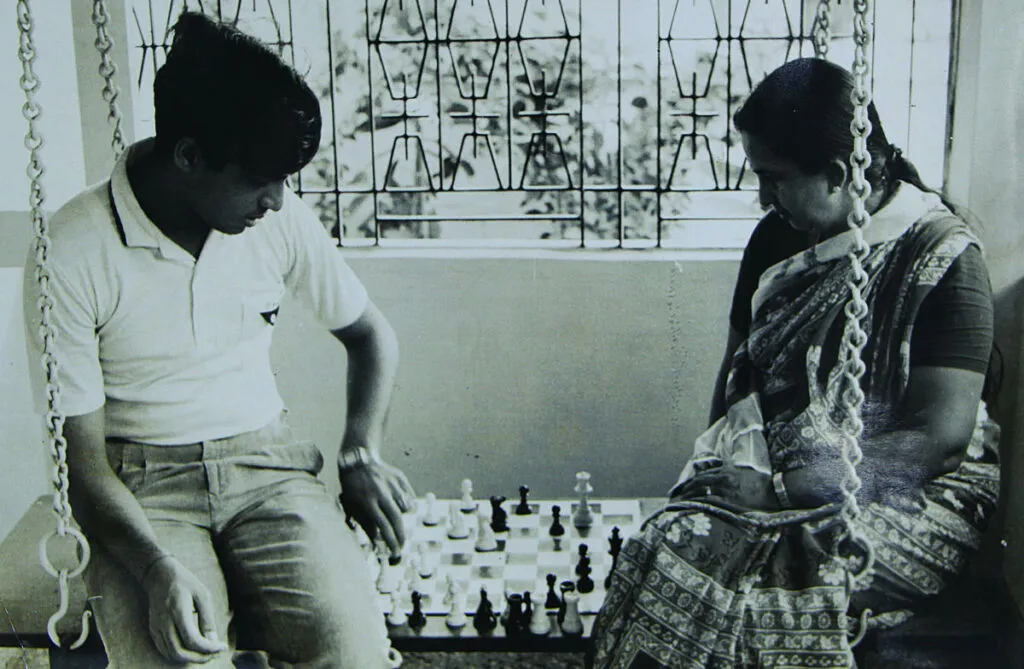
Not many people know that it was Ghalib who arranged to send Viswanathan Anand’s mother with him as his “second” to international tournaments so that Anand would be mentally comfortable
With another of his trainees, namely Viswanathan Anand, Ghalib shared a rare bond. Not many people know that it was Ghalib who arranged to send Anand’s mother with him as his “second” to international tournaments so that Anand would be mentally comfortable.
At every chess tournament in Hyderabad, Ghalib was always to be seen. He would study the moves, encourage the youngsters and solve disputes by using his powers of persuasion. He never spoke harshly to anyone. His knowledge of the rules of the game were unmatched and no one questioned his judgements.
Playing a tournament to buy air ticket
Ghalib once told this correspondent about one of the many unusual occurrences that had happened in his life. When Ghalib was a young man, he had gone to France and Spain to carry out some business-related work. However, the task proved to be extremely difficult, and it did not go as he had planned.
At the end of a month, he found that he had exhausted all his financial resources and had no money even to buy an air ticket to return to India. That was when he spotted a news article in one of the newspapers which mentioned that a chess tournament was to take place soon and a substantial prize money would be offered to the winner.
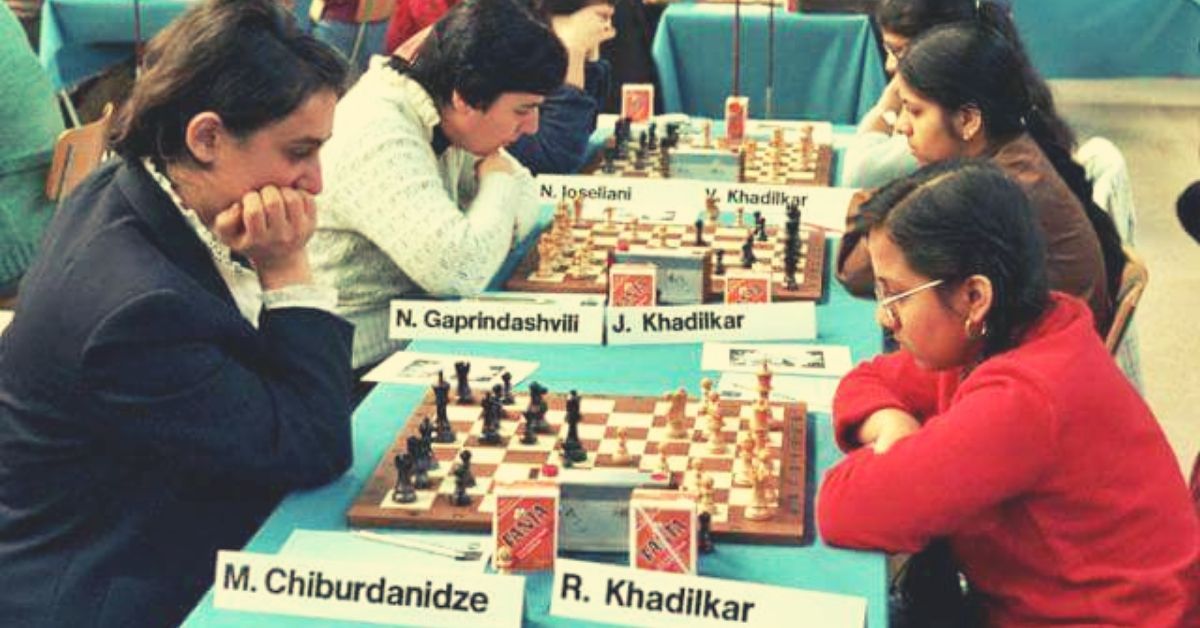
Ghalib coached the famous Khadilkar sisters. The three sisters named Jayashree, Vasanti, and Rohini, dominated the Indian women’s chess championships for one whole decade and won all the titles
Ghalib decided to enter the competition. He badly needed to win the tournament. That was the only way he could solve his financial problem. The best players of Europe were taking part in the event but none of them was as desperate as Ghalib.
Fighting with his back to the wall, Ghalib pulled out one of the best efforts of his life when it mattered most. Playing brilliantly, he defeated one opponent after another and was finally declared the winner. The prize money was enough for him to buy a return air ticket and he also had something left over to enjoy after returning to Hyderabad.
Ghalib praised by Mikhail Tal
Ghalib’s moves and planning in that tournament drew immense praise from Mikhail Tal of Latvia, a Grandmaster and former world champion who is considered one of the greatest legends in the history of chess. “Even the world’s most famous player Mikhail Tal praised my game. I will never forget that day,” Ghalib proudly told this correspondent after narrating the story.
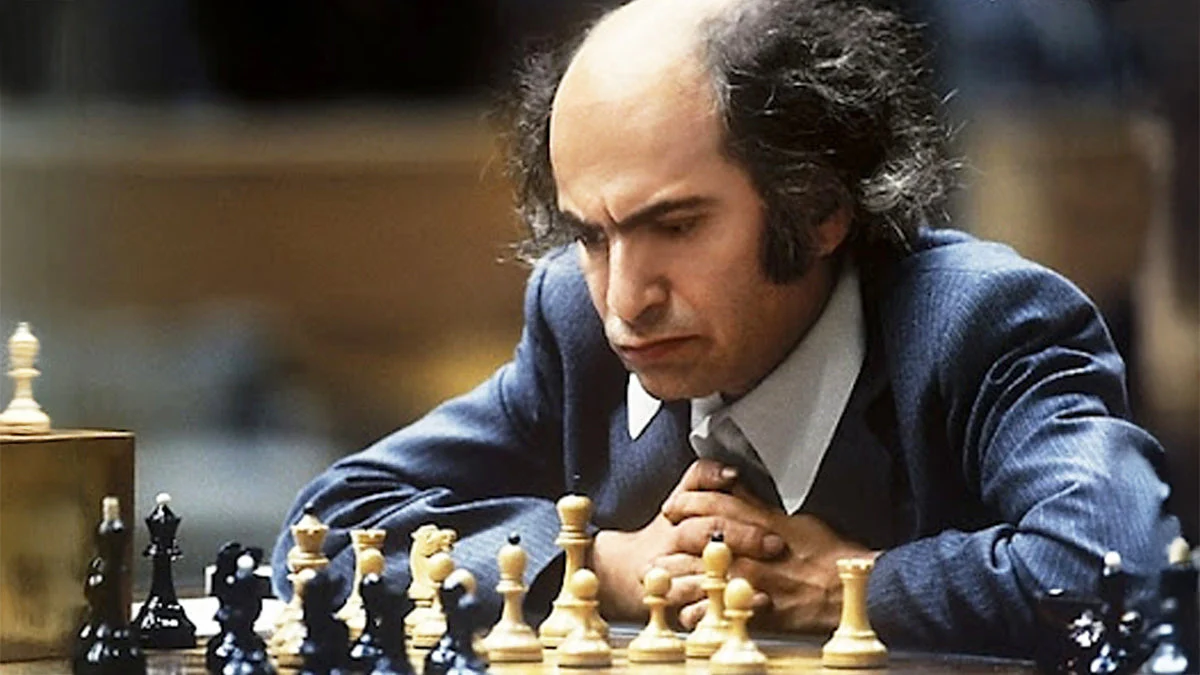
Ghalib’s moves and planning drew immense praise from Mikhail Tal of Latvia, a Grandmaster and former world champion who is considered one of the greatest legends in the history of chess
After retiring as a player, Ghalib served as the secretary of the All India Chess Federation for some time. He also coached a few trainees. When the world chess championship quarterfinal matches took place in Sanghinagar near Hyderabad, he was appointed as one of the arbiters (referees).
Ghalib encouraged players’ to be fit
He was one of the earliest chess experts who realised the importance of physical fitness for chess players. He used to advise his trainees to eat only light meals. Heavy, oily and spicy foods make the mind stagnant and dull, he used to tell them. Sadly, in his late sixties, this man with a brilliant mind was diagnosed with cancer and he passed away in 2016 at the age of 69 after a long battle with the dreaded disease.