Published: April 22, 2026 at 12:35 am
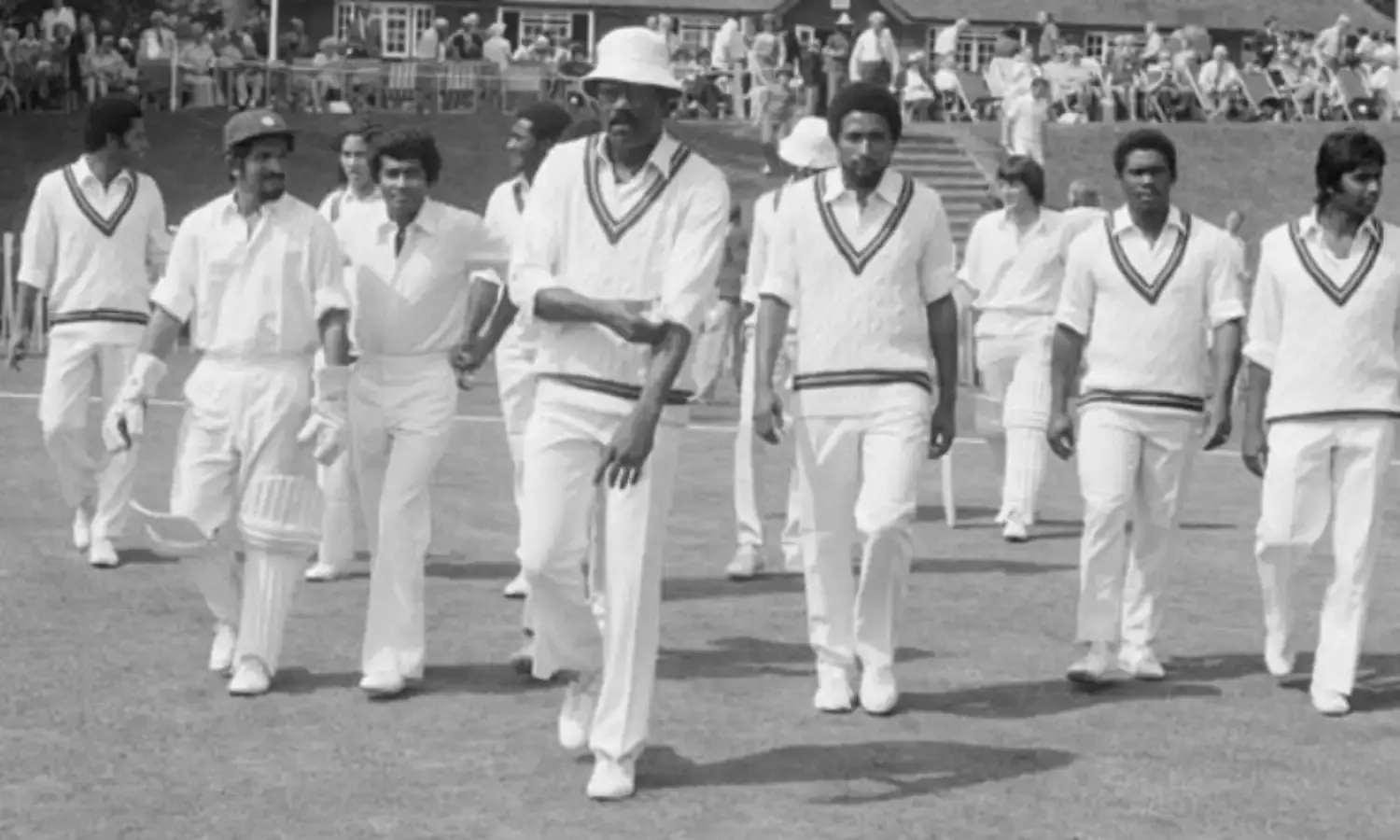
West Indies captain Clive Lloyd had a big role to play in one of the most controversial matches in the history of Test cricket which began on April 21 in 1976. The match in question was the 4th and last Test of the series between India and the West Indies that was played at Sabina Park in Kingston, Jamaica. The reason why it became such a contentious event was because the home team skipper Clive Lloyd unleashed the full fury of his fast-bowling army and left five Indians badly injured.
For Lloyd it was an experiment which succeeded and thereafter he decided to adopt the same tactics in all the matches that followed. Armed with a battery of fast bowling greats, Lloyd’s reign was one of terror for all opposing batters. For at least two decades thereafter, West Indies ruled the cricket world by relying mainly on outstanding fast bowlers and hard-hitting batters. It all began on this day five decades ago when India faced the West Indies.
https://x.com/RSingh6969a/status/2045744643368005825?s=20
But to get the full picture, one must go back in time. In 1975-76, the Caribbean islanders had gone on a tour of Australia soon after their glorious victory in the 1975 World Cup in England. The Windies had defeated the Aussies by 17 runs and so the Aussies were looking for revenge when the islanders landed on their shores.
Mike Holding went into depression
As expected, led by the fast-bowling duo of Dennis Lillee and Jeff Thomson, the Aussies thrashed West Indies 5-1. The visiting team’s batters were thoroughly battered by Lillee and Thomson who consistently maintained a menacingly short length to intimidate them. Among the West Indies debutants was 21-year-old Michael Holding, who had a torrid time even though he was a tailender. By the time the tour ended he was depressed and would often break into tears.
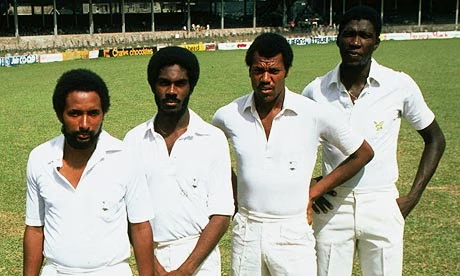
From left: Andy Roberts, Michael Holding, Colin Croft and Joel Garner of West Indies before the first Test against England in Trinidad in 1981. Pic: Getty Images
After the players returned to their homes, skipper Lloyd faced flak. Many experts in the media called for his immediate sacking. The players themselves were divided. Dissension was rife in the dressing room. So, the quiet, bespectacled giant was under immense pressure. It was only due to the support of a few well-wishers, that Lloyd retained his captaincy when India began their tour in 1976.
It was under this backdrop that the Indians began their four-Test series in the West Indies in late February 1976.The first Test was won by the home team and the second was a draw. But in the third Test, a remarkable thing happened.
India’s record chase in the third Test
West Indies won the toss and batted first to score 359. Viv Richards led with a sound 177. In reply India scored 228 as Michael Holding took six for 65. In their second outing, the host team coasted to 271 for six (Alvin Kallicharan 103 not out) before skipper Lloyd declared the innings. He felt that a target of 403 runs for India in the fourth innings was out of reach for the visitors. And it also gave his bowlers enough runs to go for wickets and to beat India.
But that was when things began to go wrong for Lloyd. Opener Sunil Gavaskar compiled a typically sound 102 in 245 minutes and Gundappa Vishwanath at No.4 followed up with 112. In between was Mohinder Amarnath’s 85. India reached the target for the loss of only four wickets. Two of these were run outs. The other two wickets went to left-arm spinner Raphik Jumadeen. All the other bowlers drew a blank.
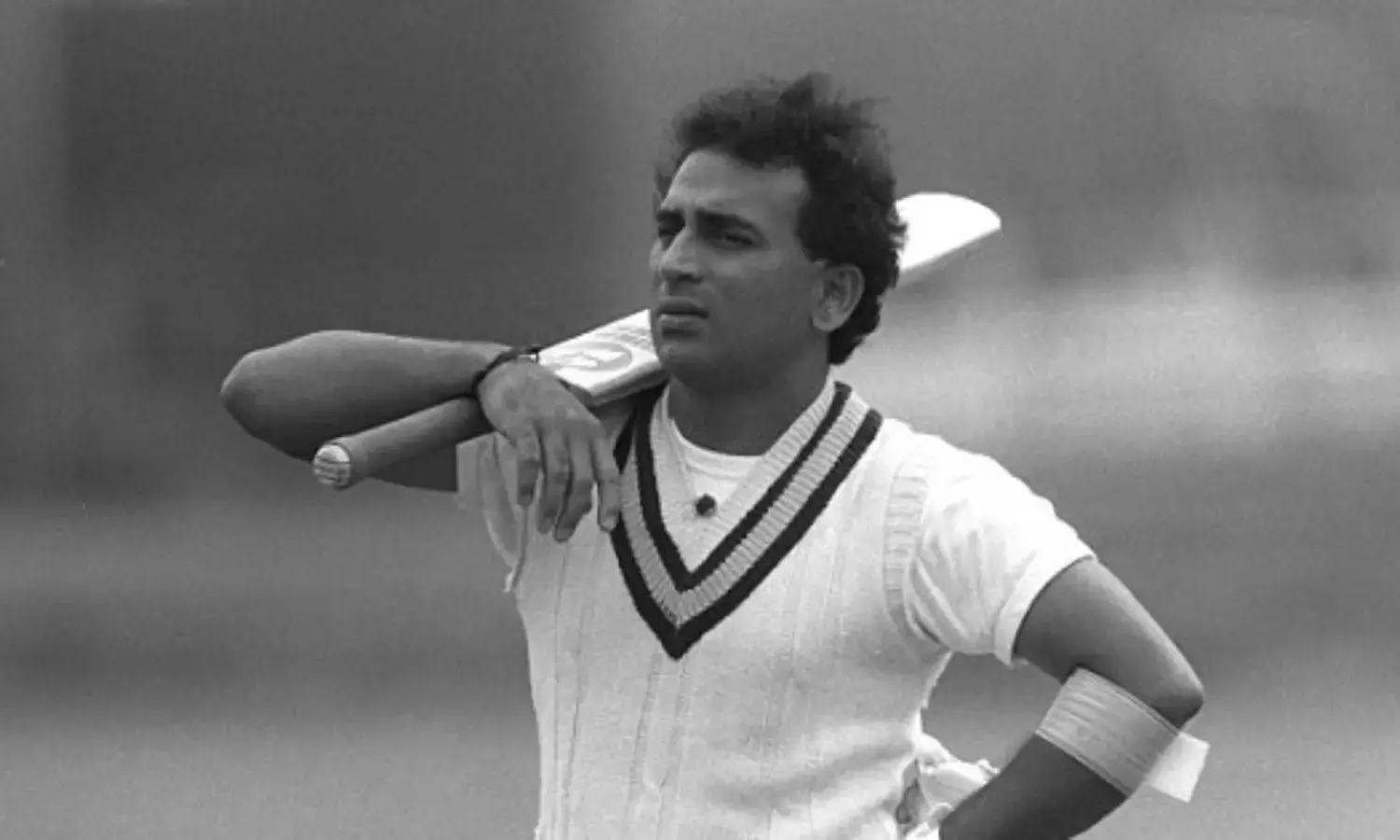
Sunil Gavaskar led the record chase in the third Test with a typically sound 102 and Gundappa Vishwanath at No.4 followed up with 112
Lloyd was livid. As soon as the match ended, he called his bowlers together in the dressing room and said: “Gentlemen, I gave you 400 runs to bowl at and you failed to bowl out the opposition. How many runs must I give you in the future to make sure that you get the wickets?”
Lloyd felt it was time for a change
English author and cricket writer Simon Lister has described the scene in his book “Fire In Babylon”. Lister writes that among the awe-struck listeners was a 20-year-old debutant Wayne Daniel whose home lay in St Phillips parish in Barbados. He was in the team but not in the playing XI. Daniel recalled to Lister: “Lloyd was fuming. It wasn’t his style to pick on individuals but for the first time he let himself go.”
For the next match at Sabina Park, Lloyd decided to dispense with slow bowlers. He felt that the spinners at his command were not of the required quality and he was forced to play them because of the convention that cricket teams always included at least one slow bowler.
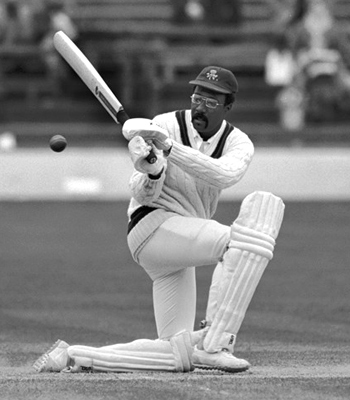
Lloyd felt it was time to change. He felt that West Indian strength lay in their crop of young fast bowlers, and the experiences of his team in Australia had demonstrated how high-quality and hostile pace attack could intimidate the opposition batting.
What Deryk Murray told Simon Lister
Wicket keeper Deryck Murray explained to Simon Lister: “We used to pick our teams in the standard format. Two openers, three in the middle order, an all-rounder, a keeper, two fast bowlers and two spinners. But after this, we had to take another look at our policy. If we didn’t have good spinners and had great fast bowlers, so be it. We would go with fast bowlers only.”
With the series at 1-1, for the final Test at Kingston, the West Indies picked a four-pronged pace attack of Michael Holding, Wayne Daniel, Bernard Julien and Vanburn Holder. There were no spinners in the line-up.
Bowlers targeted the body instead of stumps
The Sabina Park pitch had variable bounce and a sudden storm erased about two hours of play. Moreover, it further worsened the conditions. However, the Indian batters played with sound defence to grind out 178 for 1 at the end of the first day’s play. The next morning the West Indian bowlers began to attack the Indian batters from around the wicket, targeting the bodies instead of the stumps.
After Mohinder Amarnath was dismissed by a short-pitched delivery (caught by Julien off Holding for 39), Gundappa Viswanath’s finger was broken by a delivery from Holding off which he was also caught by Julien. Brijesh Patel was hit in the face and had to retire hurt. Thereafter Anshuman Gaekwad, who had batted bravely to reach 81 not out, was subjected to a bumper barrage.
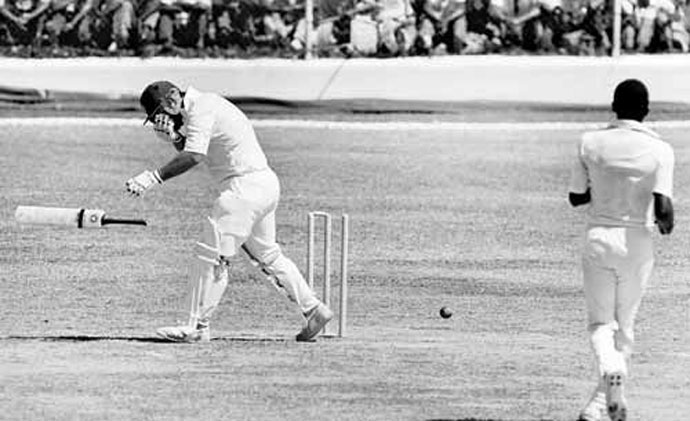
This was a time when there were no restrictions on bouncers and there were no helmets. The umpires watched the proceedings without batting an eyelid as the lightning fast Holding and Daniel sent the ball hurtling at the batter’s face again and again. Soon enough they found their mark. After being hit on the glove and on the body, Gaekwad was finally felled by a bouncer which hit him behind the left ear. He had to be taken to hospital.
The Indian captain Bishen Bedi and senior players including Sunil Gavaskar, were incensed by the West Indian tactics. They felt that the umpires Douglas Sang Hue and Ralph Gosein could have stopped this massacre, but they had refused to intervene.
Sporting spirit goes out, animal instincts come in
Gavaskar was particularly upset that the local crowd had chanted ‘kill him’ as Holding had bowled to Gaekwad and had cheered when the Indian batter was lying on the ground. Cricket had taken a back seat and animal instincts had taken over.
Bedi declared the innings at 306 for 6, partly out of protest and partly because he did not want any more injuries in the team. The West Indies scored 391 in their first innings, and when India went out to bat again, they slumped to 97 for 5. At this point Bedi announced that the Indian innings was over.
He was without the three batters, who had been hit in the first innings, and stated that both he and Chandrasekhar had picked up fielding injuries and that consequently five Indian batters should be recorded as ‘absent hurt’.
The West Indies were left with the formality of scoring 13 runs to win the Test which they did comfortably. But the question that arose was: Were such tactics justified? Was it in keeping with sporting spirit?
What Holding said about it later
The chief executioner Michael Holding admitted later: “On that surface it was inevitable that some batsmen would be hit against such a pace-based attack as ours, especially as we adopted the tactic of bowling round the wicket, aiming the ball at their bodies. I was not too keen on this method since it gives the batsman little chance of avoiding a bouncer, but it was 1–1 in the series and we were under extreme public pressure to win.”
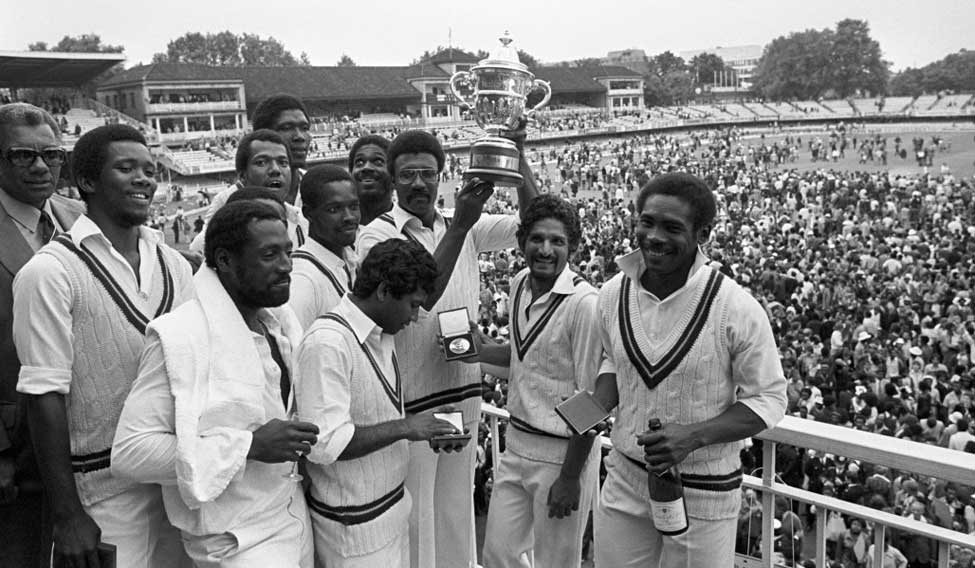
Official complaints were made by the BCCI about the West Indian tactics in the final Test but to no avail. After this victory, Clive Lloyd realised that his experiment had worked. He had unearthed a new strategy based on an attack of four fast bowlers. It was to prove successful in the next series which ended in a three-nil victory over England.
Thereafter, this four-pronged pace attack provided the foundation for the West Indian dominance of Test Cricket for the next 20 years. The fast bowlers of the islands struck fear into the hearts of all batsmen across the world. But it all started on that fateful day in 1976 when the hapless Indian batters were the first to be injured, routed and humbled by raw pace bowling targeted at their bodies.