Published: October 2, 2026 at 4:25 pm
In any track meet, the most dramatic race is the 100m sprint and Lavy Pinto’s name is enshrined in the annals of Indian athletics. For most top-level runners, it takes about 10 seconds to complete (give or take a fraction of a second). In those ten seconds, fortunes are made or marred. An athlete may have prepared for years for that moment. But if he cannot bring it all out in 10 seconds, then he is done for.
Injured athletes, below-par performers: Asian Games fiasco is a wake-up call for AFI
Only one Indian runner has ever won a 100m race at the Asian Games. That man was Lavy Pinto who won the coveted 100m gold medal in the very first Asian Games held in New Delhi in 1951. In fact, he went on to make it a memorable sprint double by winning the 200m also. The only other Indian who has won an international 100m race is Dutee Chand who won the 100m in a World University Games in 2019.
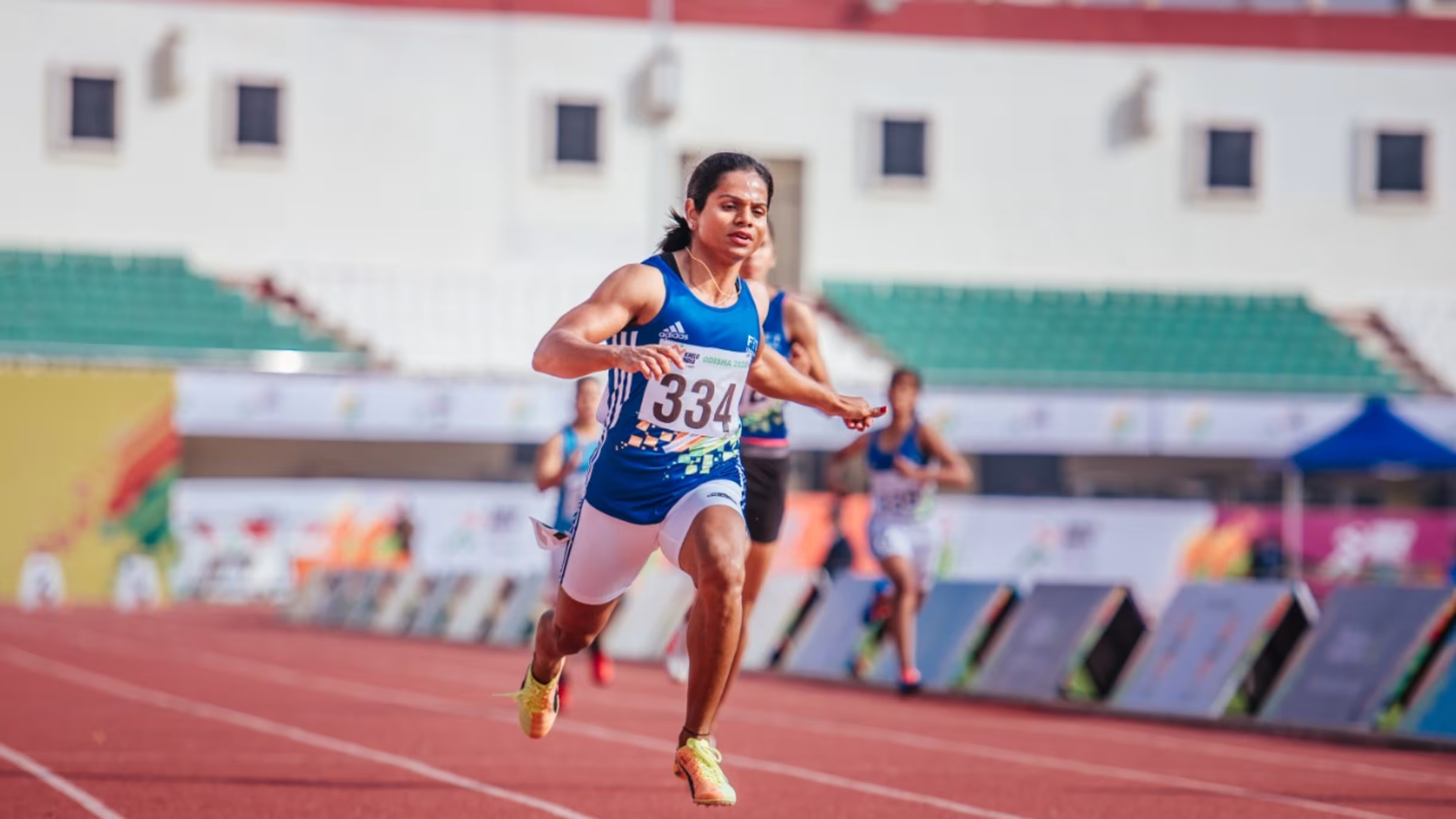
The only other Indian who has won an international 100m race is Dutee Chand who won the 100m in a World University Games in 2019
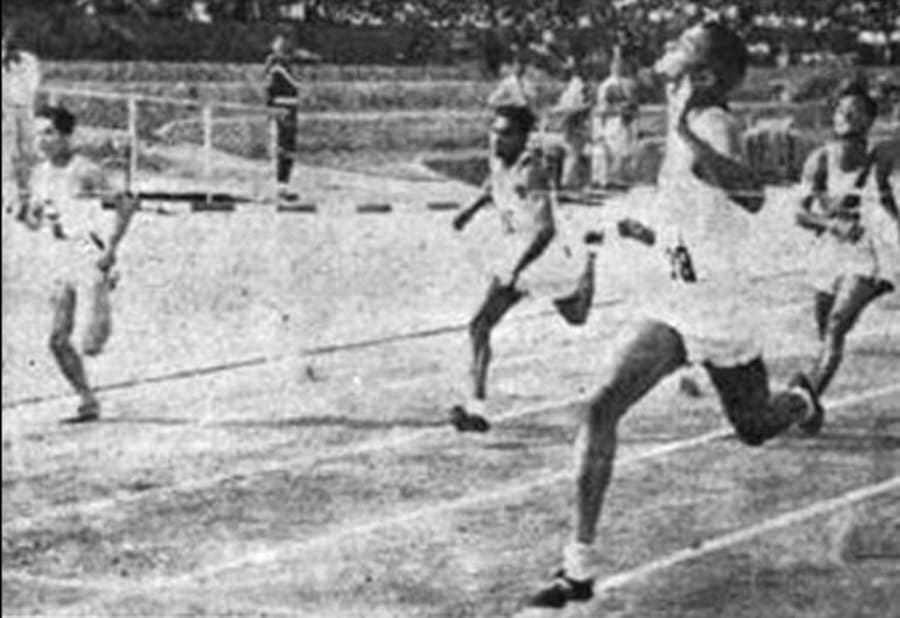
It was on the fourth day of the inaugural Asian Games that a slim 22-year-old from Bombay by the name of Lavinho (Lavy) Pinto was crowned the “Fastest Man in Asia”, when he won the showpiece event of the meet – namely the 100m sprint. Pinto breezed to the tape in 10.8 seconds, fighting back a strong challenge from the Japanese duo of Toshihiro Oshahi and Tomio Hosoda, who finished second and third, respectively.
Pinto caught the imagination of the public
Nobody caught the public imagination in the manner Lavy Pinto did. He won the race in a superlative style after a bad start. Pinto was usually a slow starter. At the 50m mark, he was nearly two yards behind Toshihiro. But once he had settled into his stride, he was unbeatable.
https://www.facebook.com/share/p/14sTu73oTS9/
Pinto later followed up his 100m gold by winning the 200m event, which he did in 22.0 seconds. Then he capped off his Asian Games performance with a silver in the men’s 4×100 metre relay where the Indian quartet comprising Pinto, Alfred Shamin, M Gabriel and Ram Swarop came second.
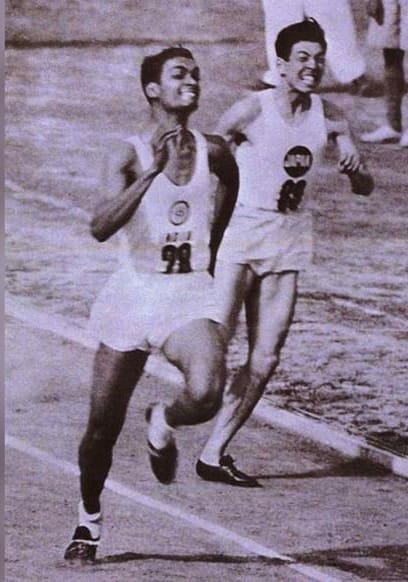
In the relay, Pinto was assigned to run the anchor leg even though he had a pulled muscle. By the time the baton was handed to him, India was six yards behind the Japanese leader. Pinto made a great effort but though he reduced the margin, he could not catch up. It was bad luck for India. Had he been fit, India could have won the relay, and Pinto could have bagged his third gold at the Asian Games.
Pinto was born in Nairobi but later moved to Bombay
Pinto was born in Nairobi, Kenya (which was then a British colony like India), before his parents moved to Bombay (now Mumbai). He spent his boyhood in the Dhobi Talao area of South Bombay and studied at the reputed St Xaviers School and College. His talent in running showed up early and he was an outstanding athlete from his school days. Pinto finished his matriculation in 1948.
https://www.instagram.com/p/Cv9pGveJsDl/?utm_source=ig_web_copy_link&stkn=NTc4MTIwNjQ2YQ==
It was in the Bombay State Athletics Meet in 1949, where Pinto shot to fame, when he won the 100m and 200m sprints. Pinto followed up his performances at the state level by dominating national-level events. In 1950, in the 14th edition of the biennial event called the Indian Olympic Games, Pinto set a new Indian 200m record in the second heat of the event by clocking 21.8 seconds. The next day, in the same event, Pinto broke his own record by clocking 21.7 seconds.
But his first international breakthrough came when he won the gold medal at the Asian Games and then represented India at the Helsinki Olympics in 1952.
Before going to Helsinki, at the 1952 Bombay State Athletics meet, Pinto managed his best timing of 10.6 seconds. It was even better than his Asian Games gold medal-winning performance of 10.8 seconds. Thereafter Pinto left for a two-month training stint in England, where he joined the London Athletic Club and linked up with the legendary Austrian coach Franz Stampfl – the man who coached the famous Roger Bannister among others.
Pinto took only 0.3 seconds more than the gold medalist
In the Olympic Games, Lavy Pinto was the captain of the Indian athletics team. He finished fourth in 10.7 seconds in the 100m semifinals and was just outside the top six who made it to the final. The final was eventually won by Lindy Remegino of the USA in 10.4 seconds. So, only 0.3 seconds separated Pinto from the gold medalist.
Participating in the 200m, Pinto clocked 21.7 seconds in the 200m semifinals, but it was just outside the qualifying mark for the final. The gold medal in this race was eventually won by Andy Stanfield of the USA in 20.7 seconds.
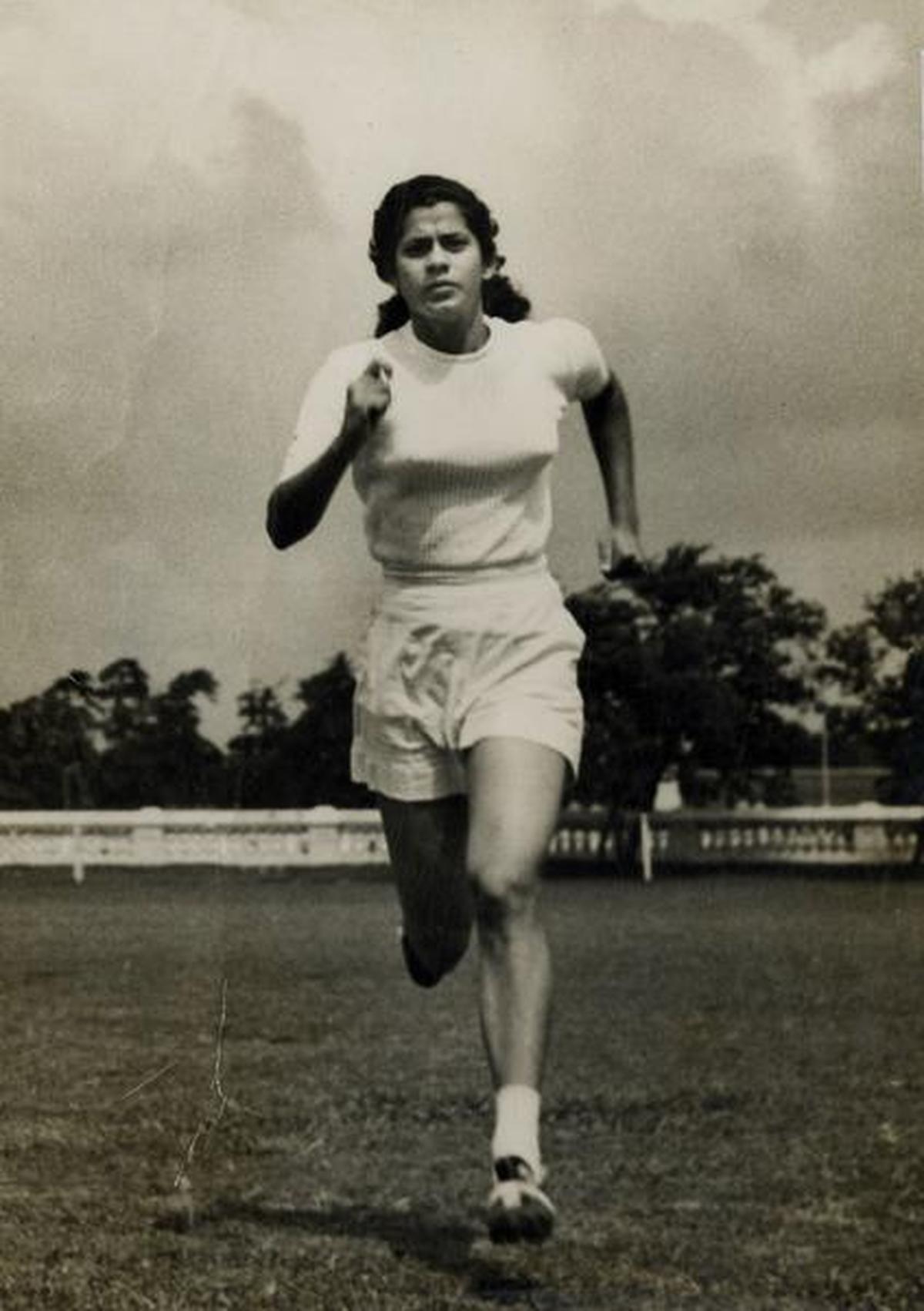
Mary D’Souza Sequeira was a double international in athletics as well as hockey. Pic: The Hindu
A few months after the Olympics, in February 1953, at the 18th National Athletic Meet in Jubbulpore (now spelled Jabalpur), Pinto once again put up an outstanding run by charging to the first place in both 100m as well as 200m sprints. In September that year, at the Amateur Athletic Championships Meet of Ceylon, Pinto won the sprint double (100 and 200m) – the only two events he entered for.
The astonishing tale of four women who represented India at the 1952 Olympics
His coach Leslie Woodcock, saw in him the makings of a world champion. Soon after, Pinto joined the Tatas, where he linked up with a highly regarded athletics coach back then named Benson Proudfoot. Pinto, in many ways, was the torchbearer of a sporting tradition in Bombay, which became a hub for athletics back then.
Pinto retired at 27 to focus on career with Tatas
Other Bombay athletes who made a name for themselves during this time were Violet Peters, Stephie D’Souza, Christine Brown and the famous Mary D’Souza who was a double international in athletics as well as hockey. These four girls won a gold medal for India in the women’s 4×100 relay at the 1954 Asian Games. The inspiration was provided by Lavy Pinto.
But to the disappointment of track fans and followers, Pinto retired even before he had reached 30. At the age of 27, he retired from competitive athletics after the Indo-Pak track meet in Delhi in 1956 and focused on his career with the Tatas in the Taj Hotel and Air India. Later he moved to the United States of America in 1969. He passed away at the ripe old age of 90 in Chicago on February 15, 2020.