Published: January 18, 2026 at 5:24 pm
The early 1970s were the golden age of Hyderabad cricket. In 1971, five of the most talented players of Hyderabad came together and helped India to register one of its greatest victories in Test cricket. That year, the Indian team led by its new captain Ajit Wadekar, defeated the mighty West Indies in the Caribbean islands. There were five Hyderabad players in that team, and they facilitated India’s glorious achievement.
Never before and never after, have five Hyderabad cricketers played together for the Indian Team. The five were M.L Jaisimha, Syed Abid Ali, Pallemoni Krishnamurthy, Kenia Jayantilal and Devraj Govindraj.
As is well known, India won the second Test at Port of Spain and then held on to that lead by drawing all remaining Test matches. The series can be deemed a landmark in Indian cricket in many ways. It saw India’s first ever Test victory and Test series victory over the West Indies. The series also marked the international debut for Sunil Gavaskar, and he had a great start to his legendary career.
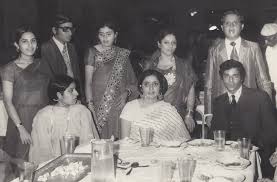
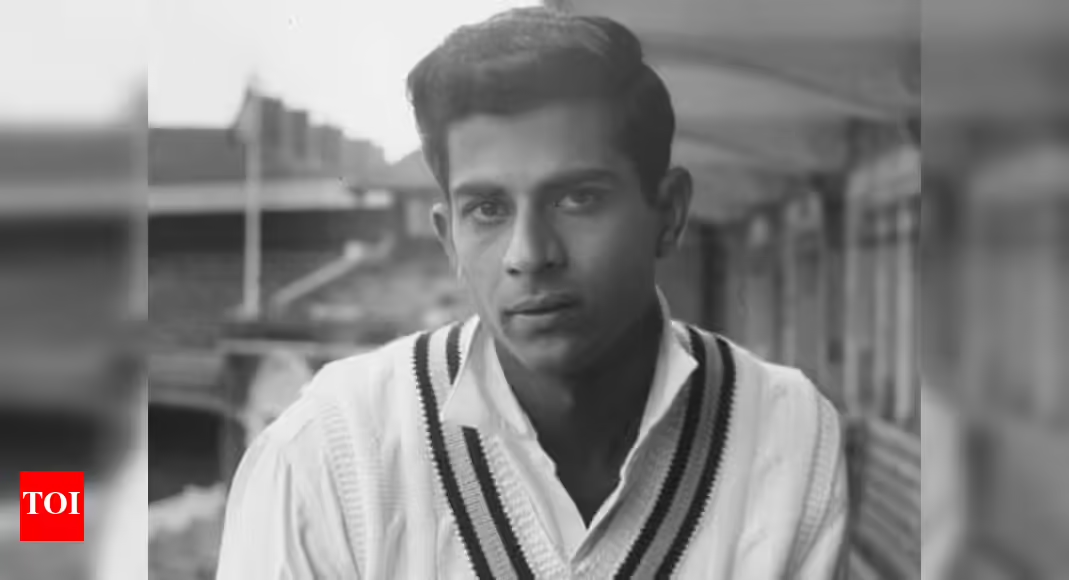
Hyderabad’s flamboyant ML Jaisimha was a team man to the core
Hyderabad’s superstar Jaisimha’s contribution was immense
Jaisimha’s contribution to the team was immense – not only as a player but also as an advisor to his captain. Later Wadekar acknowledged that on several occasions when the going was difficult for India, it was Jai who came up with helpful hints that broke rival partnerships or shored up India’s own batting.
Jaisimha’s ability to read the game and his tactical sense were of invaluable help to India. Jai was once described by Sunil Gavaskar, who idolized him and named his son after Rohan Kanhai, Jaisimha and GR Vishwanath, as one of the “shrewdest cricketing brains in the country.” He had the ability to assess match situations and devise effective strategies. His leadership was so respected that the Indian captain, Mansur Ali Khan Pataudi, chose to play under Jaisimha’s captaincy for the Hyderabad Ranji Trophy team.
Abid Ali denied West Indies a chance to draw level
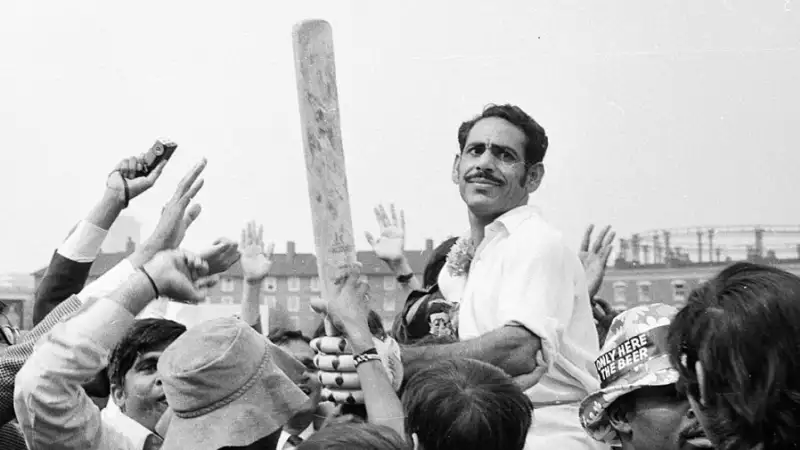
Abid Ali’s two wickets were instrumental in the match ending in a draw, and it led to the Indian team celebrating one of the greatest feats in its history
In the fifth and final Test, the West Indies had the chance to win the match. Batting in the fourth innings, they needed only 262 to win and Clive Lloyd who came in at number three began firing with all the power in his sinewy arms. All he needed was a steady partner at the other end. It would have been all over if the number four (Rohan Kanhai) or number five (Gary Sobers) had given Lloyd the support that he was looking for.
But one of Hyderabad’s most accomplished all-rounders, namely Syed Abid Ali, ensured that India would not be deprived. Bowling accurately and moving the ball sharply off the pitch, he clean bowled Rohan Kanhai for 21 and then also Sir Gary Sobers for a duck. With two unplayable deliveries the all-rounder from Hyderabad wiped out the cream of West Indies. It was a task that great fast bowlers would find difficult to accomplish. But Abid Ali could strike devastating blows when India needed him to do so.
As the two Caribbean legends walked away, Clive Lloyd watched in shock and horror from the other end. He couldn’t believe what he was seeing. Thanks to Abid’s two crucial wickets, this match too ended in a draw, and it led to the Indian team celebrating one of the greatest feats in its history.
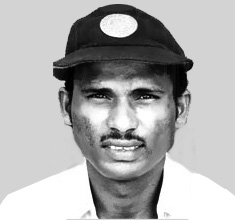
P Krishnamurthy had a reliable pair of gloves
Wicketkeeper Krishnamurthy’s unique feat
Wicket keeper P Krishnamurthy showed that he had a reliable pair of gloves. In the first Test at Kingston, he took a good catch to dismiss Gary Sobers off Eknath Solkar for 93 when the all-rounder was looking for a century.
In First-class cricket, Krishnamurthy’s unique feat was that he batted at all 11 slots for Hyderabad in the Ranji Trophy. He is also the only batsman to be associated in a century partnership batting as an opener and also as a number eleven batter. Surely that is a feat which will not be easily replicated.
Alas, Jayantilal lacked a Godfather
Hyderabad’s Kenia Jayantilal was a solid opening batsman. He had a penchant for the pull shot and had a good defence. But he got only one opportunity in Test cricket and that was his misfortune. The phenomenal success of Sunil Gavaskar meant that the slot for one opener would always be occupied. All the other opening batsmen in India would have to fight it out for the single remaining slot. Unfortunately, Jayantilal had no Godfathers in the BCCI to speak for him.
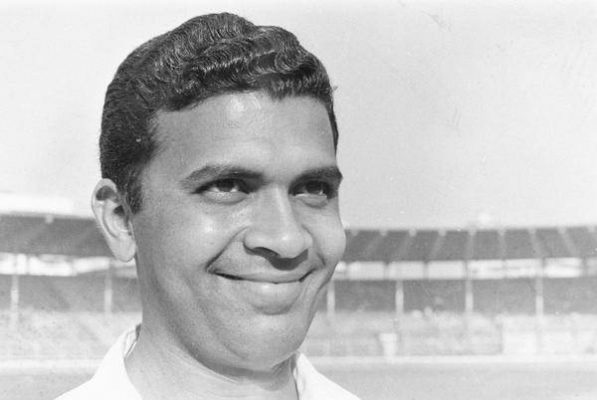
Opening bat Kenia Jayantilal got only one opportunity in Test cricket and that was his misfortune
Govindraj bowls Gary Sobers, impresses the legend
The other Hyderabadi in the team was seam bowler Devraj Govindraj. In Hyderabad, his career surged upwards under the leadership of M.L.Jaisimha who knew how to make best use of a pace bowler with Govindraj’s abilities. In 1966–67 Govindraj scored 59 while batting at number nine and helped SBI to win the Moin ud Dowla Gold Cup for the first time.
In the Caribbeans, Govindraj was given a chance only in the First-class games. In one of the matches against local sides, even Gary Sobers was very impressed with his bowling. He bowled Gary Sobers in that match (for 135), which is a feat that very few Indian bowlers can boast of. After that Sobers told Wadekar: “You must take this young man to England.” But why skipper Wadekar did not give Govindraj a bigger role in the team’s plans, remains a mystery.
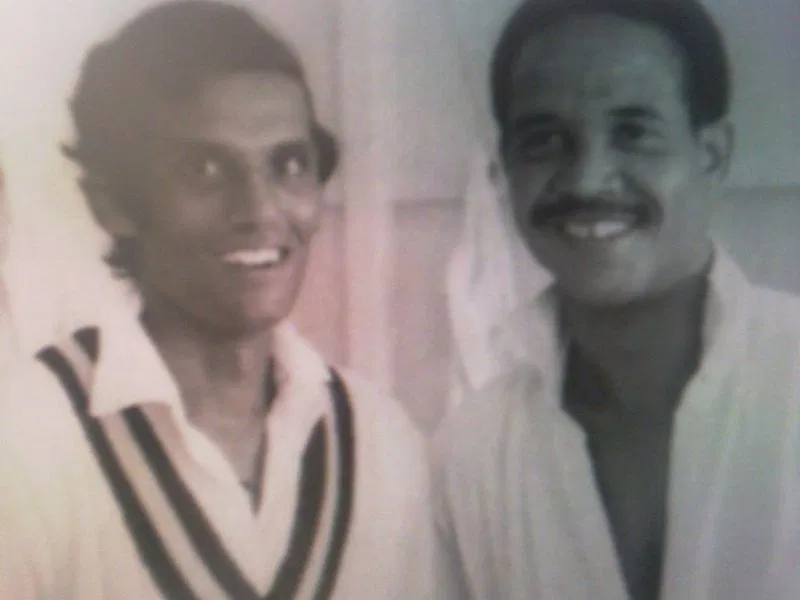
Devraj Govindraj with West Indies legend Gary Sobers
He was a good fast bowler in the days when fast bowlers were a rare commodity in Indian cricket. For Hyderabad, he was a key member of the Ranji trophy squad that all other teams were apprehensive of facing, including the giants Bombay.
Alas, those days of Hyderabad’s glory have now drowned in an ocean of controversy and corruption. We may never again see five Hyderabadis battling it out beside each other for the Indian team.