Exclusive
Sleeping with the enemy: Germany’s Bernard Trautmann turned into English football hero

About 100 years ago, in the 1920s, Germany was struggling to rebuild its economy after a devastating defeat in the first World War that lasted from 1914 to 1918. A system of governance known as the Weimar Republic came into force after the war ended in 1918. But it was a ramshackle alliance which failed to curb hyperinflation and the economic woes that the nation faced.
The situation provided a young Adolf Hitler plenty of fertile soil to stoke the fire of antisemitism against the Jewish population. He blamed them for all of Germany’s ills. The 1920s were also a period when Hitler transformed the Nazi party from a small fringe group into a well-organised political force.
In 1926, he formed a group for young boys and girls to take active part in politics. In effect this was the youth branch of the Nazi party. It was called the Hitler Youth. Many young children, encouraged by their parents, joined this group and were indoctrinated into the Nazi party ideology from a young and impressionable age. For even smaller children who were in the pre-teen age group, there was the Jung Volk (Young Folk) group.
One such boy who joined the Jungvolk was a child named Bernard Carl Trautmann. He was born on October 22, 1923 in the neighbourhood of Walle, a working-class area in the industrial city of Bremen. His father worked in a fertiliser factory and his mother Frieda was a homemaker.
Attracted by Nazi party ideology from young age
He was nicknamed Bernd (short for Bernard) and he had a brother, Karl-Heinz, three years his junior. The bleak economic climate of that period forced the Trautmann family to sell their house and move to a town called Gropellingen. But from a very early age, Bernard was attracted by the vision of revival of German glory that was being promoted throughout the country by the Nazi party. Many years later, when he was an adult, he realised his mistake. But by then much water had flown under the bridge.

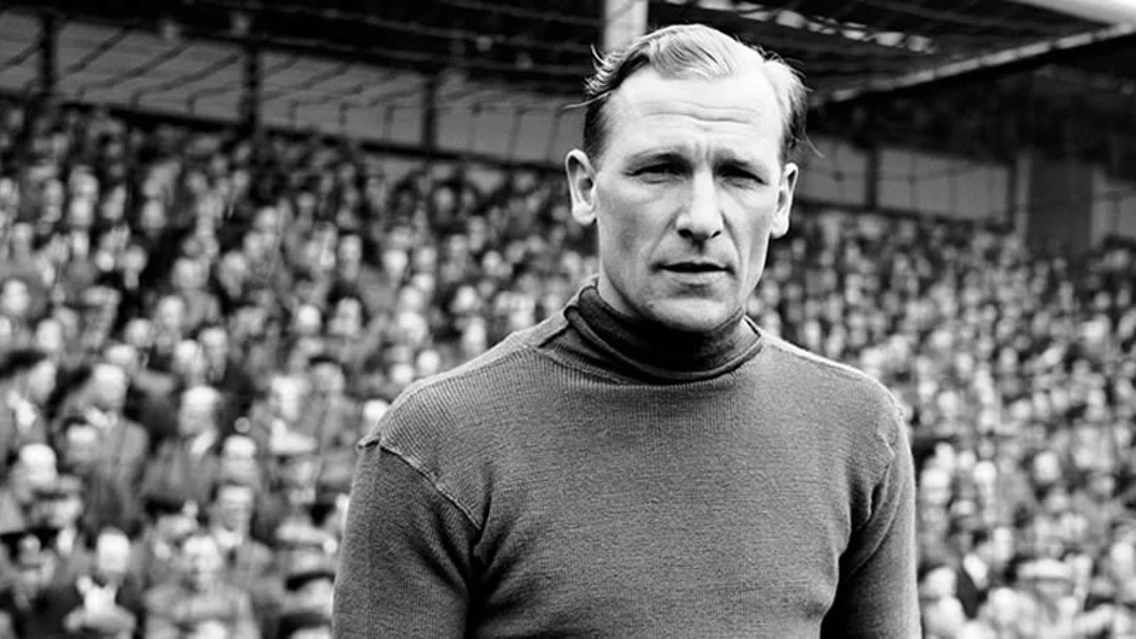
While being held prisoner, Bernard played football occasionally with other prisoners in the prison yard. But his English captors found it difficult to pronounce his nickname Bernd. So, they began calling him Bert. Pics: Manchester City
In 1933, even though he was a small boy, he was fed up with attending poorly equipped schools, wearing shabby clothes and never having tasty food to eat. The situation was such that any child would be drawn to the promises of change that the Nazi party officials were talking about every day.
One day, along with his friends, he joined the Jung Volk group and was given daily lectures by Nazi party tutors about how to bring about a radical change in German society. But at this age, he also realised that he had good skills in football. So, he played regularly for his YMCA football team. But in 1939, when he was almost 16 years old, Hitler decided that the time was ripe to conquer Europe and attacked neighbouring Poland. That act of belligerence sparked off the second World War.
Bernard enlisted in the army at age 18
As soon as he was 18, Bernard enlisted for the German army. By then (1941) the war was raging on many fronts and Bernard was involved in the action in several crucial battles. He even gained promotions and medals including the prestigious Iron Cross First Class. Twice he was captured, once by the Soviet army and once by the French but both times he managed to escape.
A Football-Loving Family’s Tragic Yet Inspiring Story from the 2018 FIFA World Cup in Russia
In 1944, the fortunes of the war swung in favour of the Allied troops and Germany went onto the back foot after British and US forces landed in Normandy on June 6, 1944. Bernard and his men found themselves on the run as the Allied forces pursued them across the French countryside.
Fancy a cup of English tea?
But one day his attempts to flee came to an end and he was captured while hiding in a barn. This time he could not escape. One of his captors sarcastically asked him: “Hello Fritz. Fancy a cup of English tea? That’s what you are going to get from now on.”
He was taken to a prison camp in Essex in England where he was interrogated by British army officers. He was under greater restrictions because not only was he a German soldier but also a member of the notorious Nazi party. After the interrogation, he was sent to a Prisoner-Of-War camp in Lancashire. That is where he remained until the war came to an end in September 1945.
While being held prisoner, Bernard played football occasionally with other prisoners in the prison yard. But his English captors found it difficult to pronounce his nickname Bernd. So, they began calling him Bert. His football skills also earned him some sympathy and goodwill because many British officers were football lovers. In one unofficial match between the prisoners’ team against a local British team, Bert Trautmann was injured. So, he swapped positions with goalkeeper Gunther Luhr, and from that day he played as a goalkeeper.
Home destroyed, family members dead
Sometime after the war had ended, the prison camp was dismantled and preparations were made to send the German prisoners back to Germany. But sadly, Bert Trautmann had no home to go back to. His home had been destroyed in the bombing and his parents and siblings had died.
So, he refused to return to Germany. With the permission of the British government, he continued to live in England and went to work on a farm. He also got married to an English woman named Margaret Friar, daughter of a football official. They had three sons but one of the boys died tragically at the age of 5.

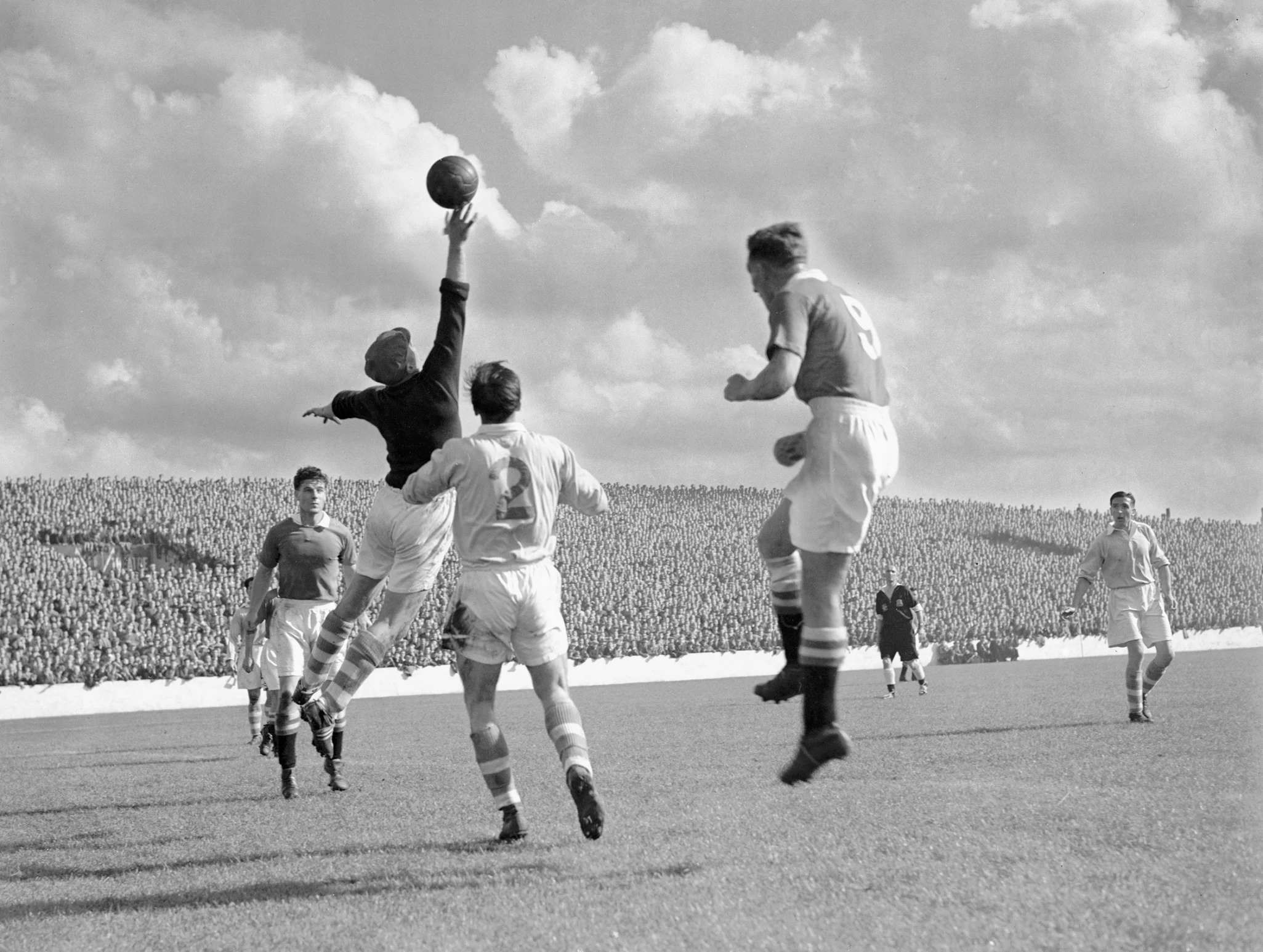
In 1949, Manchester City took the controversial decision to sign him in its ranks. Given the bitterness against Germans that still lingered after the war, the move was met with outrage from sections of the public. Every time he played, he faced taunts and insults
But in the midst of all this, Trautmann continued to play football whenever he had the chance. Soon the local clubs realised his immense talent and that he was destined for football glory. What followed over the next few years was a transformation few could have imagined – a former enemy soldier becoming a beloved sporting icon in England.
His natural athleticism and fearlessness quickly marked him out as a gifted goalkeeper. In 1949, Manchester City took the controversial decision to sign him in its ranks. Given the bitterness against Germans that still lingered after the war, the move was met with outrage from sections of the public. Every time he played, he faced taunts and insults.
Trautmann became a changed person
But by now Trautmann was a changed person. He was no longer a haughty, war-loving soldier. He had learned from his mistakes and transformed himself into a well-mannered and humble human being. His humility and discipline gradually won over even his fiercest critics. But although his fame spread across borders and he came to be recognised as one of the best goalkeepers in world football, he was not selected for the German team that went on to win the FIFA World Cup in 1954. So, his career remained restricted to football in England.
Greatest moment of his career wiped clean his Nazi past
Trautmann went on to make more than 500 appearances for Manchester City and became one of the finest goalkeepers of his generation. His defining moment came in the 1956 FA Cup final against Birmingham City. Late in the match, Trautmann collided violently with an opposing player while bravely diving at his feet. Despite intense pain, he refused to leave the field and played on as Manchester City secured a 3–1 victory. It was his excellent goalkeeping that thwarted the rival strikers from finding their mark.
After that display, even the most prejudiced fans joined the group that surged into the field to carry him on their shoulders. His Nazi past was wiped clean that day. Much later doctors discovered that he had suffered a broken neck. To be specific, he suffered a fractured vertebra. To play with a broken bone in his neck made his performance one of the bravest in football history.
Beyond trophies and heroics, Trautmann’s significance lay in what he represented. At a time when wounds from war were still raw, his acceptance by English fans symbolised redemption, reconciliation and the healing power of sport.
In recognition of his contribution to Anglo-German relations, Trautmann was later awarded the Order of the British Empire (OBE). Bernard Trautmann passed away in 2013, but his legacy endures even though he is no more. He serves as an example that sport can build bridges between former enemies. His life story is one of the most extraordinary ones in the history of football.