Exclusive
A shot for freedom: Bina Das’ bold attempt to assassinate former England captain Jackson

The echoes of India’s freedom struggle had their effect in different sports activities too and one incident involved a cricketer Francis Stanley Jackson. The said incident happened in the pre-independence era. The principal actors in the drama were Jackson, former captain of England’s cricket team, and Bina Das, a student at Calcutta University and an ardent freedom fighter.
As a student, Stanley Jackson played for Cambridge University and then England. It was he who supported the case of India’s Ranjitsinhji when the latter was struggling to find a place in the university team. As the Cambridge University captain, Jackson was responsible for Ranji’s inclusion in the Cambridge First XI.
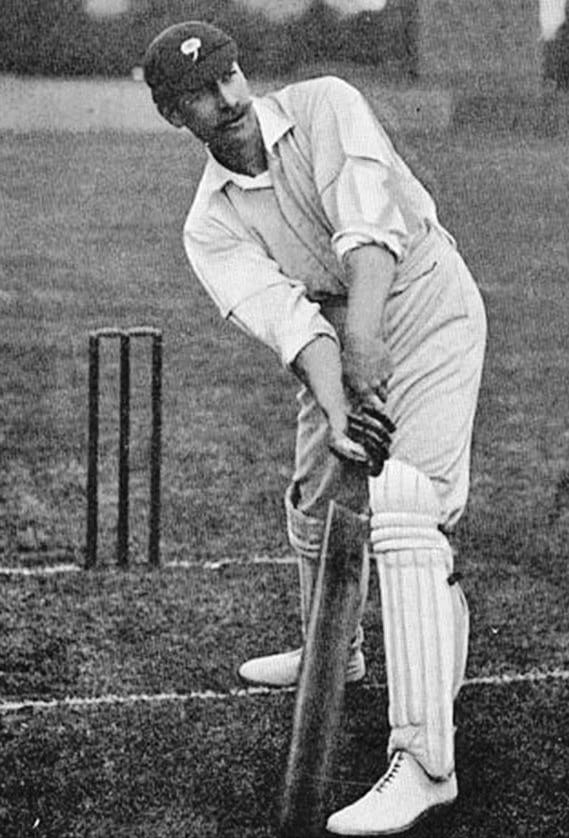

Jackson went on to be named captain of England in five Test matches in 1905. Under his leadership England won two Tests and drew three to retain The Ashes that year. He himself scored 492 runs and took 13 wickets in that series. A journalist described him as a captain who was not a popular man but always respected.
He was one of the outstanding English cricketers of the late Victorian era. A stylish right-handed bat and an effective right-arm fast-medium bowler, he was a genuine all-rounder. Jackson was educated at Harrow and Trinity College, Cambridge. He was an outstanding schoolboy cricketer and captained Harrow in 1889. He subsequently represented Cambridge University, Yorkshire and England.
Yeh dosti hum nahi todenge: A friendship that survived the pangs of India’s partition
Jackson made his Yorkshire debut in 1890 and remained an important member of the county until 1907. In first-class cricket he scored 15,901 runs and took 774 wickets. His outstanding performances earned him the distinction of being named one of Wisden’s Cricketers of the Year in 1894.
Jackson made his Test debut against Australia at Lord’s in July 1893. His Test career lasted until 1905 and comprised 20 matches, all of them played in England. He could not undertake overseas tours because of his business commitments. He was an amateur player and his earnings came from his business.
Jackson had a solid Test record
In 20 Tests he scored 1,415 runs at an average of 48.79 with 5 centuries and 6 fifties. He took 24 wickets and his best bowling performance was 5 for 52. Jackson belonged to what is often called English cricket’s Golden Age, alongside such celebrated figures as WG Grace, CB Fry, Ranjitsinhji and Wilfred Rhodes.

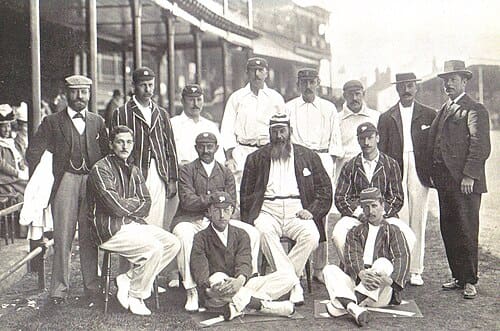
England team vs Australia, Trent Bridge 1899. Back row: Dick Barlow (umpire), Tom Hayward, George Hirst, Billy Gunn, J T Hearne (12th man), Bill Storer (wk), Bill Brockwell, V A Titchmarsh (umpire). Middle row: C B Fry, K S Ranjitsinhji, W G Grace (captain), Stanley Jackson. Front row: Wilfred Rhodes, Johnny Tyldesley. Jackson, Hirst and Rhodes are wearing their Yorkshire caps. Pic: Wikipedia
He was also president of the MCC in 1921–22 and eventually became president of Yorkshire County Cricket Club in 1938.
While still a player, he volunteered to join a militia Battalion and was given the rank of captain. Thereafter, he took part in the second Boer War in South Africa and rose to the rank of Lt. Colonel. In later life he went into politics, was elected as MP and held several important posts.
Shot at after being appointed Governor of Bengal
In 1927, he reached the shores of India after he was appointed as the Governor of Bengal, and it was from this point that the story of his brush with death developed. During his term as Governor, one day he had to preside at the convocation ceremony of the Calcutta University.
https://www.instagram.com/reel/DZDIGLHTZzw/?utm_source=ig_web_copy_link&igsh=NTc4MTIwNjQ2YQ==
He had just begun his speech when a girl student of the university named Bina Das pulled out a pistol from her handbag and took aim at Jackson. Fearing that she would soon be pulled down by security men, she snapped off five shots in rapid succession before anyone could react. The entire hall reverberated to the sound of the firing and threw everybody into confusion.
https://www.facebook.com/share/v/1afVkDia9P/
But Jackson, even at the age of 62, seemed to have retained some of the quick reflexes and sharp wits that he had as a cricketer. He ducked and sidestepped the volley of shots and managed to avoid all the five bullets that were fired at him. Bina Das was quickly taken into custody and led away. It was a very narrow escape for the Bengal governor and ex-cricketer.
Bina came from a highly respected family
But who was this fearless woman named Bina Das? She belonged to a highly esteemed family. Her father Beni Madhab Das was a respected teacher and had taught Netaji Subhas Chandra Bose when Bose was a teenager.
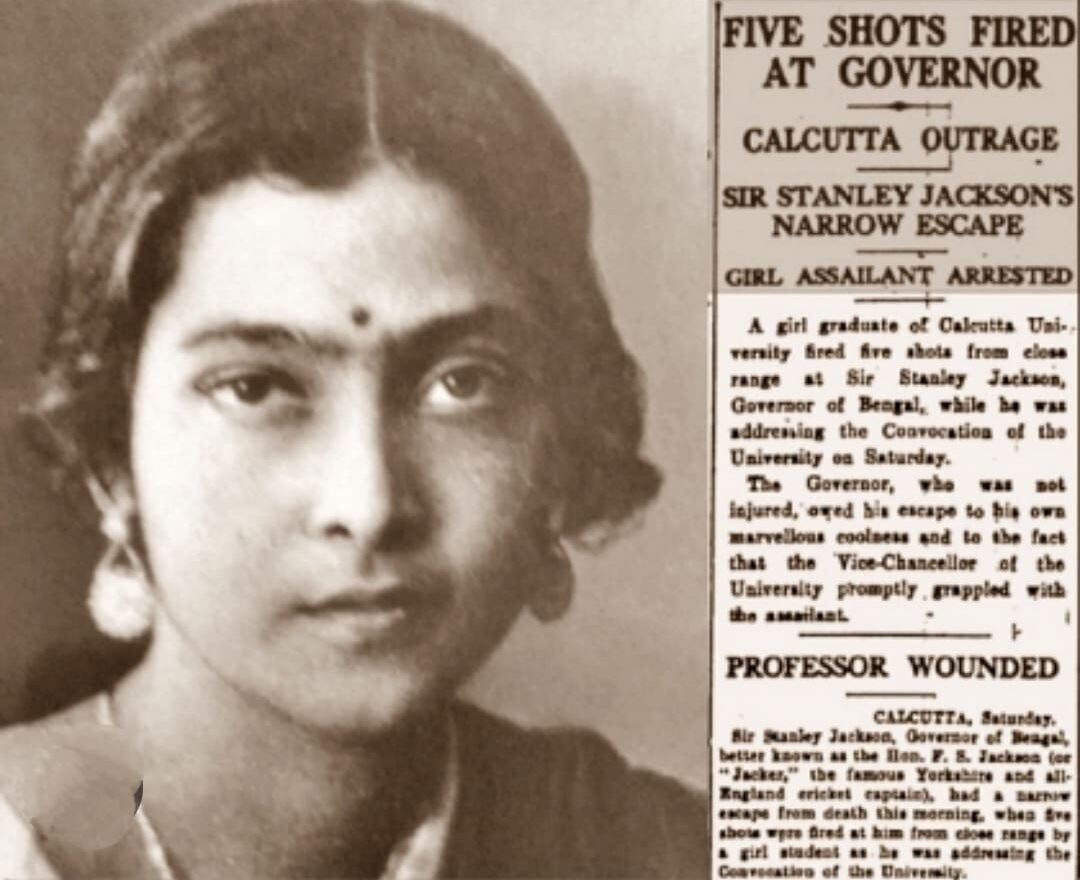

Bina Das became a passionate campaigner for India’s freedom and joined the Chhatri Sangha which was a revolutionary organisation for women freedom fighters in Calcutta (now Kolkata). When she heard that the Governor of Bengal was scheduled to address the convocation of the Calcutta University, she was determined to carry out an assassination and teach the British rulers a lesson even if she herself died in the attempt.
She procured a pistol from another woman revolutionary named Kamala Dasgupta and carried out her attack on February 6, 1932. After she had been foiled and arrested, she wrote in her confession: “My object was to die, and if to die, to die nobly, fighting against this despotic system of government, which has kept my country in perpetual subjection.”
Sad end to Bina’s life
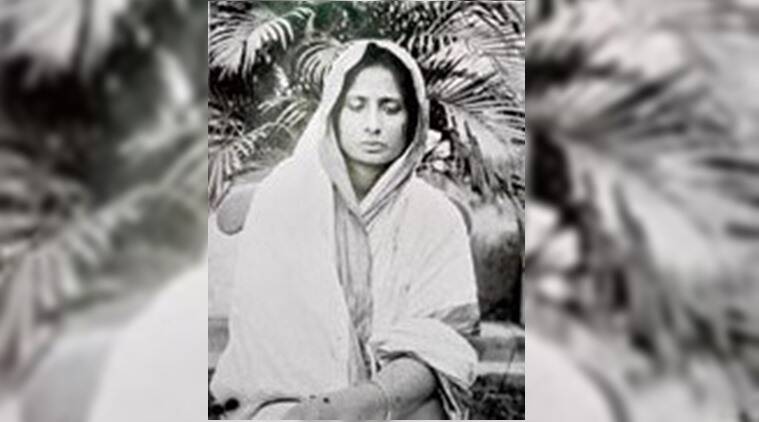
Thereafter she was sentenced to nine years in jail for attempted murder. After her release, she joined the Congress party and carried on with her objective of attaining freedom for India. After her husband Jagadish Chandra Bhaumik passed away, she led a lonely life near the Ganges river in Rishikesh. She dropped out of the public gaze and when she died, she was all alone without any family member to care for her.

Fate catches up with Jackson
And what happened to Stanley Jackson? He served his full term as Governor, returned to England, and died at the age of 77 in a traffic accident. It seems that fate always had a violent end in mind for Jackson. He may have escaped the bullets of Bina Das in Calcutta but was mowed down by a speeding vehicle in London. Thus ended an eventful life of a cricket captain, soldier and politician.