Published: November 24, 2026 at 12:35 pm
A not-so-well known Australian Bransby Beauchamp Cooper connects India to the first-ever Test match which was played way back in 1877.
There are several instances of English cricketers who were born in India and who went on to achieve fame in world cricket. They include Douglas Jardine (born in Bombay), who captained England and devised Bodyline tactics, Colin Cowdrey (born in Ooty), who led England in 27 Tests, and Nasser Hussain (born in Madras), who captained England in 45 Tests and 56 ODIs. Then there were also the likes of John Jameson (born in Bombay), who played 4 Tests and 3 ODIs for England, Robin Jackman (born in Shimla), played 4 Tests and 15 ODIs, and Bob Woolmer (born in Kanpur) who played 19 Tests and 6 ODIs for England and later became a well-known coach of South Africa and Pakistan.
Blame it on Nehru! PM Jawaharlal’s decision rescued India’s standing in world cricket
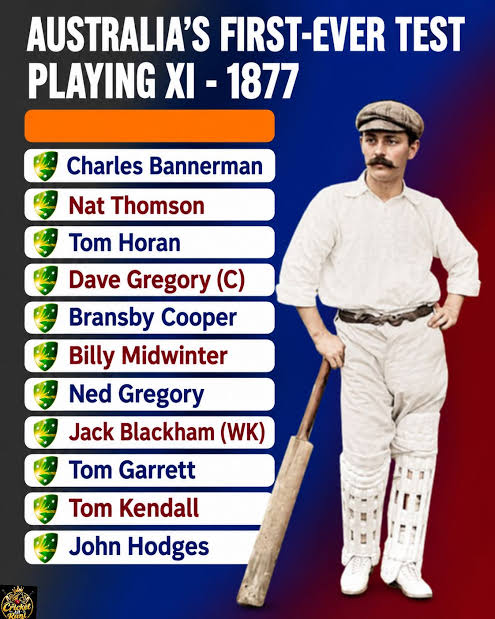
However, there was also another player, an Australian, born in the middle of the 19th century, who is not a familiar name with most Indians. His name was Bransby Beauchamp Cooper and his claim to fame was that he took part in the historic first-ever Test match between England and Australia in Melbourne in 1877.
Interesting background of Cooper
He had a very interesting background. His father Bransby Henry Cooper (both father and son had almost similar names), was an employee of the British East India Company and was posted in Dhaka which was then a part of India. His wife’s name was Mary Ann. It was in Dhaka that little Bransby Beauchamp Cooper was born in 1844.
But tragedy hit the family when the father, Bransby Henry Cooper, died in 1857. At that time, he had gone for work to Mymensingh, which is a town near the Brahmaputra River and is located about 120 kms from Dhaka. The year 1857 was a tumultuous one since the Indian uprising took place against British rule that year. But Mymensingh was not a centre of the revolution and there are no reports of British casualties in that region. So probably the father died of natural causes.
After her husband passed away, Mary Ann took her two children, Bransby and Mary Edith, and went away to England. There she took up residence in a house in Hemel Hempstead in Hertfordshire. There the 13-year-old Bransby was enrolled in the famous Rugby school. While a schoolboy he began showing a talent in cricket.
Cooper’s first-class career began in England
Cooper played club cricket for Southgate CC and the Free Foresters before going on to play first-class cricket for Middlesex and Kent. He made his first-class debut in 1863 for Middlesex against Surrey. He also played for Marylebone Cricket Club (MCC) and the Gentlemen’s XI, often playing with WG Grace.
https://x.com/CricketopiaCom/status/1635829810906923010?a=3uHBXdTxvapnNuguruM&s=20
After the 1869 season, Cooper moved to the United States where he played cricket for St George’s Cricket Club at Hudson City in 1870. Then he moved to Australia in 1871. He played for Victoria in 11 matches, including nine matches against New South Wales.
Cooper narrowly missed the captain’s post
For the Test match at Melbourne in 1877, Cooper was expected to be named as captain because the Victorians outnumbered players from New South Wales. However, that did not happen, and it was Dave Gregory of NSW who was named captain of Australia.
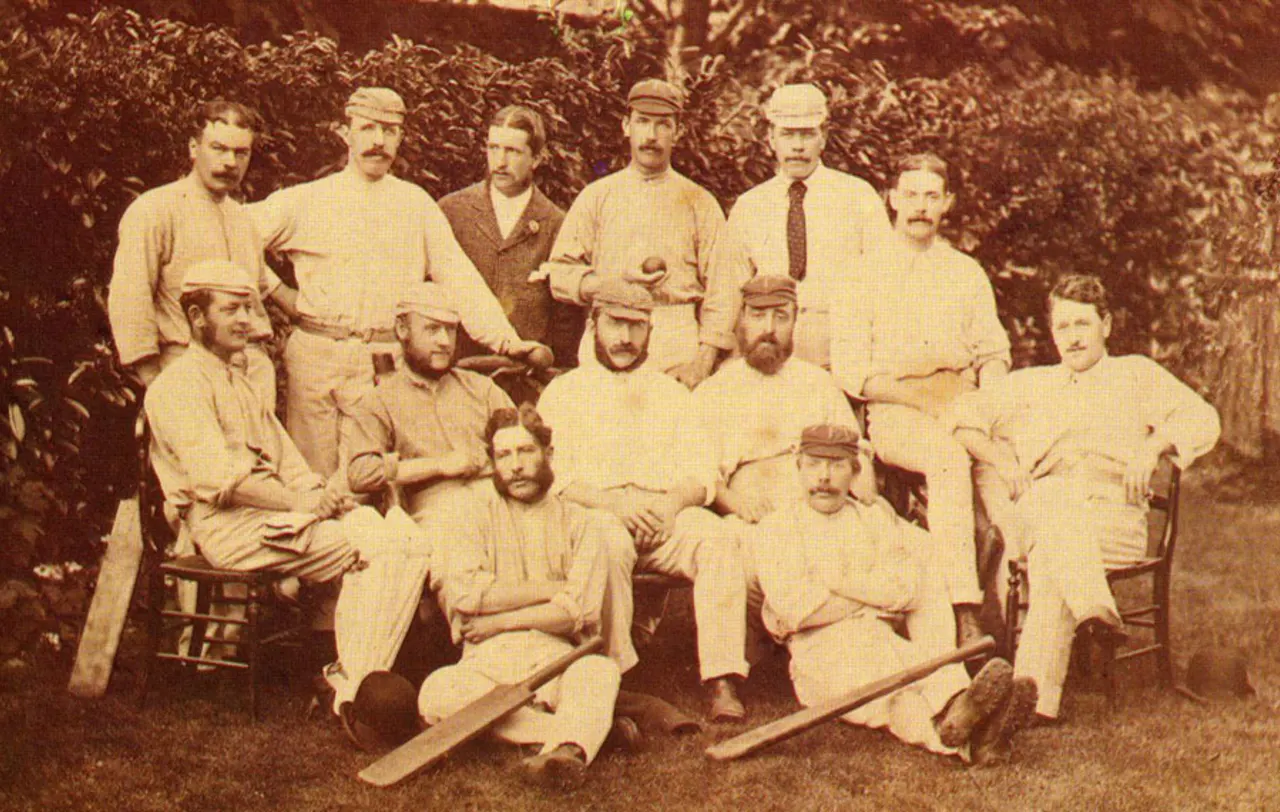
England team for the first ever Test against Australia. Pic: Cricinfo.com
However, at this point, one fact must be mentioned. When the match took place in 1877, the players were not aware that they were playing in a historic first-ever Test match. That status was given to the match after the Imperial Cricket Council (forerunner of the International Cricket Council) was formed many years later.
Cooper shared highest partnership with centurion Bannerman
As is well known, in the 1877 match, Australia’s opener Charles Bannerman scored a century which obviously became recorded as the first century ever scored in Test cricket. Bransby Cooper who came in at number 4, gave good support to Bannerman and the two of them added 73 runs for the fourth wicket. It was the best partnership of the innings. Cooper scored only 15 before he was bowled by James Southerton of England. Finally, Australia went on to win the contest by 45 runs.
Test matches were very few in those days so the inaugural match happened to be the only Test match played by Bransby Cooper. But he played 50 first class matches, scored 1600 runs at an average of 20.51, with one century (107) and 7 half centuries. These first class matches were played mostly during his career in England before he moved to Australia.
Cooper was involved in a record stand with WG Grace
His 107 was scored during the course of a 283 run-partnership for the first wicket with WG Grace. That stand stood as a first class record till 1892. The Grand Old Man of cricket (WG Grace) once said about Cooper: “His driving powers were good, and he could cut very prettily, but it was his patience and defence which made him so valuable.”
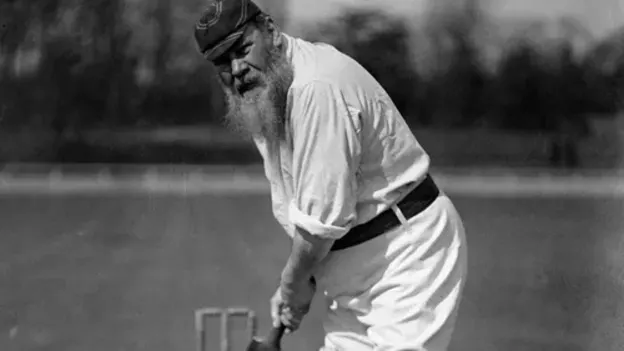
Cooper’s only century (107) was scored during the course of a 283 run-partnership for the first wicket with WG Grace (in pic). Pic: ICC
After Cooper married Helen Wilkinson in 1875, he played less cricket. The couple had three daughters. The family was living in Queenscliff, Victoria, when he died in 1914 aged 70. He is buried in the Geelong Eastern Cemetery. But he is still hailed as the only India-born cricketer who took part in the historic first Test match that was played in Melbourne in 1877.