Exclusive
Yeh dosti hum nahi todenge: A friendship that survived the pangs of India’s partition

Few friendships in cricket have been tested by history as much as that of India’s legendary all-rounder Lala Amarnath and Pakistan’s great fast bowler Fazal Mahmood. Even the partition pangs could not sever the ties between these two cricketers who went on to play for different countries though they hailed from the same region.
Their friendship began in the cricketing world of pre-Partition Lahore and survived one of the greatest upheavals in the history of the Indian subcontinent. Amarnath was already a celebrated cricketer when the young Fazal began making his mark. They played together in domestic Indian cricket in the 1940s, for North Zone.
Colourful Ranjitsinhji continues to be a legendary figure decades after his death
The close friendship between Fazal Mahmood and Lala Amarnath was well known. What made their bonding stronger was their shared Punjabi background since both of them hailed from Lahore. Although Lala was considerably older, about 16 years older, than Fazal, the two got along very well.
Lala was Fazal’s friend and mentor
Amarnath recognised the young bowler’s extraordinary potential and became both his captain and mentor. Their relationship went far beyond the cricket field. Fazal remembered Amarnath with enormous affection and respect. After Amarnath’s death on August 5, 2000, Fazal described it as a personal loss because of their close association and recalled that Amarnath had been his first captain, friend and guiding light. He particularly remembered Amarnath’s great compliment that, as a captain, he could beat any rival in the world as long as Fazal was in his team.
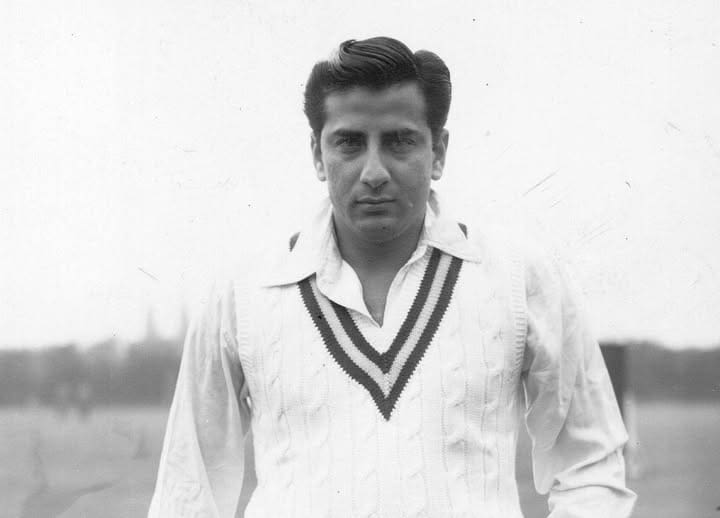

When India and Pakistan met for their first Test series in 1952, Fazal and Amarnath were on opposite sides. In a remarkable twist of fate, Fazal took Lala Amarnath’s wicket in his first Test match. Yet there was no evidence that the fierce competition between them destroyed their affection for each other.
Their story is therefore much bigger than the game of cricket. Before the India versus Pakistan rivalry, there was simply Lahore, cricket, friendship and a shared sporting culture. History separated Fazal Mahmood and Lala Amarnath into two countries, but it could not separate the minds of the two friends.
Umrigar, 1st Indian to score a double century, would have celebrated a ton of years today
Their story is a reminder that rivalries may divide countries, but they do not divide people.
Fazal’s passion to don Indian jersey
However, Fazal’s story goes beyond his friendship with Lala. Fazal was keen on donning the Indian jersey, but fate would have it otherwise. In 1947, the Indian team was about to be selected for the first-ever tour of Australia (to begin in 1948). The selection camp was to begin at Pune on August 15, 1947. When this plan was made, the BCCI had no idea that India would become Independent that very day.
One of the players who had been called for selection was Fazal Mahmood, who later became one of Pakistan’s legendary all-rounders. However, at the time, there was only India, no Pakistan. So Fazal was keen to be picked in the Indian team. As soon as he got the news, he set off from his hometown of Lahore to make his way to Pune. The time was the second week of August 1947, and communal riots were raging across the country.
Hyderabad-born Asif Iqbal, who led Pakistan gloriously, was a man for all seasons & crisis
So even as lakhs of people were migrating from one side of the country to another, Fazal Mahmood was swimming against the tide. He was desperately trying to reach Pune from Lahore when lakhs of Muslims were headed in the other direction.
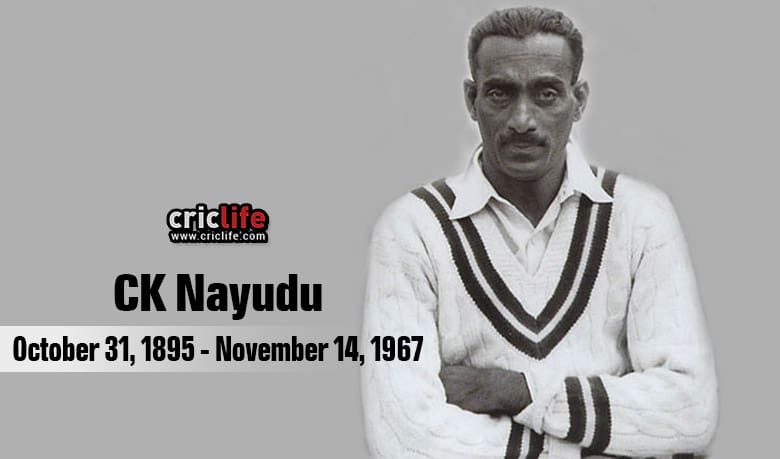

But for obvious reasons (India and Pakistan becoming independent nations), there was too much political activity, uncertainty and tension. Therefore, the selection trials could not be held and Fazal returned to Lahore crestfallen. But making any journey at that time of communal conflict was fraught with extreme risks. So, veteran C K Nayudu, then in his fifties, decided to accompany Fazal and ensure that he reached his destination safely. Fazal had to travel by train from Pune to Bombay from where he would take a flight to Lahore and Nayudu accompanied him on the train journey.
C K Nayudu saved Fazal’s life
At one point of the journey, when the train had stopped at a station, some hoodlums recognized Fazal. His photo had been published in the newspapers many times as a player, so he was easily recognized. They tried to drag him out of the train.
But when the tall and sturdy Nayudu, armed with a cricket bat, threatened to break their bones, they changed their minds. Nayudu was a well-known and highly respected person, and they did not want to create any hostility with him. Nayudu’s action saved Fazal’s life that day. Fazal has mentioned this incident in his autobiography titled From Dusk to Dawn.
Fazal turned down film offers
Fazal had the ideal fast bowler’s physique. He was 6 feet 2 inches tall and was well built. He also had sharp features which made him strikingly handsome. On one occasion, filmmaker Mahboob Khan, who made blockbuster films such as Mother India and Aan, offered Fazal a role in the latter film. But Fazal turned it down. Hollywood filmmaker George Cukor, who won an Oscar for directing My Fair Lady, also offered Fazal a role in the film Bhowani Junction (starring Stewart Granger and Ava Gardner) but this too was refused by Fazal whose only love was cricket.


Fazal Mahmood was not merely a good cricketer. He was one of the outstanding fast bowlers of his generation and the inspiration for those who followed such as Sarfaraz Khan, Imran Khan, Wasim Akram and Shoaib Akhtar. Fazal played 34 Tests between 1952 and 1962 and took 139 wickets at an average of 24.70. He took five wickets in an innings 13 times and 10 wickets in a match four times.
That performance earned him selection as one of Wisden’s Five Cricketers of the Year in 1955. He was the first Pakistani ever to receive the honour. He also became Pakistan’s captain and was the first Pakistani to reach 100 Test wickets, doing so in just 22 Tests.