Published: November 14, 2026 at 12:43 pm
Today India is the hub of world cricket, and the game is the most popular sport in India thanks to former Prime Minister Jawaharlal Nehru’s one decision which turned the tide. There was a time, after independence, when cricket did not have the mass appeal that it now has. In fact, it may have sunk into oblivion had not Nehru made a crucial decision that had a spin-off effect on the future course of the game in India. Today (November 14), on the occasion of Nehru’s birth anniversary, let us see how his decision helped Indian cricket.
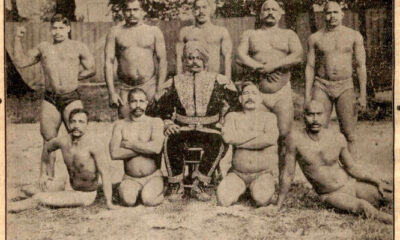
When India became independent in 1947, hockey and football garnered more attention than cricket. By 1947, India had already won an unprecedented three gold medals at the Olympic Games thereby overtaking Great Britain which had two. After a magical third gold at the Berlin Olympics in 1936, the Indian maestros, with the wizard Dhyan Chand as the captain, was hailed as the best team in world history. Names such as Dhyan Chand, Ali Iqtidar Dara, Roop Singh and goalkeeper Richard Allen were famous throughout the world and had become household names in India.
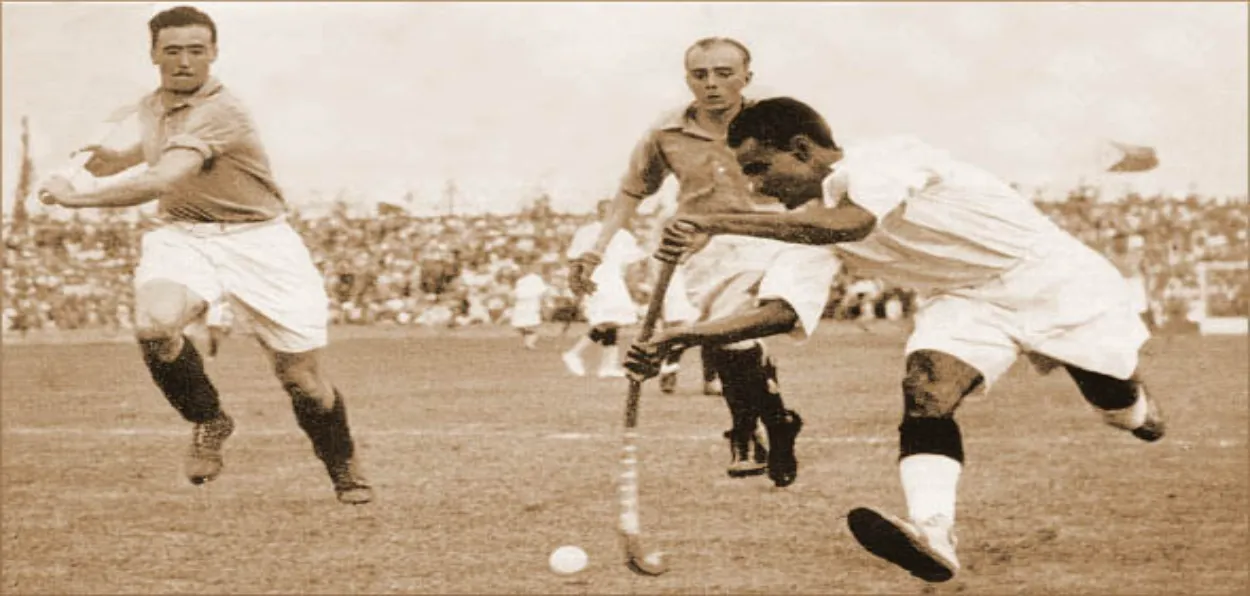
Hockey legend Dhyan Chand in action during the 1938 Olympic Games in Berlin
In football, India’s clubs were among the first to be formed in Asia and these club teams could sometimes defeat British army teams. In 1911, Mohun Bagan defeated the East Yorkshire Regiment to win the prestigious IFA Shield. Later Mohammedan Sporting club became the first Indian team to win the Durand Cup (third oldest tournament in the world) when it defeated the Royal Warwickshire Regiment in 1940.
Therefore, hockey and football stars were the sportsmen who were the best known amongst the sports lovers of India.
Cricket was not doing well before independence
On the other hand, before independence, cricket was not doing very well. India had produced some fantastic players like CK Nayudu, Mohammed Nissar, Amar Singh, Lala Amarnath, and others but the Indian team could not win any matches. India had been given Test status in 1932, but when India became an independent nation, a question mark arose about India’s status within the ICC (then called Imperial Cricket Conference) which was at that time dominated by British interests.
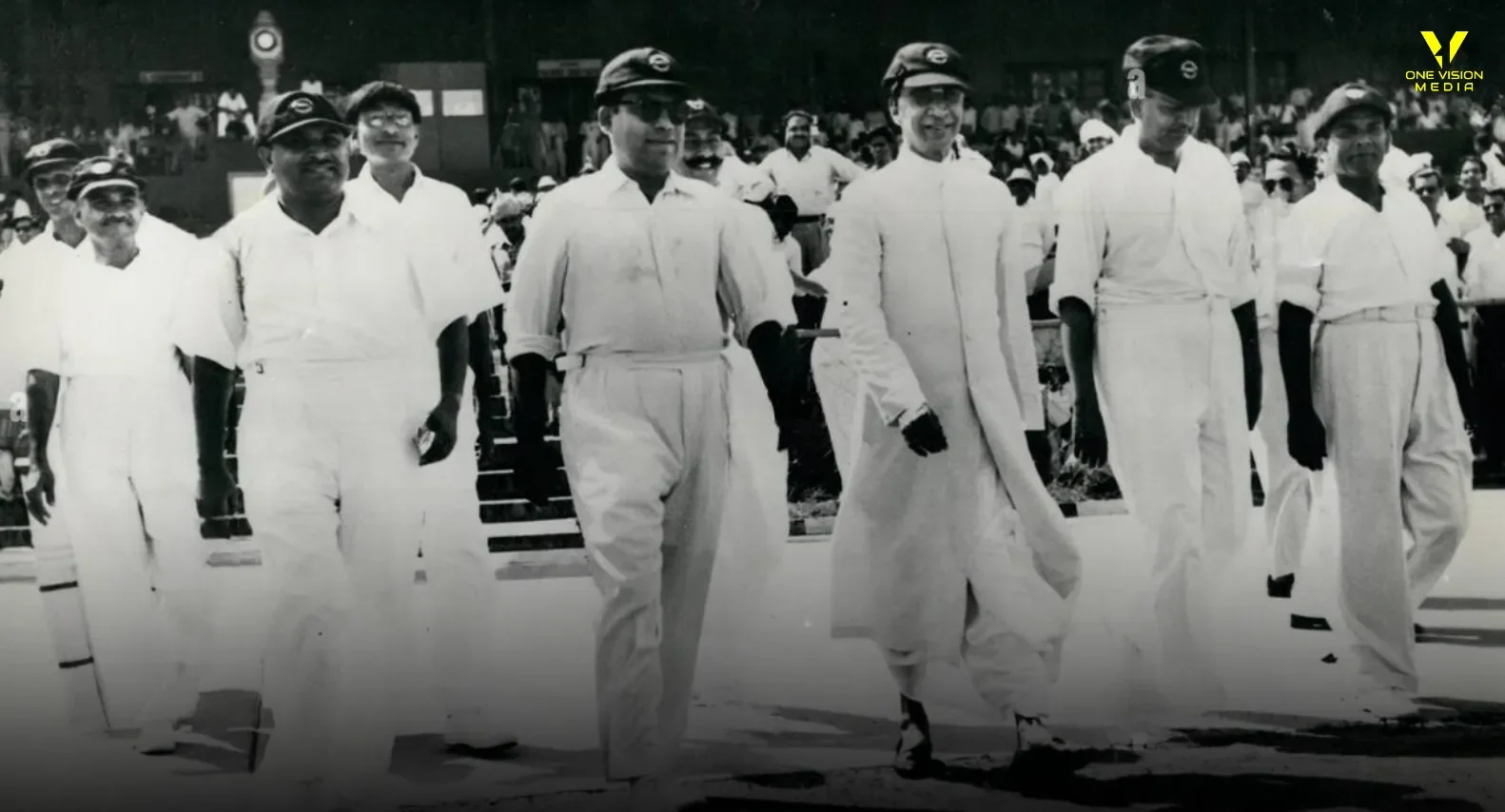
Had India opted out of joining the British Commonwealth of Nations there was a likelihood that India’s membership of the ICC could have been terminated. Author and cricket historian Mihir Bose has written in his book Nine Waves, that the ICC had decided that newly independent India could remain as a member but only provisionally. Powerful forces within the ICC were in favour of throwing out India if the country decided not to be a part of the Commonwealth.
PM Nehru to the rescue
But it was at this juncture that Prime Minister Jawaharlal Nehru’s decision came to Indian cricket’s rescue. Although it must be clarified that he did not do it for cricket. He had several economic and political factors in mind. He decided to go against the wishes of his own partymen and place independent India within the Commonwealth. Congress leaders were adamant that India should never join the Commonwealth. But Nehru argued vehemently in favour of Commonwealth membership on the grounds that a friendly relationship with Britain would be in India’s best interests.
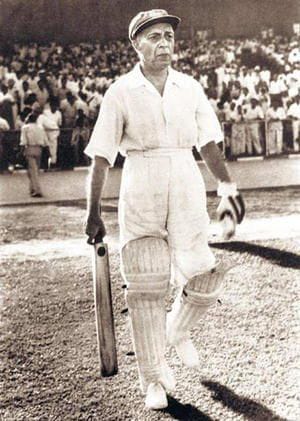
The Prime Minister overcame fierce opposition from within his own cabinet led by Sardar Patel and managed to get his decision enforced, writes Bose. The side effect of Nehru’s decision was that Indian cricket got a much-needed life-line when hockey and football were more popular. So, for Indian cricket, Nehru’s decision had far-reaching consequences. It served to keep the game from sinking down and losing its visibility.
Nehru was a sports lover
Incidentally Nehru was a great sports lover and used to encourage all sports. It was under his leadership that India hosted the first Asian Games in 1951 with great success. Just like his daughter Indira Gandhi did in 1982 with the Delhi Asian Games. Both father and daughter were aware of the fact that sports had a public relations value and could be used to showcase the nation’s prosperity and success in front of the international community.
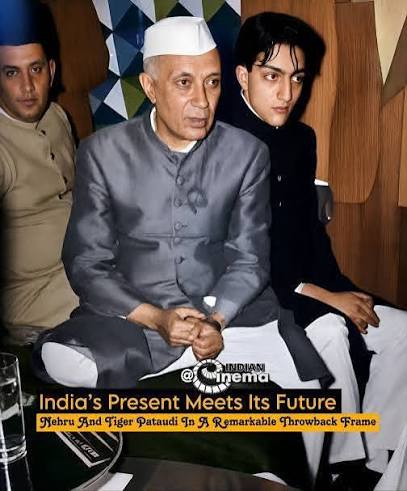
But Nehru had a special soft corner for cricket. He had himself played cricket when studying at Harrow school in the UK. He was not a skilled cricketer but he cared for the game. When the West Indies toured India for the first time after independence, Nehru insisted that the first match should be played in the nation’s capital New Delhi. So, he was probably glad to see that the decision, which he had made mainly on economic and political grounds, also had the effect of reinforcing India’s stature in international cricket.
In 1949 the Constituent Assembly of India formally ratified the continued membership of the Commonwealth and in 1950 India officially became a Republic but maintained its status within the Commonwealth.
How India’s cricket team fared after independence
Independent India’s first series was against Australia in 1948 when they lost a five Test series by 0-4 but in 1952 came India’s first-ever victory in Test cricket when they defeated England by an innings and eight runs in Madras (now Chennai). Later that year India won their first series by defeating Pakistan 2-1 and followed it up with a 2-0 victory over New Zealand in 1955-56.
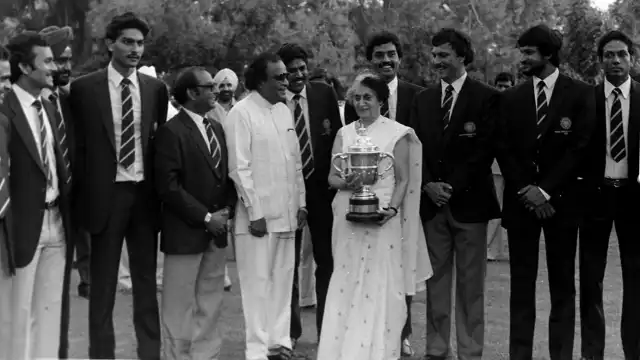
The Indian team, which won the 1983 Prudential World Cup, with Prime Minister Indira Gandhi during a felicitation ceremony in New Delhi. Pics: Wikipedia Commons / X
There followed many ups and downs for India on the cricket fields of the world. But after the turn of the century, India began a dramatic rise that could not be stopped. Now, the Indian team has won World Cups in different formats, Indian players have created world records and India is now unquestionably, a superpower in world cricket. But the scenario may have been very different had India’s first Prime Minister, Jawaharlal Nehru, not stood firm about his decision to keep India within the British Commonwealth.