Published: September 23, 2026 at 1:23 pm
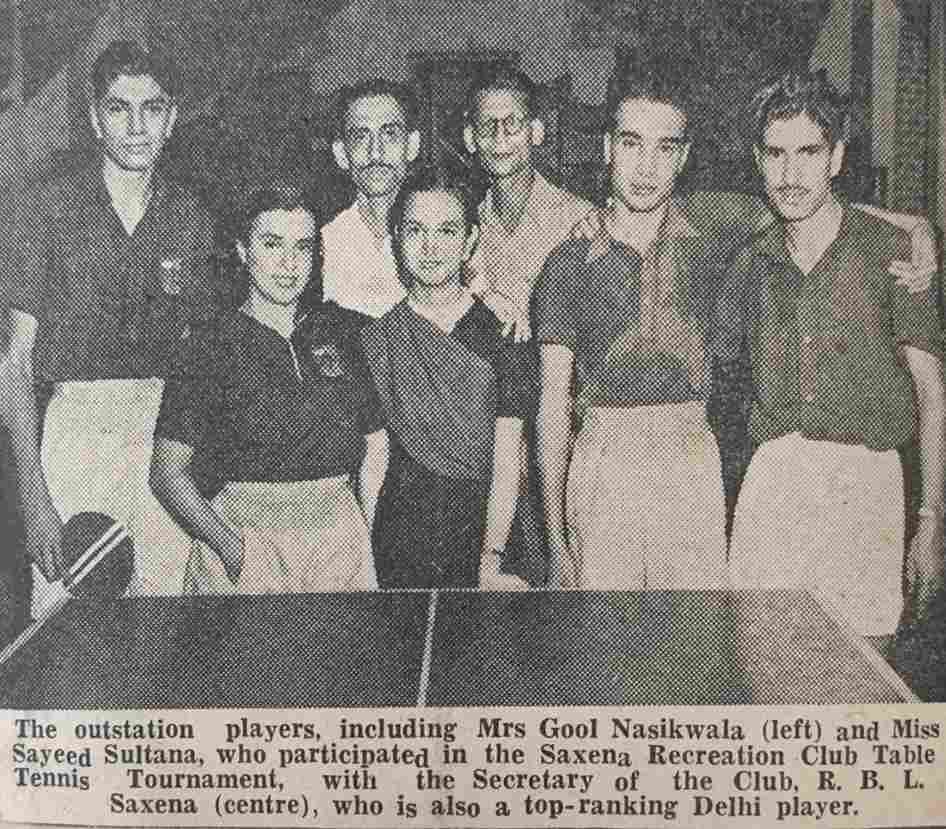
At around the time of India’s independence, there was a teenage wonder named Sayeed Sultana from Hyderabad who had extraordinary talent in table tennis and she astonished the experts in India and Europe. Sayeed Sultana later achieved the unique distinction of becoming the national champion of two different countries namely India and Pakistan. She was India’s national champion from 1949 to 1954. Thereafter her family moved to Pakistan and there too she became the national champion from 1956 to 1958.
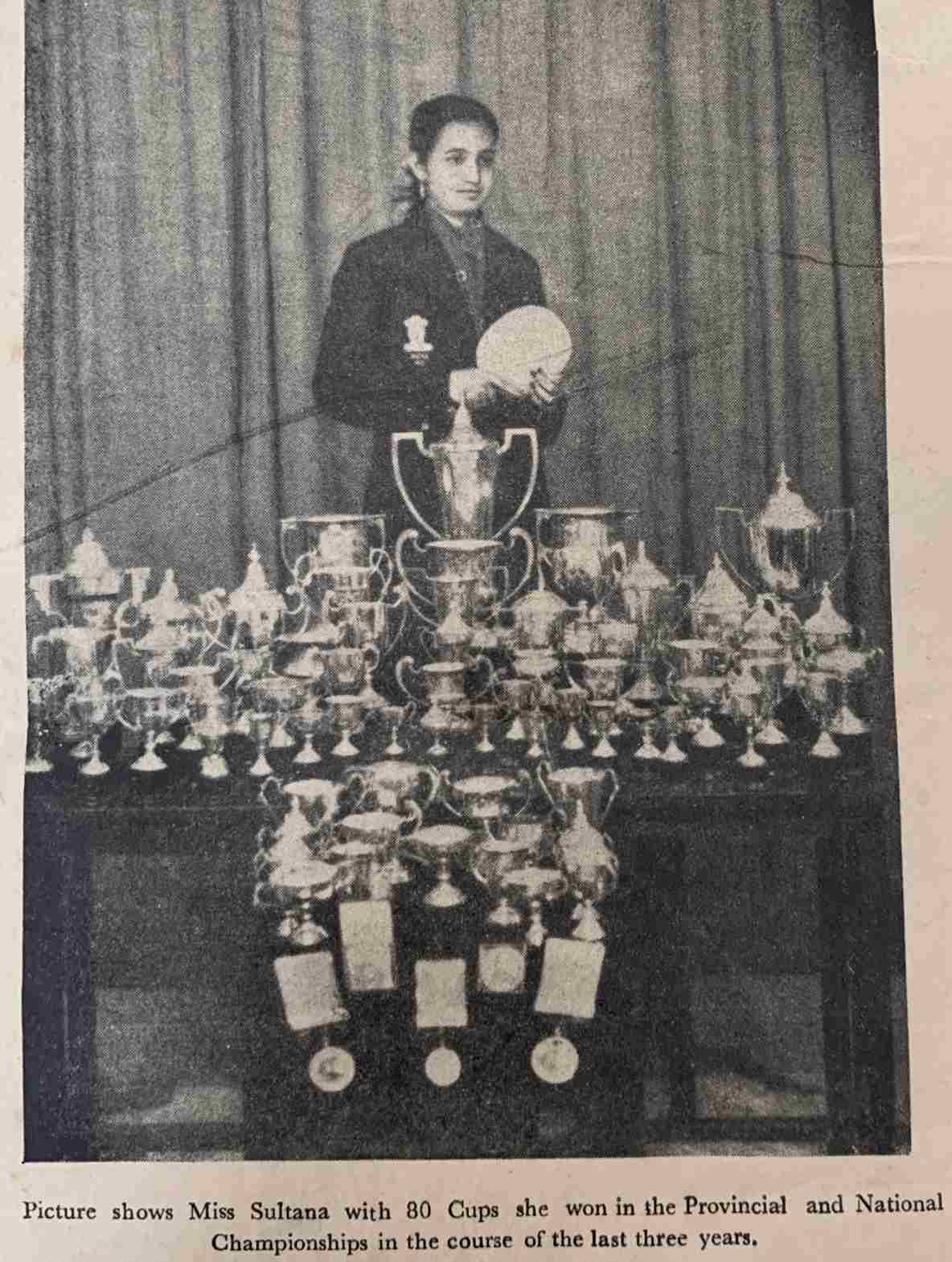
Sultana was born on September 14, 1936, to a family which had seven children. She was the first girl after six boys so she received special attention from the day she was born. Her father Mohammed Ahmed Ali enrolled her in Mahboobia Girls High School and she proved to be bright at studies as well as games. But her excellence in table tennis began in 1947 when one of her elder brothers named Hamid Ali bought a table tennis table.
After watching her brothers playing the game, she decided to try it herself and it was immediately obvious that she was better than all else even though she was so young. Incidentally one of her brothers named Altaf later became the national champion among boys while another brother Muzaffar was her main coach.
Within two years she was a master at the game and could defeat everyone who played against her. A family friend advised her to take part in the Hyderabad state championship. Initially her mother was against the idea of her playing in front of the public, but her brothers persuaded their mother to agree. She took part and became the champion. That was the turning point of her life.
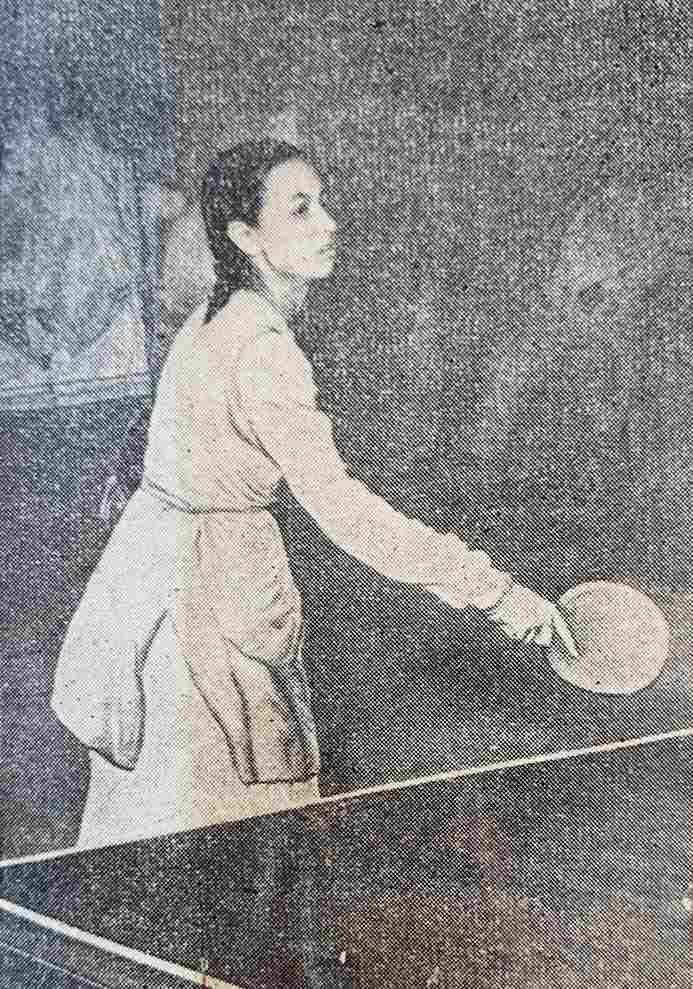
Sayeed Sultana was a treat to watch—winning or losing. Pics: sayeedsultana.com
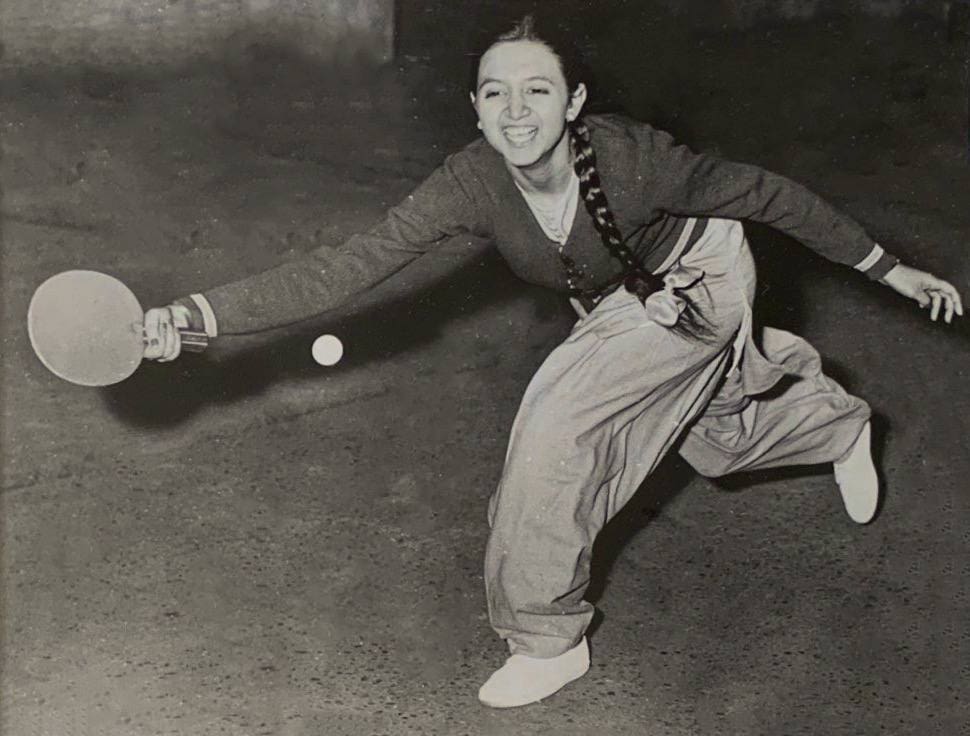
In December 1949, the All India Table Tennis championship was held in Hyderabad and she won the title although she was still a 13-year-old schoolgirl. The little girl, with her hair tied in two plaits, played with swiftness and superb timing that was unmatched. Her senior rivals, all experienced women, could neither counter her sharp attacks nor break her sound defence. That victory made her the darling of the fans and her photo was splashed across the pages of all leading newspapers.
Sultana selected to represent India
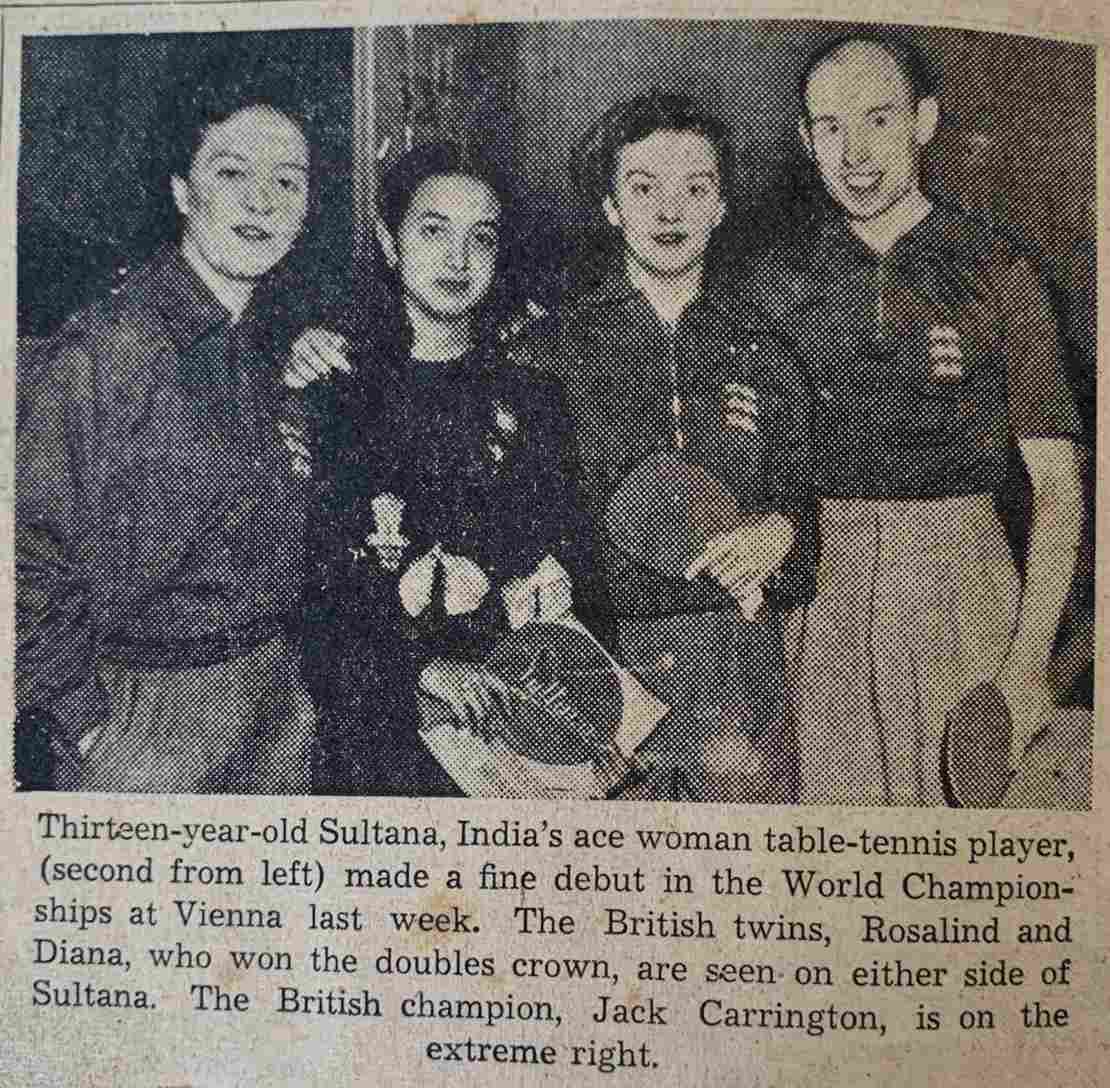
In 1950 she won an international competition in Sri Lanka and was then selected to represent India in another international competition in Vienna (Austria) in 1951. There she stunned the world by forcing the world champion Angelica Rozeanu of Romania to drop a game. It was something that rarely happened because the six-time world champion Rozeanu was said to be unbeatable. For a salwar-kameez clad Indian teenager to take a game from the world champion was an unheard of feat. Although Rozeanu won the match, the experts hailed Sultana as the find of the year.
With an impeccable defense carried most effortlessly, a touch of feminine grace in the handling of the paddle, and a rhythmic movement that comes naturally to some women, Sultana tired her opponent by her consistency, patience, coolness, and cunning placement of shots. She had a free and easy style for defense, fluent on both flanks and had a follow through as deadly as it is undetectable. Quick on her feet and prancing like a new-born kitten, Sultana was a treat to watch—winning or losing.
Student of Mahboobia Girls High School
The international media had a field day. For a few days, the city of Hyderabad, her school Mahboobia GHS, her family members and Sultana herself, became the talk of the world. The amazing thing was that among the luggage that she carried, were her favourite dolls which she used to play with and which she considered her lucky companions. The media nicknamed her the “Cinderella Girl from India”.
The men’s world champion Johnny Leach of Great Britain said he would not be surprised if Sultana became the world’s best player soon. Richard Bergman of Austria, world champion in singles and doubles, opined that the four best women’s players at the time were Rozeanu, Gizella Farkas of Hungary, Gertrude Pritzi of Austria and Sayeed Sultana of India.
Victor Barna, a legendary name in table tennis said: “In Miss Sultana, India has a girl with world championship potential. I have played against her several times on my two visits to India so I know her ability.”
When the prestigious Corbillon Cup championship was held in Bombay (now Mumbai), the Japanese team stunned all European rivals to emerge victorious. The only other Asian to put up an impressive show was Sultana of Hyderabad. Had her teammates matched her skill, India would have put up a better show but the other players were not up to her standard.
Most outstanding player from Asia
At the next Corbillon Cup, Hungary was the winner but again Sultana was the most outstanding player from Asia.
That was the stage when a proposal was put before the Indian government to send her abroad for further training but due to various factors it did not work out. The matter got further complicated when her family moved to Pakistan. Both the governments of newly independent India and Pakistan had little financial resources to spare for sportsmen. Had she been given more opportunity to train and play against the top ranked players of the world, she would undoubtedly have become a world champion one day.
As things turned out, she continued to rule the roost in Pakistan as well. She won many trophies and many memorable triumphs before retiring from the game. Years later, she passed away just one day after her 69th birthday.