Exclusive
Vaibhav’s heated confrontation in Lanka calls for stricter rules against violence in cricket

India’s teenage sensation Vaibhav Sooryavanshi and his heated confrontation with Sri Lankan players after a dramatic tri-series match between India A and Sri Lanka A ended in controversy. India lost the match in the super overs and then, under provocation, the 15-year-old Vaibhav lost his cool and physically pushed a Sri Lankan player. The Sri Lankan retaliated. TV cameras caught all the action in detail.
The incident has divided the Indian experts and former cricketers. Sanjay Majrekar and Kapil Dev have called for action to be taken against Vaibhav for crossing the line. Manjrekar who played 37 Tests and 74 ODIs for India before becoming a commentator, said: “If I was the coach or manager of the team, I would have left Vaibhav out of the next match. Just to let him know that it is not OK to get physical on the field – regardless of the provocation.”
Noted cricket journalist Boria Majumdar wrote: “Physical confrontation has no place in cricket. Young stars must learn how to handle provocation with restraint.”
But others including former Test cricketer and now coach, Sairaj Bahutule and Saad Bin Jung have taken a stand supporting Vaibhav. Saad, a former First-Class player and nephew of Mansur Ali Khan Pataudi, wrote on Facebook: “By all means sledge and taunt a batsman when he is batting. But to provoke him after he is out and his team has lost, shows disgraceful meanness. If I had been in his (Vaibhav’s) place I fear I may have reacted in a much worse manner than him.”
When a cricketer dons the India team jersey, he becomes more than just a cricketer. He or she is seen by outsiders as a representative of the country and the player stands for all the values and traditions of India. Every word that is spoken and every deed that is done, is seen in this light. So, a player must be very careful to speak and behave with dignity at all times regardless of provocation.
BCCI will not impose any fine on Vaibhav
ICC match referee Pradeep Jeyapragash has recommended fines for the Indian as well as Sri Lakan players who were involved in the incident. According to some reports, the Sri Lankan cricket board has fined Vishen Halambage (the player who provoked Vaibhav) but BCCI secretary Devraj Saikia has ruled out any action against Vaibhav.
The BCCI is sympathetic towards Vaibhav because the 15-year-old was provoked by exchanges between the players. No doubt, competitive sport is built on passion, and emotions run high after a dramatic loss. Sledging, taunts and attempts to unsettle opponents are as old as the game itself. However, one of the marks of a truly great athlete is the ability to remain calm even when others are trying to provoke a reaction.
Sachin Tendulkar was a role model for youth
In this respect one cannot help but admire the tremendous self-control that Sachin Tendulkar exhibited throughout his career. Many times, he was heckled by rivals and even umpires gave him out when he was not out. Especially the tall West Indian umpire Steve Bucknor. On such occasions, a fleeting expression of astonishment would cross his face. He knew that the decision was wrong. Yet within a second, he would recover himself, lower his head and walk away. He was truly a gentleman cricketer.

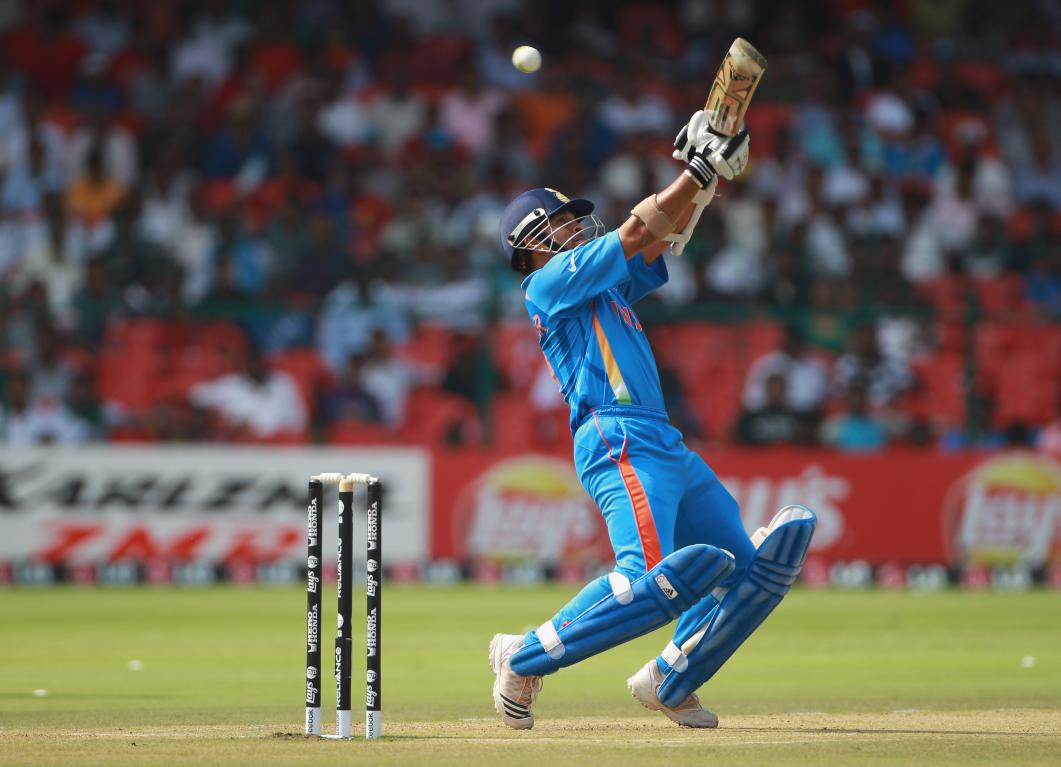
Sachin Tendulkar exhibited tremendous self-control right through his career. Pic: RCB
Why composure is important
There are several reasons why it is important to be composed at all times. Firstly, retaliation often hurts the person who reacts more than the person who provokes. Physical contact or aggressive behaviour can lead to disciplinary action, fines, suspensions and damage to a player’s reputation. The media headlines quickly shift from the player’s sporting achievements to the controversies that he is always involved in.
Secondly, opponents understand that the player has a weak point. Thereafter, they frequently use provocation as a tactic. As former India cricketer Manoj Tiwary observed, the rapid rise of Sooryavanshi means rivals are likely to target him even more in the future. Learning to ignore such tactics is essential for long-term success. Players must realise that the rival may try to provoke you into committing an illegal act to gain an advantage against you.
Thirdly, young stars carry the hopes of millions and serve as role models for the youth. The fans, especially children, admire not only their talent but also their conduct. Legends such as Sachin Tendulkar, Rahul Dravid, VVS Laxman and MS Dhoni earned enormous respect because they combined excellence with self-control under pressure.
Controlling oneself is part of learning sport
In many ways, such episodes are part of a young athlete’s education. The world’s greatest players know that the most effective response to provocation is not a shove but coming up with a superb performance. Let the bat or the ball do the talking for you. Talent may make a player famous, but discipline and composure are what make a champion. The sooner Vaibhav learns that aspect of the game, the better it will be for him and for India.
Infamous Slapgate incident is difficult to forget
Unfortunately, cricket has seen similar incidents earlier. The “Slapgate” incident is one of the most famous off-field controversies in Indian Premier League (IPL) history. In 2008, during the inaugural IPL season, Mumbai Indians’ player Harbhajan Singh slapped opponent S Sreesanth following a match against Kings XI Punjab. It left Sreesanth weeping on the field.

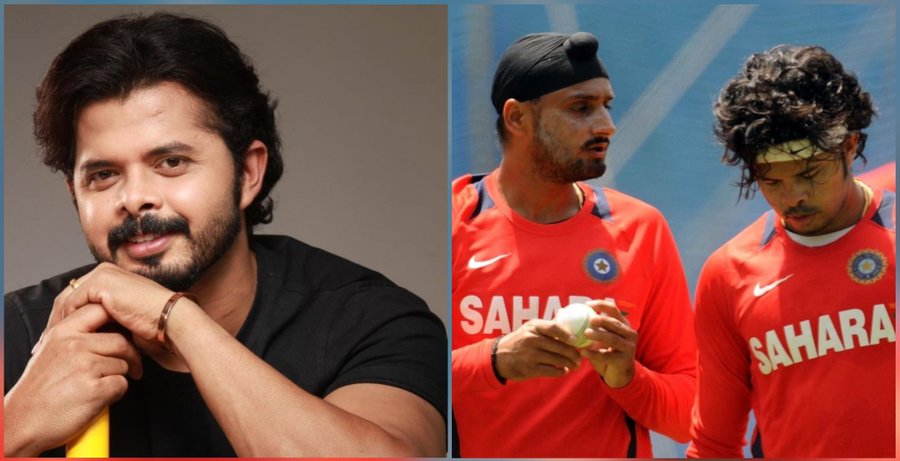
Sreesanth and Harbhajan Singh. Pic: X.com
After Kings XI Punjab defeated the Mumbai Indians, as the two teams lined up for the customary post-match handshake, an agitated Harbhajan Singh struck Sreesanth in the face. Later, Harbhajan Singh was handed an 11-match suspension by the BCCI and forced to miss the remainder of the 2008 IPL season. At the time Harbhajan Singh was a well-established international cricketer and should have known better than to let his emotions get the better of his common sense.
Lillee-Miandad incident was disgraceful
Way back in 1981, the fiery Aussie fast bowler Dennis Lillee, no stranger to controversy, kicked Pakistan’s batsman Javed Miandad in the course of a Test match at Perth. Miandad raised his bat to retaliate but fortunately for both of them, umpire Tony Crafter stepped between the two and de-escalated the situation. The incident was described by Wisden as the most undignified in the history of Test cricket.
https://www.facebook.com/share/v/1ChSFp6G2f/
The Australian players who used to themselves judge on such matters back then, imposed a fine of 200 Australian dollars. The two umpires who were on duty went on record that the fine was too lenient and wanted a harsher punishment. But skipper Greg Chappell stated that Miandad had been constantly provoking Lillee through the contest and at one point the fast bowler couldn’t hold back anymore.
Need for more comprehensive rules
However, such incidents highlight the fact that it is time to lay down more comprehensive rules and implement them impartially. The ICC has to look into several aspects of the game. For one thing, why should rival players be allowed to talk to each other? They may consult their own captain or teammates but there is no need to talk to a rival.
In sports such as tennis and badminton or even combat sports like boxing and wrestling, the two contestants do not talk to each other. Does it rob the matches of their excitement? Why allow it in cricket? This merely enables players who have the gift of the gab to emotionally upset a rival player who may be an introverted person and who cannot retaliate with his tongue.
ICC Code of Conduct needs more teeth
The ICC already maintains a strict Code of Conduct that categorizes physical violence, acts of violence, and physical assault against players, officials, or spectators as Level 4 offenses. But to further prevent physical violence, the ICC can implement and enforce the following rules in future.
The ICC can institute immediate, football-style red card send-offs for the remainder of the match for minor physical aggressions such as pushing or deliberate inappropriate contact between players. The ICC can also ensure that independent match referees closely monitor on-field altercations (like aggressive chest bumps or aggressive charging) and sanction lower-level violations to prevent them from escalating into physical brawls.
Cricket has become a big money sport nowadays. Stakes are high, pressure on the players is much more now than it used to be in the past and if the trend continues, it is likely that physical violence between players will become as common as it is in football or ice hockey. The time for ICC to act is now. Cricket was and is still called a gentleman’s game. Its grand old traditions must not be allowed to degenerate into unwarranted mayhem and unseemly brawling by the players.