Football
FIFA World Cup’s most (in)famous bite: When ‘street kid’ Luis bit more than he could chew

June 24, 2014—Luis Suárez infamously bit Italy’s Giorgio Chiellini in the closing stages of their group match in Natal. FIFA handed the Uruguay striker, who had two previous suspensions for biting during his career, a four-month ban from all football-related activity—the longest in World Cup history.
https://www.instagram.com/p/DZ91dVnDeQy/?utm_source=ig_web_copy_link&igsh=NTc4MTIwNjQ2YQ==
Now, there are no hard feelings between the players. Chiellini in his 2020 autobiography had said: ‘I admire his mischief. He had no need to apologize to me. I too am a son of a b—h on the field and proud of it.’
Luis grew up in poverty
Luis Alberto Suarez Diaz had a tough upbringing. Poverty had prevented the boy, yet to turn ten, from throwing away a coin in Montevideo, Uruguay. So, he stowed it away in his sock and went on to score a hat-trick in a soccer match. Over time, that superstition perhaps saw his high-scoring abilities gain currency across continents as he soon had the world at his feet.

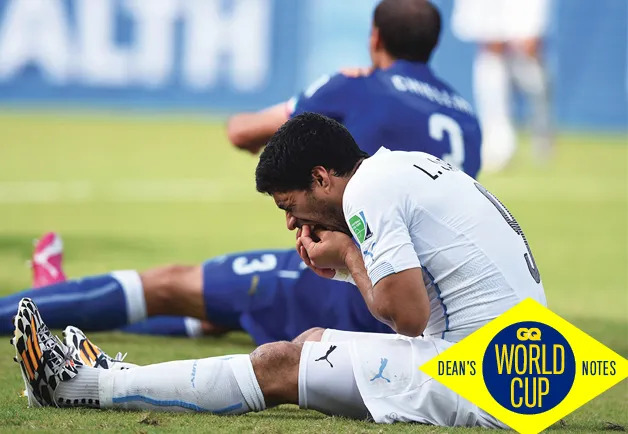
The infamous bite: Luis Suarez and Giorgio Chiellini. Pic: GQ
With teeth like piano keys, Luis Suarez would prove more than a menace to rival defenders. By sinking those fangs into Chiellini, his bite may have beaten Italy to the 2014 FIFA World Cup’s round of 16 but banished him to exile from the beautiful game.
https://x.com/DSports/status/2068855756875866558?s=20
Here’s a portrait of the man in his own words, which reveal as well as conceal to those who have followed the flashy forward’s career:
“I guess I’m still a botija, a street kid who relies on the cunning I learned on the streets. These days, I’m not thinking intuitively about these skills; they just come out of me as instinct,” Suarez told FourFourTwo magazine, a few months before the world’s most widely watched spectacle unfolded.
I want to enjoy the here and now: Luis
When he was 11, his parents split, tempting him to quit. That was but one page from a painful past. “I want to enjoy the here and now. Every player should live in the present, to enjoy what they’re (sic) doing…What happened in the past happened. You have to move on.”
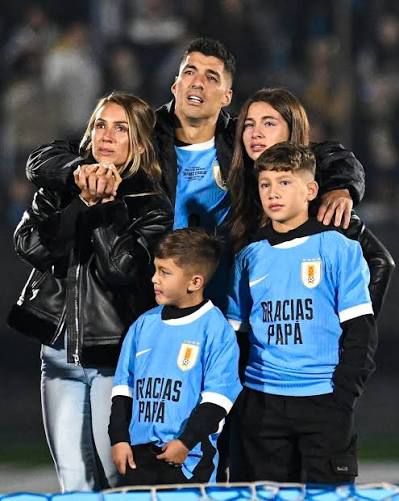

On-field theatrics: “Everyone says I throw myself to the floor, but it’s not that simple. Is it simulation if I avoid what would otherwise be a heavy contact but is still a foul?”
What spurs him on: “I’ve had boos and whistles my whole career. It’s their way of intimidating you to make you feel uncomfortable, but the more you boo me, the more you motivate me. If I went to an away ground and all the fans did was applaud me, I’d be rubbish, I can tell you that.”
A past take on the media: “When the press said this or that about me, it’s because I had allowed them to write something. If I hadn’t done anything, they wouldn’t have written or said anything.”
Luis tries to be psychologically and emotionally stronger
Suarez’s teammate at Nacional, Uruguay’s most successful side, couldn’t hide his admiration: “On the pitch, he was more or less like nowadays, a player who is not scared of big defenders, who likes to have the ball.”

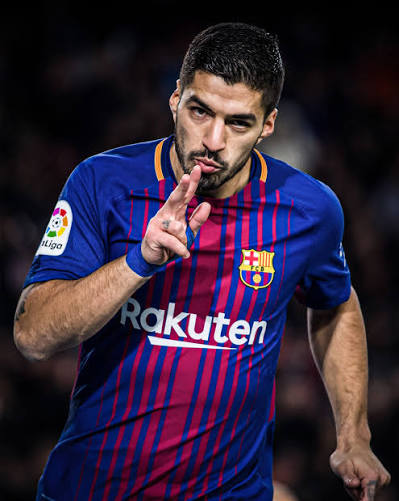
Ricardo Perdomo, Suarez’s Nacional manager had put things in perspective. “If Luis didn’t have this temperament, we wouldn’t be talking about him today. That’s what defines his success.” Pics: FC Barcelona, Facebook and Instagram
“This has happened to create a controversy, which is always important but doesn’t mean anything. Simply put, Luis tries to be psychologically and emotionally stronger than his rival,” Uruguay skipper Diego Lugano said defending his mate. Brazil’s Fred felt FIFA’s punishment on Suarez was too severe.
From the ‘Hand of God’ to the ‘Feet of Messi’, Argentina blessed with 2 incomparable genius
Uruguay’s ultimate hero Alcides Ghiggia, whose winning goal at the Maracana clinched the 1950 World Cup, was less adulatory: This boy’s clearly not right in the head. That’s just not something you do on the pitch… He already did it before in England and now he’s done it again. It’s abnormal. It’s a football match—not a war or a fight.”
Ricardo Perdomo, Suarez’s Nacional manager had put things in perspective. “If Luis didn’t have this temperament, we wouldn’t be talking about him today. That’s what defines his success.”
A Joseph Antony is the author of ‘My way—The biography of M.L. Jaisimha’ (Apple Books, Kindle, +91-9490040831).