Exclusive
Shabbir Ali: The Sniper Who Never Missed — Still Hitting Life’s Biggest Targets At 70

Six years after India became a Republic state, a ‘sniper’ lad, who was destined to become one of India’s most decorated footballers, was born in Hyderabad. Even as the nation observes its 77th Republic Day on Monday, Shabbir Ali celebrates his 70th birthday – it is no mere coincidence.
Hyderabad and Secunderabad have produced many talented football players and Shabbir Ali can be ranked among the best of them. He was a prolific goal getter both at the national as well as the international level and later, an outstanding coach.
When he was at his peak, it was well known that a Shabbir Ali header from inside the box would be a sure goal. It could be nothing else. He was a sniper who never missed his target. This correspondent was fortunate to cover several of the matches that he played in.

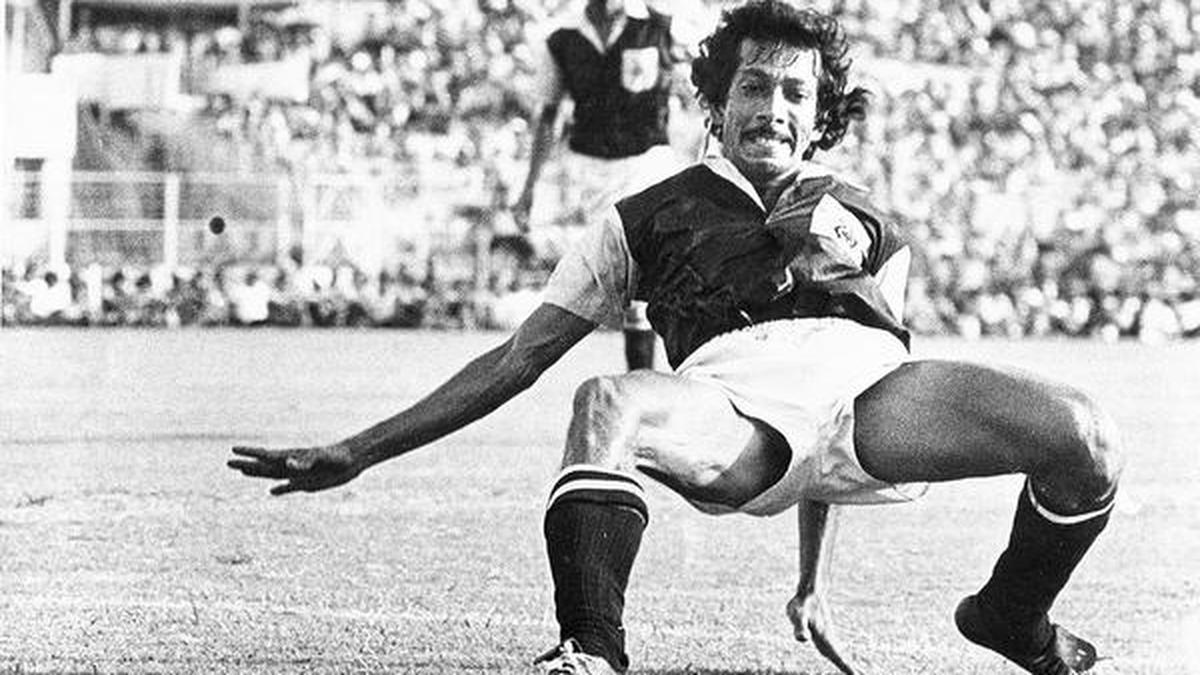
When he was at his peak, it was well known that a Shabbir Ali header from inside the box would be a sure goal
Shabbir Ali, who is a former captain and technical director of the Indian football team, has achieved many laurels in his career. In 2011, the Government of India honoured him with the Major Dhyan Chand award for Lifetime achievement in sports for his service of more than four decades. He was the first footballer to be bestowed with this honour.
He began his football career in Hyderabad with Abbas Union Football Club, Darulshifa, Hyderabad and represented AP Schools, Junior State and Hyderabad XI. In his younger days, he played for Abbas Union FC, Hyd Arsenal, AP Special Police, Tata Sports Club, Bombay, East Bengal Club and Mohammedan SC.
A magical team full of riches
Back in the 1980s, Mohammedan Sporting used to be a team of magicians. There was the formidable Atanu Bhattacharya in goal and the tall and strong Moidul Islam in the back with Prem Dorji. In midfield there was the superbly skilled Victor Amalraj and in front were Shabbir Ali and Iranian Jamshid Nassiri. It was an embarrassment of riches.

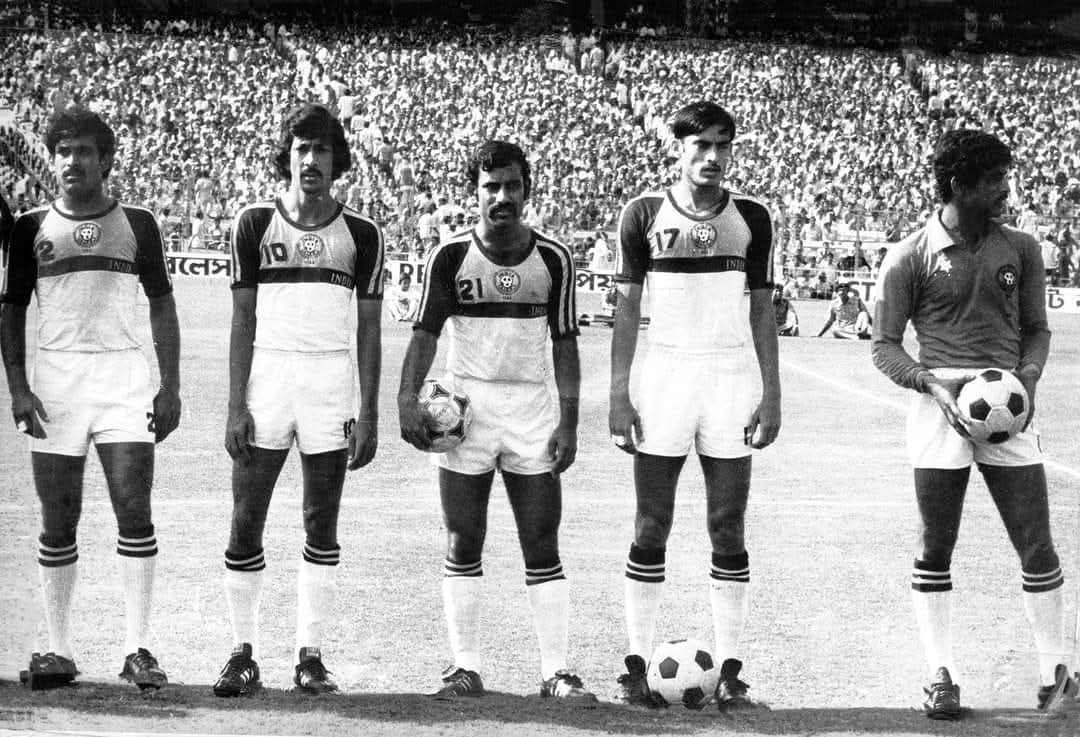
Shabbir Ali (2nd from left) wore the Indian jersey with pride. In 1974, he led the Indian team that finished as joint winners of the Asian Youth football championship. He scored five goals in the tournament. It was the last time that India won a trophy at the Asian level
During his captaincy, the club won nine trophies including back-to-back wins in the Federation Cup tournament. When this team played in the Nizam’s Gold Cup in Hyderabad, the spectators were treated to an unforgettable feast of football.
In 1974, Shabbir led the Indian team that finished as joint winners of the Asian Youth football championship. He scored five goals in the tournament. That was the last occasion when India was a winner of any trophy at the Asian level. The team’s performance was praised by the then Prime Minister Indira Gandhi.
“The boys showed some excellent fighting spirit during that tour. Most of us were playing international football for the first time, so it was a new experience for us. Playing in front of such crowds was also something that was new to many of us,” Ali said and added, “Only the boys from Calcutta (now Kolkata) had played in front of hostile crowd, and they helped the rest of us.”
The 1976 Merdeka international football tournament in Kuala Lumpur saw Shabbir Ali at his unbeatable best. He scored a hattrick against Indonesia in 34 minutes which is the fastest hattrick by any Indian player. He represented the Indian football team from 1974 to 1984. In 1984, he was appointed to lead the Indian team in the Great Wall Cup in China.
In 1995, he was appointed the Technical Director of the Indian team that won the gold medal in the SAF Games and also finished runner up in the 1995 SAARC Cup in Sri Lanka that same year.

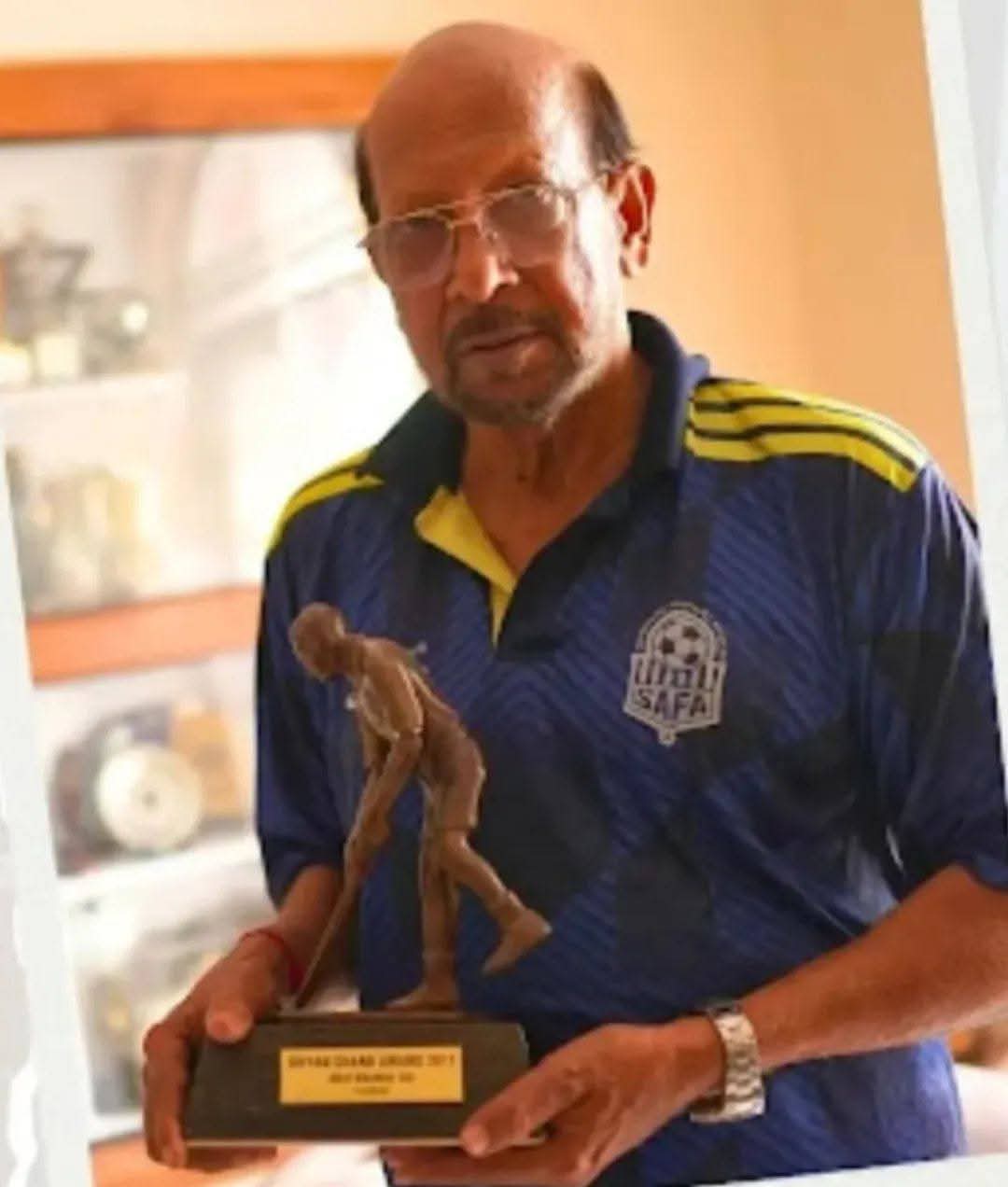
Ali with the Major Dhyan Chand award for Lifetime achievement in sports. He was the first footballer to be bestowed with this honour
Sniper Shabbir turns into a coach par excellence
After quitting the game as an active player, he showed his mettle as a coach and coached top professional clubs of India like Salgaocar SC, Goa, Mohammedan SC, Mahindra United, Churchill Bros, Fransa FC, Vasco SC, Goa, Abbas Union FC etc etc. He was the Chief Coach of the Goa state team which finished runners-up in the Santosh Trophy in 1999. He also coached the Bengal state team from 2010 to 2012, and Bengal won the Santosh Trophy in 2010 and 2011.
In the 1991–92 seasons, he made Mohammedan Sporting the top team in India. It won four tournaments and finished runners-up in two others. Next season, he took up the challenge of coaching a smaller team namely Peerless SC. It took him only one season to take the club to the Calcutta Super Division.
Between 1997 and 1999, Shabbir Ali managed the premier Goan team Salgaocar. In 1998, Salgaocar won the Goa Pro League under his guidance and went on to win the Indian Super Cup. Ali then took the team to victory in the Rovers Cup and capped it off with the Durand Cup victory. In Goa, he also managed Churchill Brothers and Vasco.

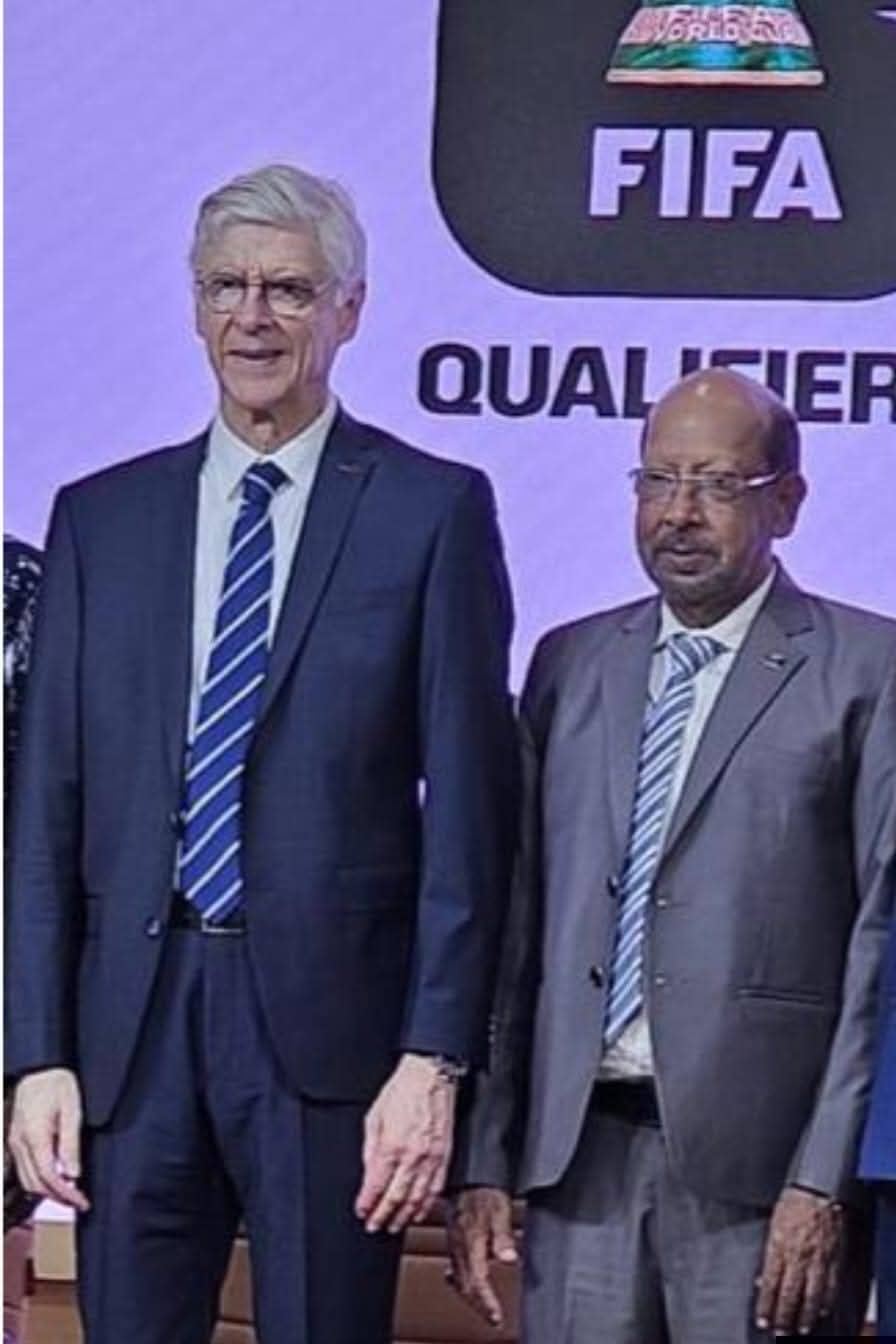
Shabbir Ali with Arsene Wenger, who coached Arsenal Football Club in the English Premier League
Shabbir served as chief coach of Telangana
He was chief coach of the Telangana state team for five years from 2018 to 2023. He started the Shabbir Ali Football Academy in March 2021 and coached youngsters in the Lal Bahadur Stadium from September 2022 to March 2023.
Now he is the chief coach and mentor of Abbas Union FC, a first division club of Hyderabad and Telangana which played in I league-3 of AIFF in 2023-24. In the 2024-25 season, AUFC topped Group E in Srinagar and qualified to play in the Final round in Kolkata. However, it narrowly missed the chance to qualify for I league-2.
Nowadays, Shabbir Ali is also serving as an executive committee member as Eminent Player category of the All India Football Federation (AIFF) and is the deputy chairperson, Technical Committee of AIFF.
He says: “Whatever I am today is because of football. I started the Shabbir Ali Football Academy to train young players with the intention of giving my contribution back to football. I gave free coaching to underprivileged boys, and it would be my biggest reward to see one of my trainees make a big mark on the international scene.”