Exclusive
Diamonds in the Rough: Secunderabad Cantonment’s Sporting Goldmine

If Hyderabad’s Old City was football’s folklore, the Secunderabad Cantonment was its factory floor. This was where players were not discovered, they were manufactured. From Trimulgherry and Bolarum to Valluvar Nagar, Jawahar Nagar, Kamala Nagar, Shastri Nagar, Ammaguda and Alwal, football wasn’t a pastime. It was routine. It was identity. Close to the hearts.
In these Tamilian-dominated neighbourhoods, almost every home produced a footballer, coach, referee or a crazy fanatic. Barefoot boys chased stitched balls across dust and grass, learning the game the hard way. Talent was raw, relentless and everywhere.
Where It All Began in Cantonment
The British presence in Trimulgherry and the Cavalry Barracks sowed the first seeds. Officers introduced organised sport, discipline and structure. What followed was a unique sporting culture, one where Olympians lived among civilians, trained alongside youngsters and lived quietly, without fuss or privilege.
At the centre of this universe stood the legendary Trimulgherry ground, a living, breathing arena of football. From sunrise to sunset, it hosted endless games. Drills blurred into matches; matches into dreams. Today, this historic ground faces extinction under a proposed elevated corridor from Paradise to Shamirpet. If lost, Hyderabad sends into oblivion one of its most authentic sporting nurseries.

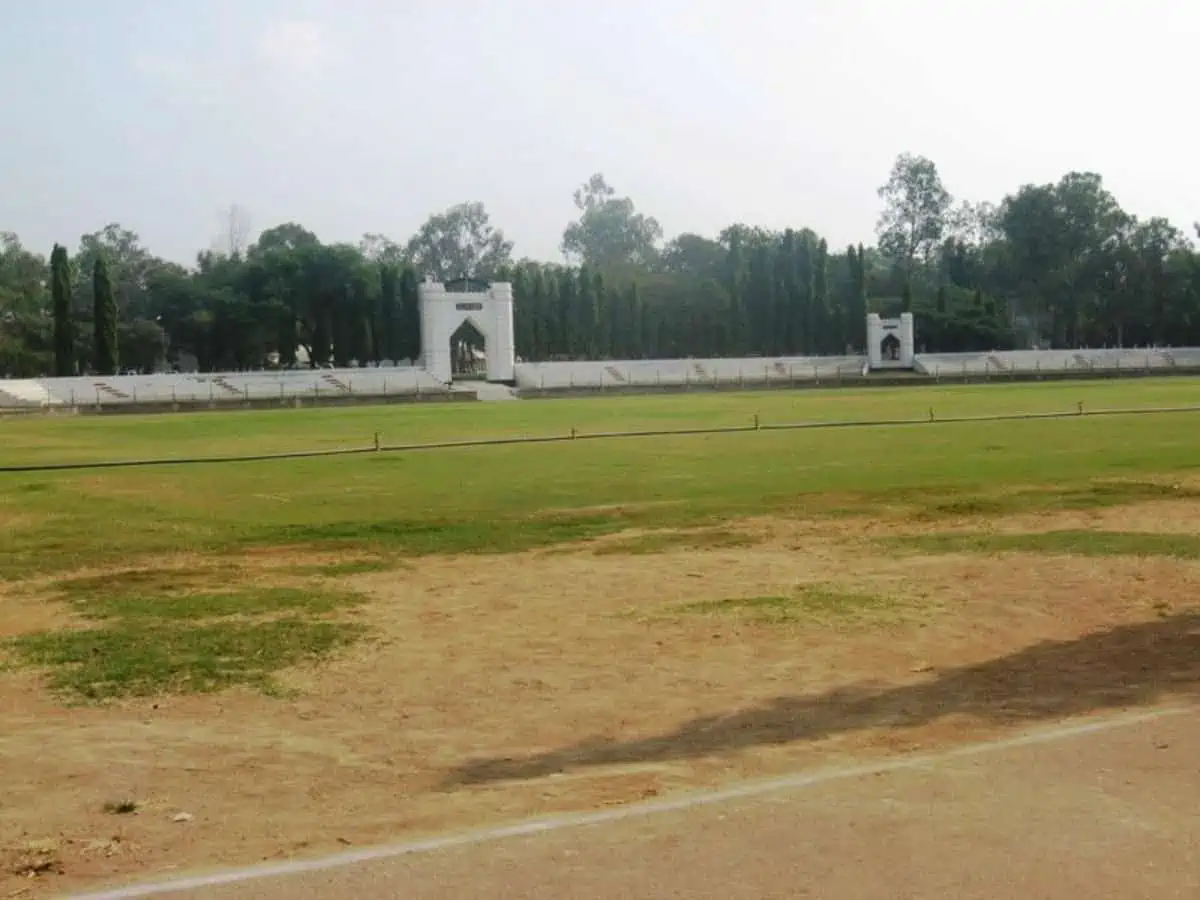
Army’s legacy: AOC’s Thapar Stadium
Football vs Authority
The ground was never freely available. Defence authorities claimed ownership; locals claimed legacy. There were flashpoints, standoffs and repeated struggles. But the football fraternity refused to yield. Through persistence and protest, access was secured. Tony, Mohan and Phalguna became guardians of the game, organising regular tournaments and ensuring football never went silent.
Cantonment teams were formidable. Many featured State-level players. The tournaments carried a special attraction, Olympians taking on local sides. Crowds packed the sidelines, soaking in every feint, flick and weighted pass from the masters.

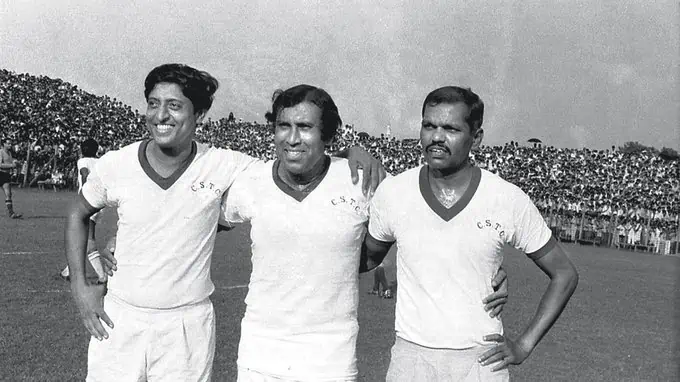
Legendary stars: Chuni Goswami, Pradip Kumar Banerjee & Tulsidas Balaram (AIFF Media)
Masters and Magicians
Kannan was the “black pearl” who razzle-dazzled with efficient close ball-control. Railways stalwart Janakiram bent free kicks with cruel precision, the ball obeying his command, embarrassing many a great goalie. Legends like Balram, Peter Thangaraj, Dhanraj, Anthony Patrick, Susai Sr and Susai Jr though have passed on, their names are etched permanently into Indian football lore.
Then came Victor Amalraj.
Explosive, fearless and supremely gifted, Victor Amalraj announced himself with unbridled swagger. Calcutta beckoned and he answered in style, donning the iconic Mohun Bagan colours. He rose to that rare pinnacle of captaining India in 1983. He dribbled, dodged and danced his way for more than a decade on the fabulous Calcutta maidans. He marshalled the destinies of the three elite teams, East Bengal, Mohun Bagan and Mohammedan Sporting. He exhibited his nuances not just in the famous Calcutta League but in the Rovers, DCM and Durand Cups in Bombay and Delhi. He had the opportunity of meeting up with the oldest Olympic legends like Chuni Goswami, P K Banerjee and Saleh Manna. Today, Victor Amalraj continues to shape the sport as a member of the national technical committee, alongside Old City greats Shabbir Ali, Habib, Akbar and Fareed. He was a very popular figure in Calcutta those days. Test cricket off spinner N Shivlal Yadav had his roots from Lal Bazar and was a student of Valerian Grammar School before shifting to Marredpally. Another off-spinner Kanwaljit Singh, who missed out donning India colours, belonged to this area too.

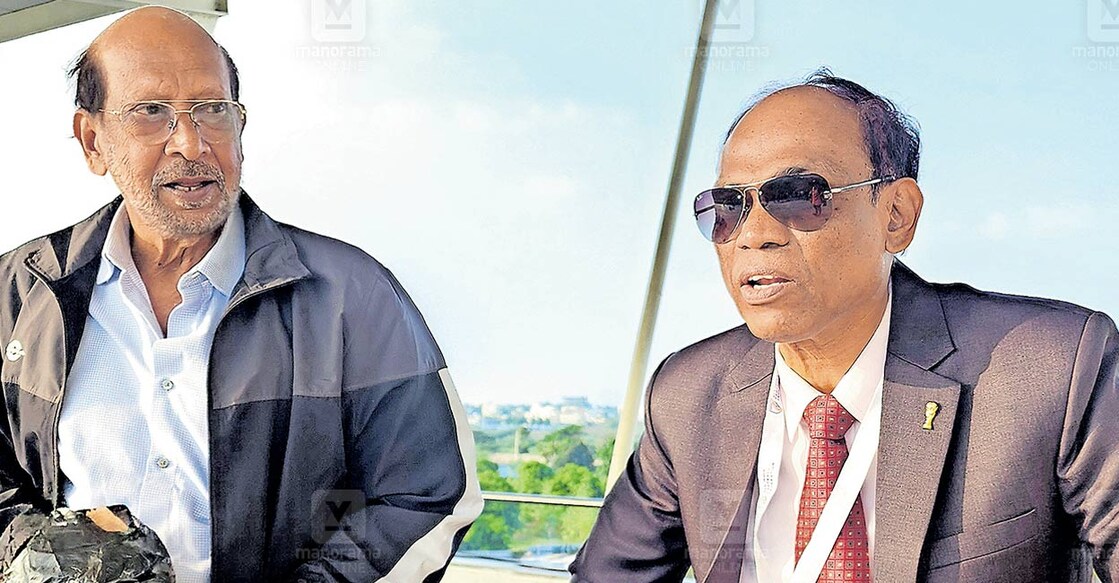
Heroes of the bygone era: Victor Amalraj with Shabbir Ali
The Unsung Pillars
The Cantonment produced more than stars. It produced builders of the game. John Victor and Aleem Khan were coaches of rare pedigree. G M Pentiah, a highly respected technical official, was known for his meticulous mastery of the laws of football. Papaiah, ice-cool and impeccable, officiated with authority and grace.
Players like the brothers’ trio, Edwards, James Zachariah and Anthony, carried Cantonment grit into departmental football with Hyderabad Telephones and State Bank of Hyderabad in the fiercely contested Rahim League. So too did Bhaskar and Pratap Seelan from Ammaguda Bazar, who graced the Indian team.
M R Krishna of Alwal was the chairman of the Andhra Pradesh Sports Council, after he adorned the ministry of defence in Indira Gandhi’s cabinet. He promoted sports in Cantonment precincts. Olympian athlete Milkha Singh trained in the EME Centre grounds and rugged cross-country hillocks on the periphery of the army centre. Attached to the kitchen, Milkha became an iconic athlete so much so a whole colony is named after him in the vicinity where his footfalls resonated every morning.
The inter-command and inter-battalion football, hockey, basketball and volleyball games often drew the locals to the venues. If the AOC and EME Centres had hockey and basketball teams of great calibre, there was L P Naidu from the defence area, who provided us all the sports tournaments news to feature next day. The AOC Centre swimming pool was the only Olympic sized pool in the city. The nearby AOC Thapar Stadium and the Football stadium saw local Army talent treat the crowds with impeccable stuff.

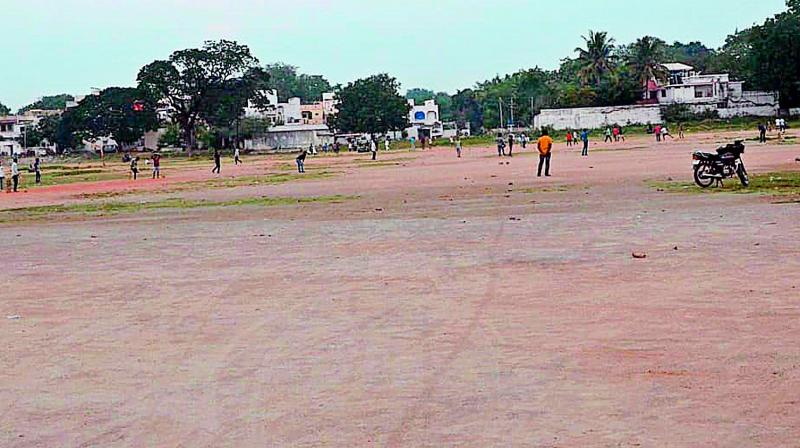
Woeful neglect: Mudfort ground
Schools That Shaped Champions
Two institutions stood tall, Valerian Grammar School and Bolarum High School. Both placed sport at the centre of education. Victor was a proud product of Valerian Grammar High School and never forgot his roots, later extending financial help to a veteran footballer undergoing treatment at New City Hospital, a gesture emblematic of the Cantonment ethos.
Beyond Football
Football ruled, but it wasn’t alone. Hockey and tennikoit flourished in pockets of Bolarum and Alwal. K N Narsing Rao, from this very soil, became a record-holding national tennikoit champion. Three-time Olympic hockey star N Mukesh, a terror for rival defences, was another jewel from the Cantonment belt. Venugopal was a super hockey player too in his heydays. One just cannot forget the redoubtable South Central Railway goalkeeper Ramaswamy. And also, the ever enthusiastic and hardworking Surana, who took care of his cricket club from Bolarum. Dorairajan and then K Jagdish oversaw the Hyderabad hockey Association affairs without any of them giving away any quarter.

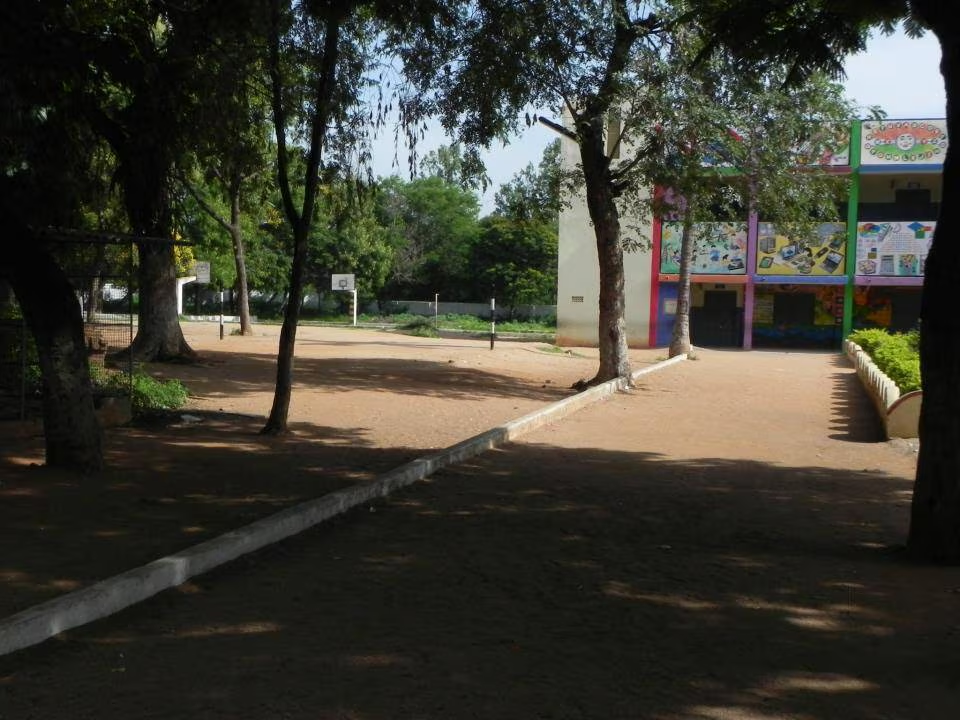
Sports at the centre of education: Valerian Grammar School in Bolarum
Legacy in Dust and Sweat
They trained without luxuries. They played without hype. They rose without shortcuts. The hard way was their highway.
These were Secunderabad Cantonment’s diamonds in the rough, forged on forgotten grounds, sharpened by discipline, and immortalised by performance. Long after the dust has settled and the grounds have vanished, their legacy still kicks on!!!