Exclusive
The name is Roy: WI’s Gilchrist, who terrorized with his beamers, had bolstered Hyd’s attack

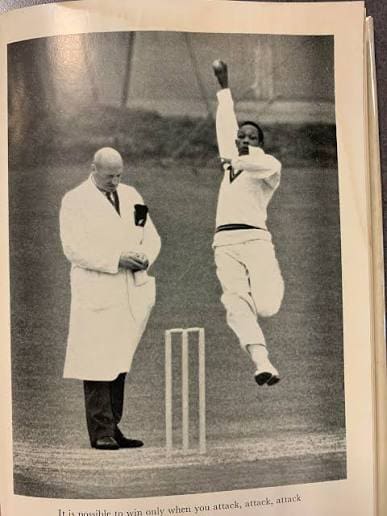
Not many people would know that way back in the 1962-63 season, fast bowler Roy Gilchrist from the West Indies represented Hyderabad in the Ranji Trophy championship. Roy Gilchrist was at his peak at that time and was considered to be the fastest bowler in the world. But what made him stand out was his unpredictable temper which was said to be even quicker than his bowling.
https://www.facebook.com/share/v/1BzYsBZg4a/
The reason for his being in the Hyderabad squad was because of an experiment that was carried out by the Board of Control for Cricket in India (BCCI). After the severe 5-0 drubbing that the West Indies handed out to India in the Test series of 1961-62, and the injury suffered by captain Nari Contractor in the same series, it was clear that Indian batters were all at sea when facing top class fast bowlers. Therefore, the BCCI decided to allow state teams to bring in fast bowlers from the West Indies to play in the domestic Ranji trophy tournament. The idea was to give Indian batters an opportunity to develop their technique against blistering pace.

Four pacers were brought in from the West Indies
Following this decision, Hyderabad recruited the services of Roy Gilchrist, Bombay took on Charlie Stayers, Delhi chose Chester Watson and Bengal picked Lester King. All four West Indians were good pacers but it was Gilchrist who was the fastest as well as the most controversial.
Cricket’s greatest all-rounder, Sir Garfield Sobers, has gone on record that Gilchrist was the fastest bowler he played with or against. And former Indian middle order batter Chandu Borde who crossed swords with the fiery Jamaican in the home series of 1958-59 gave an interview in which he agreed totally with Sir Gary.
Chandu Borde had a torrid time
Several years ago, Borde had told Cricinfo: “Gilchrist was the fastest bowler I played against, a real terror. We had never played that kind of bowling before. His motto was to hit the batsman so that he would be scared and get out. I’ve played him in domestic cricket in India and in the Lancashire League too.”

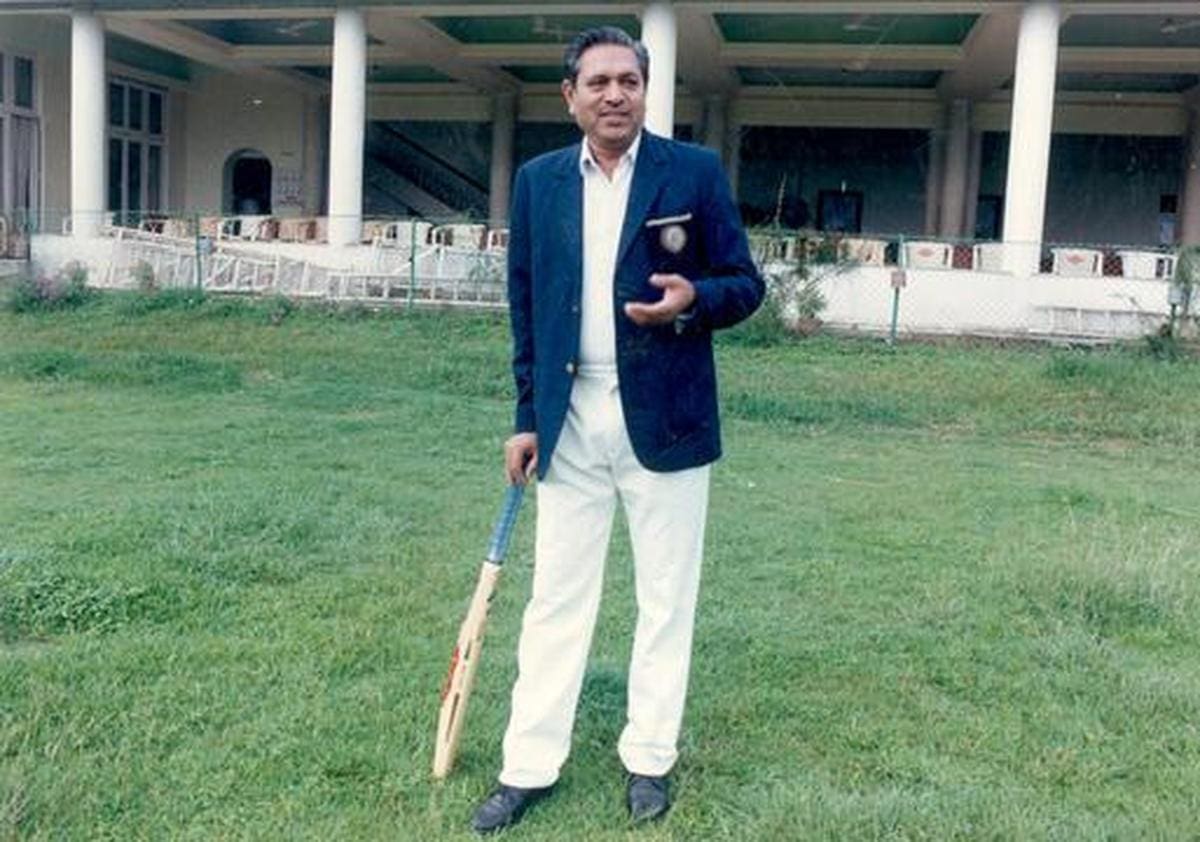
Gilchrist’s bouncer was very dangerous. It used to skid onto you and the aim was unerring. He often bowled four bouncers in an over,” recalled Chandu Borde in an interview with cricinfo.com. Pic: Sportstar-The Hindu
Borde scored India’s only century in the 1958-59 home series which West Indies won 3-0, aided by the menacing pace duo of Wesley Hall and Gilchrist. They claimed no less than 56 wickets between them. “Hall was fast in patches and used to mix his pace cleverly. Gilchrist was fast all the time and had tremendous stamina. In the Bombay Test he bowled virtually through the final day” said Borde, comparing the two speed merchants. “Gilchrist’s bouncer was very dangerous. It used to skid onto you and the aim was unerring. He often bowled four bouncers in an over,” recalled Borde.
Gilchrist was similar to Marshall
In this respect Gilchrist was quite similar to Malcolm Marshall. Like the latter-day speedster, Gilchrist was not as tall as his contemporary fast bowlers. In those days, Wesley Hall and Charlie Griffith, were the tallest men on the field in any Test match. Gilchrist was shorter but he had unusually long arms. His pace was sustained and hostile and what made him really dangerous to face, was his tendency to bowl beamers at the batsmen if he was angry. Sometimes he deliberately overstepped the line and hurled the beamer from 20 yards or less. It was a terrifying experience for any batters. Fear of rules and laws didn’t stop him from carrying out his misdeeds.

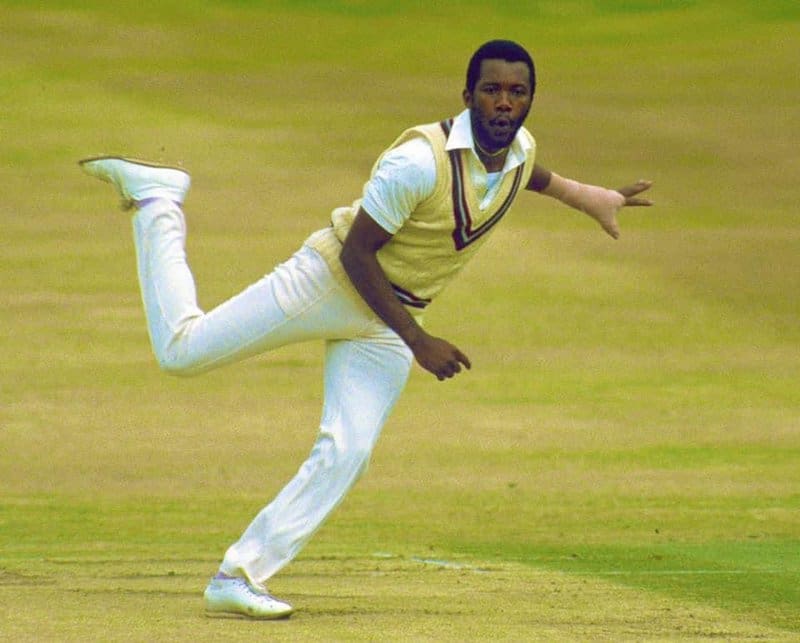
Roy Gilchrist was quite similar to Malcolm Marshall. Like the latter-day speedster, Gilchrist was not as tall as his contemporary fast bowlers
In fact his fiery temper and disregard of discipline, led to the shortening of his Test career. Gilchrist’s Test career might have been longer had he not been sent home halfway through West Indies’ 1958–59 tour of India because of his attitude and his disagreements with West Indies captain Gerry Alexander.
50 years ago, Lloyd’s West Indies changed tactics to ascend the throne of world cricket
One reason for this was Gilchrist’s penchant for bowling beamers, as well as off-field arguments with teammates and captain. In the Fourth Test of the 1958-59 series, at Nagpur, after Indian batter AG Kripal Singh had struck three consecutive boundaries, Gilchrist deliberately overstepped the bowling mark by six metres and delivered a bouncer which hit the Sikh batter on the head, dislodging his turban.

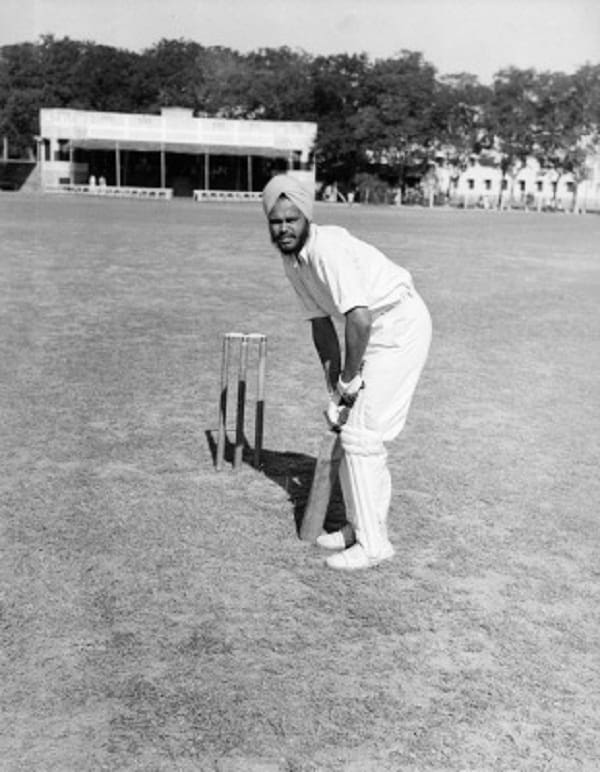
After Indian batter AG Kripal Singh had struck three consecutive boundaries, Gilchrist deliberately overstepped the bowling mark by six metres and delivered a bouncer which hit the Sikh batter on the head, dislodging his turban
In the following match, against North Zone, Gilchrist unleashed a barrage of beamers against Swaranjit Singh. He ignored captain Gerry Alexander’s instructions to stop bowling beamers and during the lunch interval, Alexander substituted him. Thereafter he was sent home, while the other players proceeded to Pakistan for the remainder of the tour. This marked the end of his Test career. Despite taking 26 wickets in four Tests, he was sent home in disgrace. He ended up playing 13 Tests in which he took 57 wickets at an average of 26.68.
Took 9 wickets for Hyderabad versus Bengal
After that, when Hyderabad recruited his services for the Ranji trophy season, Gilchrist was tamed by India’s opener Pankaj Roy of Bengal in the quarterfinal played in February 1963. Hyderabad lost the match by 184 runs at the Eden Gardens in Calcutta. Pankaj Roy subdued Gilchrist with hundreds each innings (112 and 118). Surprisingly Gilchrist did not resort to beamers even after Roy hooked him for three successive fours. So, nobody could predict what to expect from him.

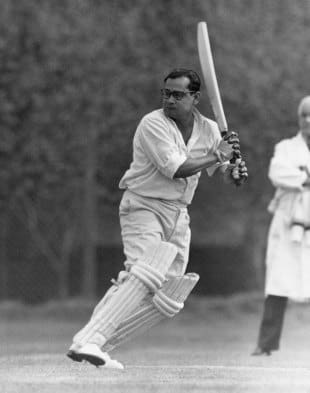
Bengal’s Pankaj Roy subdued Gilchrist with hundreds each innings (112 and 118). Surprisingly Gilchrist did not resort to beamers even after Roy hooked him for three successive fours
However, Gilchrist ended up taking a good haul of wickets in that match. He took 5 for 124 in Bengal’s first innings and followed it up with 4 for 111 in the second innings. Other notable names who played in that match were ML Jaisimha, Syed Abid Ali, Mahendra Kumar and Kaleem-ul Haq for Hyderabad and Ambar Roy, Lester King and Chuni Goswami for Bengal.
Gilchrist also played in the Duleep Trophy and the Moin-ud-Dowla Gold Cup. His last first-class appearance on Indian soil came for Andhra Chief Minister’s XI against the Indian Starlets CIub which was part of a series of fundraisers for the country’s defence forces in the wake of the India-China war of 1962.
Met with success in the Lancashire League
After the end of his Test career, Gilchrist played in the Lancashire League in England for several years. He was quite successful on English pitches, taking more than 100 wickets in each season until 1979.
https://www.instagram.com/reel/DZYBJQDoU8s/?utm_source=ig_web_copy_link&stkn=NTc4MTIwNjQ2YQ==
However, stories continued to emerge about his violent temper. In 1967, Gilchrist was sentenced to three months’ probation after attacking his wife Novlyn during an argument. In his later years he suffered from Parkinson’s disease and high blood pressure. He passed away on July 18, 2001, at his home in Portmore in Jamaica.