Cricket
Magic of wrists and discipline that marked Laxman’s Very Very Special career

On November 1, Indian cricket celebrates more than the birthday of VVS Laxman. It celebrates a player who demonstrated that elegance can be powerful, patience can be aggressive and a flick of the wrists can become a lasting sporting signature. His flick shots remain a lesson in timing. His 281 remains a lesson in resilience. His discipline remains a lesson in commitment. Laxman did not need to overpower every bowler. He simply needed to understand the ball, trust his hands and find the space others could not see.
Dressing room camaraderie, a changed stance, Azhar’s influence in Laxman’s 281 and Beyond
Born on November 1, 1974, Vangipurappu Venkata Sai Laxman earned the name Very Very Special through a career defined by extraordinary wristwork, elegant strokeplay and an uncommon ability to rescue India from difficult situations.


This birthday feature celebrates the genius behind the shots, the discipline behind the success and the gentleman behind the legend. Laxman was not the conventional power hitter who relied on brute strength. He possessed a different kind of power: the ability to manipulate the ball with his wrists, judge its movement and place it into gaps that seemed almost invisible.
His cricket was a reminder that timing can defeat power, balance can overcome pace, and patience can be more dangerous than aggression.
How did his wrists work?
If there is one aspect of Laxman’s batting that deserves special attention, it is his remarkable ability to flick and redirect deliveries into unexpected areas.
His trademark wristy shots often sent balls from outside off stump towards midwicket, leaving bowlers and fielders wondering how a delivery outside the traditional hitting line had travelled so effortlessly towards the leg side. His supple wrists and exceptional placement became defining features of his batting.
The wrists did the talking: Laxman could use his wrists to change the direction of the ball at the moment of contact. Rather than relying only on a large swing of the bat, he generated direction and timing through subtle movements.
Timing mattered more than brute force: His shots often appeared effortless because he met the ball cleanly and allowed its pace, combined with his own bat speed, to do much of the work.
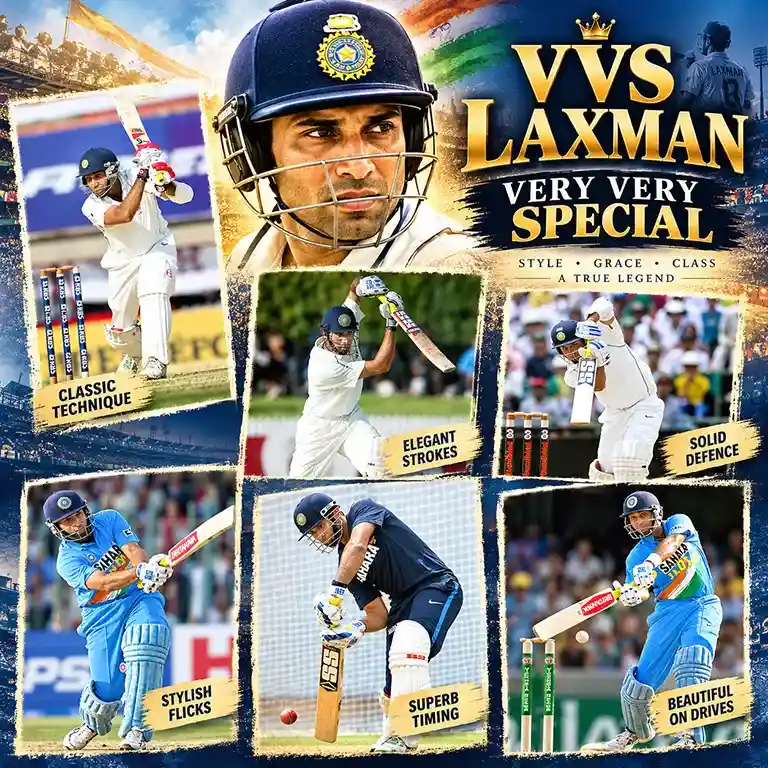

His balance created freedom: A stable base and excellent coordination allowed him to adjust his hands and body to deliveries that might trouble a less adaptable batter.
He challenged conventional field settings: When a bowler delivered outside off stump, the expected scoring options often lay towards the offside. Laxman’s ability to redirect the ball towards the leg side created different angles and forced fielders to reconsider their positions.
He made difficult shots look natural: The magic was not simply the flick itself. It was his ability to repeat the stroke under pressure while maintaining control. His style should not be reduced to a single shot. Laxman also excelled at driving, playing spin, using the depth of the crease and finding gaps with soft hands. His wristwork was one part of a complete batting method.
Wrist work is Hyderabad magic
Laxman himself offered an intriguing explanation for his wrist-dominant batting. In an interview with the BCCI, he suggested that playing on matting wickets in Hyderabad may have contributed to the development of his style. Such surfaces could produce challenging bounce, encouraging him to rely on his wrists rather than simply using his elbows to control the ball.
https://x.com/Auravauraa/status/2116702651899588868?a=1tatgNL5iGdin3vI5vY&s=20
This insight is particularly valuable for young cricketers. Technique is not developed in isolation. It evolves through the surfaces players encounter, the coaching they receive, the challenges they face and the solutions they discover through practice.
Laxman’s batting was a product of that process: individual talent refined through years of experience.
Fitness and discipline
Laxman was not celebrated primarily for muscular power or explosive physique. His effectiveness came from coordination, balance, concentration, movement and technical precision.
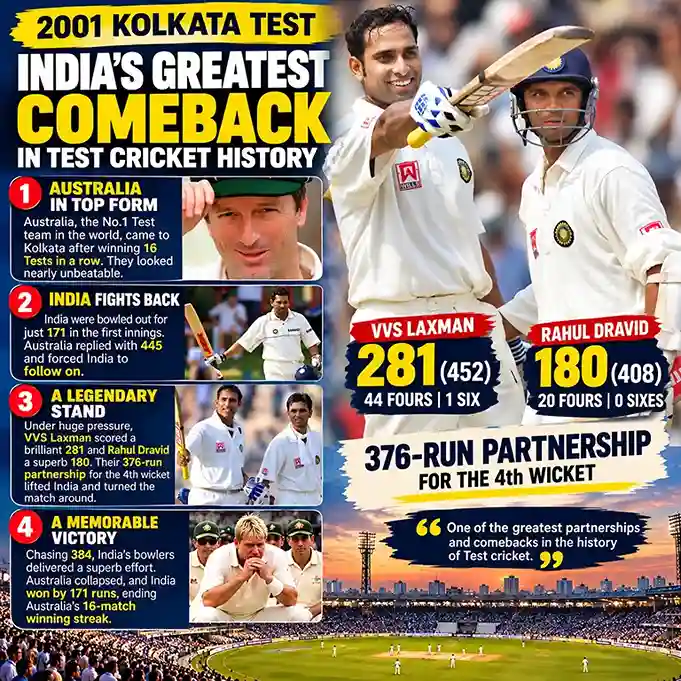
For a batter playing long Test innings, fitness means more than running quickly between the wickets. It includes maintaining posture, controlling movement, preserving concentration and repeating technically demanding actions for hours. Laxman’s famous 281 against Australia at Eden Gardens in 2001 required extraordinary endurance and mental composure. He shared a 376-run partnership with Rahul Dravid as India overturned a difficult position to win the Test.
One of the most revealing aspects of Laxman’s life is the commitment he brought to pursuing his dream. In a published interview, he explained that he was prepared to miss family functions and films with friends when he believed they might interfere with his cricketing commitments. He emphasised focus, hard work and the need to follow passion with consistent action.

His journey also included a difficult decision as a teenager: pursuing cricket rather than following the medical profession, like his parents. Their support allowed him to choose his own path.
There is also a charming birthday anecdote. Sachin Tendulkar once joked publicly that Laxman’s pre-batting secret was taking a shower and eating an apple. Laxman responded that Tendulkar’s inspiration was the bigger secret. It was a light-hearted exchange, but it captured the warmth and mutual respect between two great Indian cricketers.
Laxman’s beauty of cricket
Laxman has often resisted the description of himself as an artist, explaining that his job was to score runs and help India win. Yet the beauty of his cricket was impossible to ignore. The wrists, the timing, the balance and the quiet confidence combined to create a style instantly recognisable to fans.
His contribution continues beyond his playing career through coaching and cricket development, helping shape the next generation of Indian players.
VVS Laxman’s journey is a remarkable story of achievement, graceful retirement and a new chapter in Indian cricket. Celebrated for his elegant batting and unforgettable match-winning performances, he received prestigious honours, including the Padma Shri in 2011, recognising his contribution to Indian cricket.
After retiring from international cricket in 2012, Laxman continued serving the game beyond the boundary ropes. His passion for nurturing young talent led him into coaching and mentorship, helping shape the future of Indian cricket. His transition from a legendary batter to a respected mentor demonstrates that retirement is not the end of greatness, but the beginning of another meaningful innings.
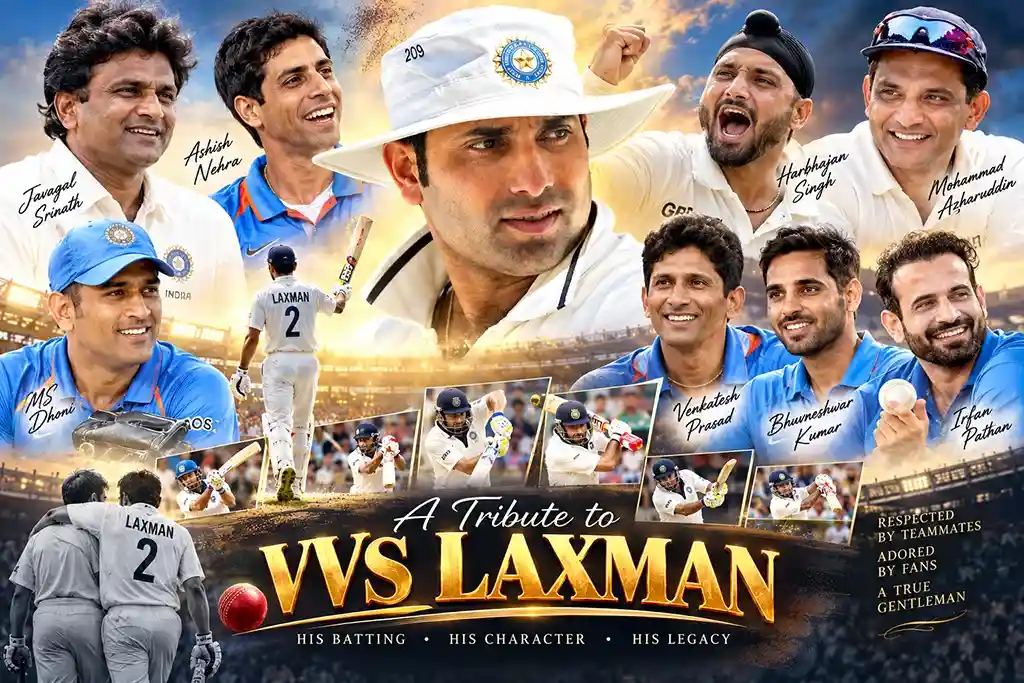

Beyond his cricketing brilliance, Laxman’s humility, sportsmanship and gentlemanly character makes him an inspiring role model. As a coach and mentor, he continues to shape future Indian cricketers. His timeless message is simple: play with passion, serve the team, respect the game and leave a lasting legacy.
The Man Who Spoke to the Ball
Before his bat could dance, his eyes would speak;
He watched the ball, its secrets to seek.
With tender respect and a craftsman’s art,
He understood its rhythm, its soul, its heart.
The ball would whisper; Laxman would know,
Where gaps would open, where runs would flow.
Past desperate fielders, through spaces untold,
It raced to the boundary, graceful and bold.
Not merely a stroke, not merely a call,
It was a beautiful friendship – Laxman and the ball.
That is what made Laxman Very Very Special and why his name continues to inspire cricket lovers across generations.