Exclusive
No X-Factor, No Margin: India’s Predictability Turns Into A T20 World Cup Liability

India’s massive loss to South Africa in the Super Eight of the ongoing ICC Men’s T20 World Cup tournament has shown that India’s ‘invincible’ bulldozer has hit a roadblock. “India are beatable,” announced South African David Miller after that game. And that is what is worrisome part as the other two teams in the Super Eight group will be keen to take a cue from the South Africans.
Suddenly, from being the team to beat in the tournament, India have sunk to a level where their progress from here on is dependent upon several factors which are complex in nature. The huge victory of the West Indies over Zimbabwe has further endangered India’s position.
South Africa thrash India, snap champions’ 12-match winning streak at the T20 World Cup
Therefore, India have to carefully plan their remaining matches to stay in contention for a spot in the semifinal. The semifinal qualification rules are as follows: Firstly, points will be the top criteria and the two teams which have the highest points will qualify. That much is quite straightforward.
But if points are tied, then the Net Run Rate (NRR) will determine the qualifying positions. If NRR is also tied, then head-to-head results will be the determining factor. Now, after India’s loss to South Africa, our further progress may depend on all these factors.
India was riding the crest of a wave. The boat was rocked by just one bad performance. It is not unusual and does happen sometimes. India’s big loss to South Africa saw our run rate descend to -3.80. Later, the West Indies thrashed Zimbabwe by 107 runs and raised their run rate to a whopping 5.35. So now, India’s chances of making it into the semifinals will very likely depend upon the results of their own matches as well as other contests.
India must win big in next two contests
Firstly, India will have to win their next two matches by a handsome margin. Then they will also have to pray that the other results go in such a way that favours their position in the table. Due to the run rate gains made by West Indies and South Africa from their matches, India are under great pressure to win big and increase their run rate drastically. Nothing less will do.
One advantage India have in their favour is that they play their last Super Eight match (against West Indies), after the South Africa vs Zimbabwe battle. So, India will have a clear picture of the run rate requirements in their last Super 8 game. That may help by giving them a clear target.
How did this happen?
But why did this come about? Why did the strongest team in the tournament allow the situation to descend into such chaos? Coach Gautam Gambhir is facing a lot of flak on this count.

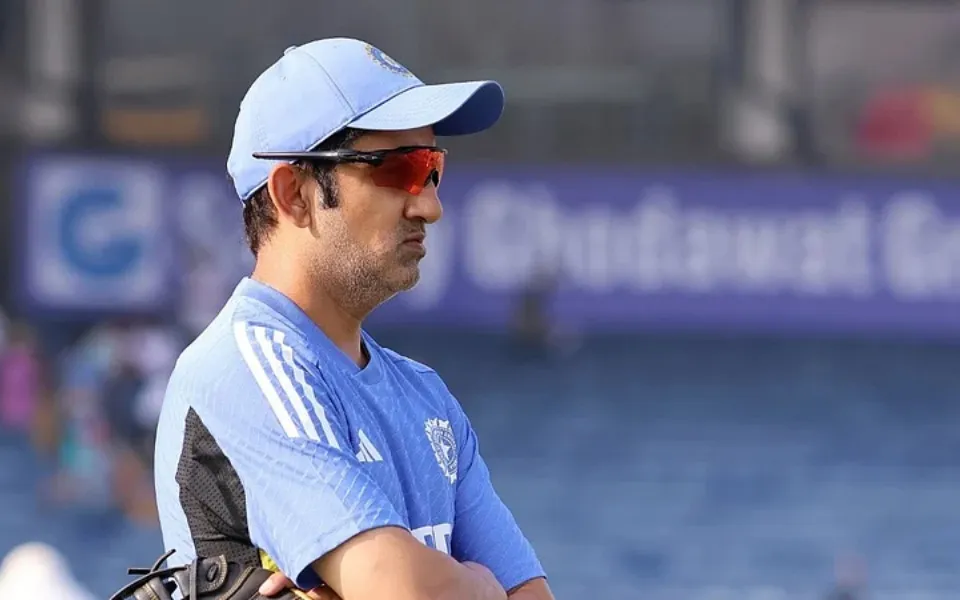
Gautam Gambhir is facing a lot of flak. Pic: CricTracker
Some of the biggest names of Indian cricket like Sunil Gavaskar and Kris Srikkanth are questioning the decision to drop Axar Patel and pick Washington Sundar for the match against South Africa. Gavaskar feels that the approach is too academic. He likened the move to a professor making mathematical calculations and about right and left combinations.
Srikkanth too lashed out. He told NDTV: “Why should anyone drop Axar Patel? This is one of the most embarrassing defeats in the history of Indian cricket in T20s. This is the worst loss apart from the 2022 semifinal. Because of this, the match against Zimbabwe has become crucial. Suddenly, even the Zimbabwe-West Indies match has become important for India. I wonder who India will pray for. But for starters, they should pray for themselves.”
Undoubtedly, it was a very unusual decision, and it failed miserably to achieve anything. It hampered India to a considerable extent. However, it wasn’t because of one selection error that India lost. The batting failed collectively.
I think we’ll come back strong, says India skipper Suryakumar Yadav post SA loss
Suryakumar Yadav is an excellent batter, but he didn’t provide the kind of example that was required from him both as a batter and a captain. He reads the game well and picks up signals from the bowler’s body language, his field placements, and bats according to match situations. Ishan Kishan and Abhishek Sharma have the same qualities although Sharma is going through a lean patch.
Poor show by opening pair
That brings us to the second point. Abhishek Sharma’s bad form is putting India under immense pressure. If the opening stand is repeatedly low, then the middle order is subjected to an overload. Here are India’s opening stands in the ongoing tournament: 8 vs USA, 25 vs Namibia, 1 vs Pakistan, 0 vs Netherlands, 0 vs South Africa. With the start being consistently poor, how can India do well?
Incidentally, the 25 against Namibia was because Sanju Samson opened with Ishan Kishan. Out of the 25 runs, 22 were scored by Sanju off just eight balls. That was the only game that Sanju got in the tournament thus far.


Abhishek Sharma is going through a really rough patch and that has not helped India’s cause
Abhishek Sharma has hit a really bad patch in his career. Three ducks in one tournament is a shocking display by the man who is ranked World No.1 batter in the T20 format. In 2026, Abhishek has played nine T20I innings for India so far. His highest score is 84, and he has made 197 runs with an average of 24.62 and a strike rate of 211.82. He has hit only two half-centuries this year. Out of these nine innings, he has been dismissed for a duck five times.
To compound India’s problems, Rinku Singh will probably not play in the next one or two matches. He has returned home because his father, who is suffering from liver cancer, has taken a turn for the worse. And, therefore, Rinku needs to be by his father’s side.
The only silver lining for India has been the performance of pace spearhead Jasprit Bumrah. He produced another superb spell in the Super Eight clash against South Africa, taking 3 wickets for only 15 runs in his 4 overs. In doing so, he surpassed Ravichandran Ashwin’s long-standing record for most wickets by an Indian bowler in T20 World Cup history. Bumrah dismissed Quinton de Kock and Ryan Rickelton early to rock South Africa’s top order, then added the scalp of Corbin Bosch to his kitty to complete his three-wicket haul. He will be at the centre of India’s campaign in the rest of this tournament.
Has India become too predictable?
Without going too deep into the minor details, it looks like India has become too predictable. Rival coaches have understood India’s mindset and have come up with counter-schemes. Some teams have used an off-spinner attack effectively against India’s top order. The examples are Salman Ali Agha (for Pakistan), Aryan Dutt (for Netherlands) and Aiden Markram (for South Africa).

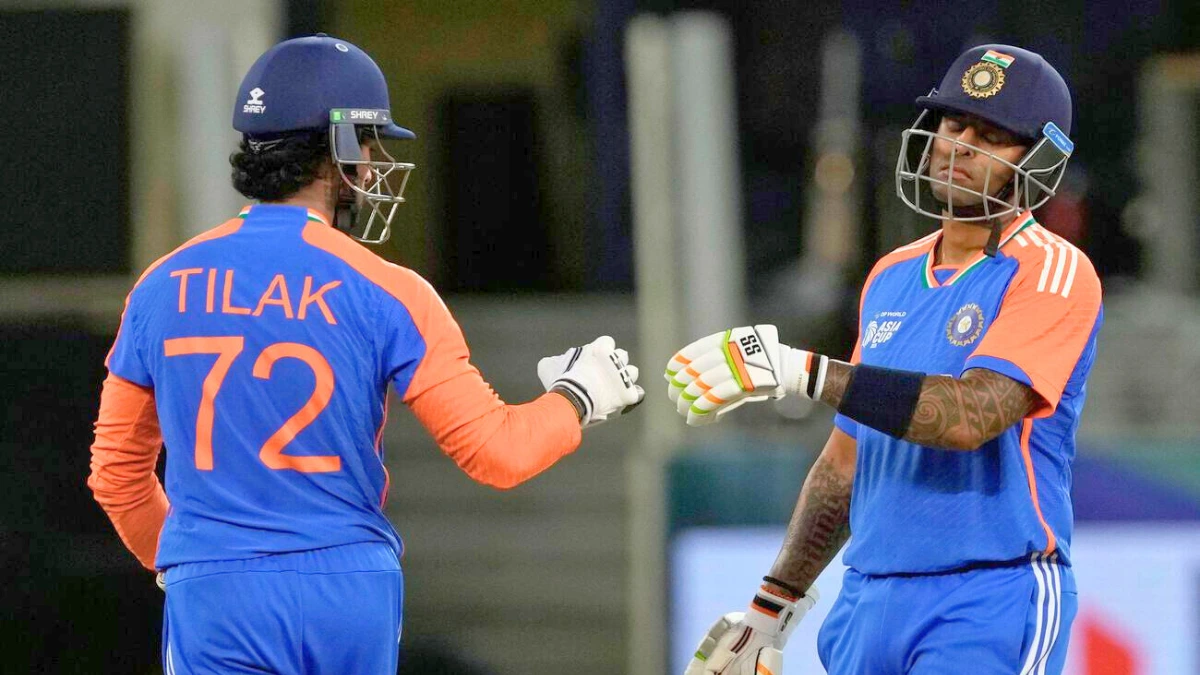
Tilak Varma and Suryakumar Yadav have not set the stands on fire
In each of these cases, our rivals used an off spinner to open the bowling, instead of the conventional fast bowler. And as soon as our opening stand was broken, the off spinner would depart from the attack line. The rivals have spotted something in us that we have overlooked. It is time to figure out what it is and immediately change our approach.
Moreover, India’s think tank must now accept the fact that discarding Axar Patel was a mistake, and he must be brought back for the next two battles. Next, we have to tighten the fielding. Our fielding has not been as sharp and disciplined as it could have been.
View it like a knockout contest
From here on, India needs to win every match. So, India should look at the event like a knockout contest from now. The team must go for the jugular of the opponents knowing that the slightest relaxation will cost us the Cup. It is a trophy that we have the ability to win and if we adopt the right approach, we can still do it.