Exclusive
Indian Super League stands at the crossroads, future of Indian football at stake

Indian football finds itself in a prolonged stalemate, caught in a trap by its own systemic failure. Despite a vast population, adequate resources and enthusiasm for the game, progress has stalled due to chronic administrative instability. Inconsistent leadership and frequent conflicts with clubs and state associations have added to the problem.
This year the domestic structure has been hit hard because the Indian Super League (ISL) has failed to take off. India’s leading players are dismayed by the situation. Several of them have made a collective appeal to FIFA, urging world football’s governing body to step in and help resolve the deepening crisis.
Bengaluru FC and India goalkeeper Gurpreet Singh Sandhu, FC Goa and India defender Sandesh Jhingan, and former Indian team captain, the iconic Sunil Chhetri, were among those who expressed their frustration on social media at the prolonged lack of clarity surrounding the ISL, which normally would be well underway by this point of the year.
Sunil Chhetri stressed the wider implications of the uncertainty and wrote: “Players, support staff, owners and the fans deserve clarity, protection and more importantly, a future plan that can solve the problem.”
Situation is unclear in Indian football
However, it is unclear whether the rules would permit FIFA to have a say in this matter. It is primarily an issue for the All India Football Federation (AIFF) to resolve. However, the AIFF has its own problems. The ISL clubs want the AIFF to take the financial responsibility for running the delayed 2025-26 season. But the national governing body may not have the funds to hold the tournament, according to news reports.
On December 31st, 2025, the AIFF had asked the ISL clubs to confirm their participation in the delayed ISL. In response, 13 out of the 14 clubs confirmed their participation, but on two conditions. First, there must be no participation fee, and secondly, AIFF must bear the financial burden to conduct the league.

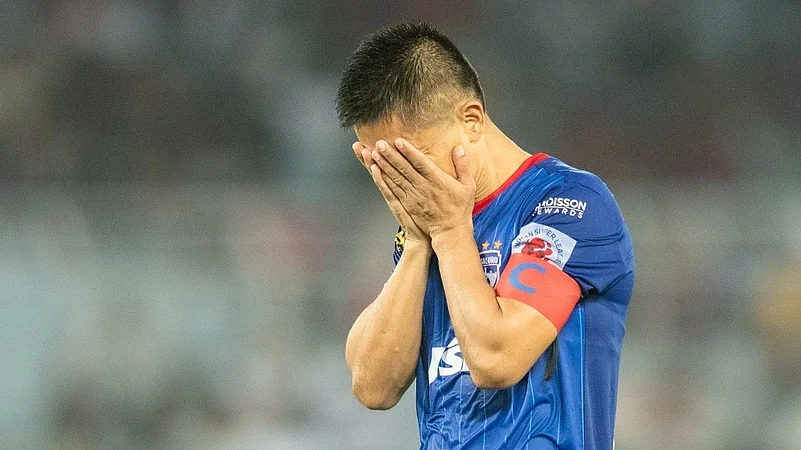
Several Indian footballers have made a collective appeal to FIFA, urging world football’s governing body to step in and help resolve the deepening crisis.
Contract with FSDL not renewed
The ISL was earlier operated by AIFF’s commercial partner, Football Sports Development Limited (FSDL). But the contract between the two parties ended on December 8, 2025. Thereafter, the AIFF failed to find a new partner. FSDL used to pay Rs 50 crore annually to AIFF, in four equal installments of Rs 12.5 crore each. But with the 15-year contract having ended last month, the AIFF has reportedly been left with a deficit of Rs 25.9 crore till June this year, according to a report in the Times of India. So, the million-dollar question is – who is going to foot the bill?
ISL was founded on October 21, 2013, with the objective to grow the sport in India and increase its exposure in the country. Play began in October 2014 with eight teams. The season usually runs from September to April and includes a 26-round regular season which is followed by the ISL Cup playoffs involving the top six teams, culminating with the ISL Cup final. The league is currently contested by 14 teams. Since the league’s inaugural season, six clubs have won the ISL Cup title: ATK (3), Chennaiyin (2), Mumbai City (2), Mohun Bagan (2), Bengaluru FC (1) and Hyderabad FC (1).
Confident that the problem will be solved, says former Indian captain Victor Amalraj
But former Indian team captain Victor Amalraj does see a light at the end of the tunnel. “Talks are going on with a sponsor and I am confident that this problem will be solved soon. A three-member panel of the AIFF has suggested February 15 as the start date for the top-tier league, with January 15 set as the deadline for clubs to submit 20-year agreements. The AIFF will ensure that there is some financial support towards the overall cost of organising the league. It has confirmed that it will do so,” he told Khel Khiladi.com on Sunday.
However, fans and players are keeping their fingers crossed. Too often they have seen promises remaining unfulfilled and their hopes dashed. This time there are a few signs that the dark clouds may disappear from the skies of Indian football but until that really happens, nobody can take anything for granted.
Until governance of the game finds stable ground, grassroots investment deepens, and a coherent footballing vision is formed with the cooperation of all the concerned bodies, Indian football may remain in limbo. It is the harsh truth but unless AIFF wakes up and acts, that sad fact may be what the fans may have to reckon with in the foreseeable future.