Exclusive
Global conflict erupts; sportpersons face hair raising situations as they scramble for safety

Late on Sunday night, a small and fast-moving jet airplane, quietly left Riyadh airport and under cover of darkness, flew off westwards. It was a private aircraft owned by football’s global superstar Cristiano Ronaldo and is reputed to be worth $81 million. The aircraft contained the family of the Portuguese millionaire footballer. Initially it was believed that Ronaldo himself was also on board, but his club Al Nassr later clarified that Ronaldo was still in Saudi Arabia. However, the Portuguese legend had decided to send his family away from the war-torn region to safer pastures in his native homeland in Europe.


Cristiana Ronaldo flew his family out of Saudi Arabia to avoid the conflict. Pic: Moneycontrol.com
According to a Flight tracking service, Ronaldo’s plane, a super luxury Bombardier Global Express Jet 6500 which can accommodate up to 15 passengers and even has a bedroom inside it, made a seven-hour non-stop flight from Riyadh across Egypt and landed in Madrid. On board were Ronaldo’s partner Georgina Rodrigues and their five children.
Sindhu’s harrowing experience in Dubai
Ace badminton star P V Sindhu was scheduled to take part in the All England Open badminton championships in Birmingham from March 3 to 11. When she boarded her flight from India on February 28, she was thinking about her match preparations and the strategy against her rivals ahead of the eight-day event. But within 15 minutes of landing in Dubai, those thoughts were replaced by tension and uncertainty.
“I landed at around 1 pm. By 1.15 pm, all flights were suspended,” Sindhu told NDTV, while recounting the moment the scale of the disruption began to sink in. What initially appeared to be a routine delay, soon escalated into flight cancellations and complete airspace closure. For several hours, all the passengers waited without clarity about the future flights.
Other Indian players had transited through Dubai just a few hours earlier and were already on their way to Birmingham. They were lucky to have escaped in the nick of time, but Sindhu was trapped in the conflict. As the situation worsened, Dubai airport descended into total chaos. Flights were cancelled, immigration was shut, and thousands of passengers were left stranded.
Narrow escape for Sindhu’s coach
Eventually Sindhu was moved to a transit hotel but her coach Irwansya Adi Pratama, who had remained at the airport, heard a loud explosion barely 100 metres away. He was lucky to remain unharmed. People began running about in panic before the Airport authorities rushed passengers out. “It was very frightening,” Sindhu said to a journalist. Sportspersons are used to pressure but this was a danger to their lives that they had never faced before. Thankfully the Indian ace has now been able to reach her home safely.
The rapidly intensifying conflict between Israel, the United States, and Iran has had a ripple effect far beyond geopolitical factors and has created disruptions and uncertainties throughout the international sports calendar of different sports disciplines.

One of the most immediate effects of the conflict has been the widespread travel disruption that has left individual sportspersons and teams stranded along with their equipment, in different corners of the world
One of the most immediate effects of the conflict has been the widespread travel disruption that has left individual sportspersons and teams stranded along with their equipment, in different corners of the world. Airspace closures and security warnings over the Middle East have caused major flight cancellations and re-routings. Teams in sports ranging from cricket and football to Formula 1, have faced logistical challenges just to reach competitions or return home.
Tennis players and England cricketers trapped in Dubai
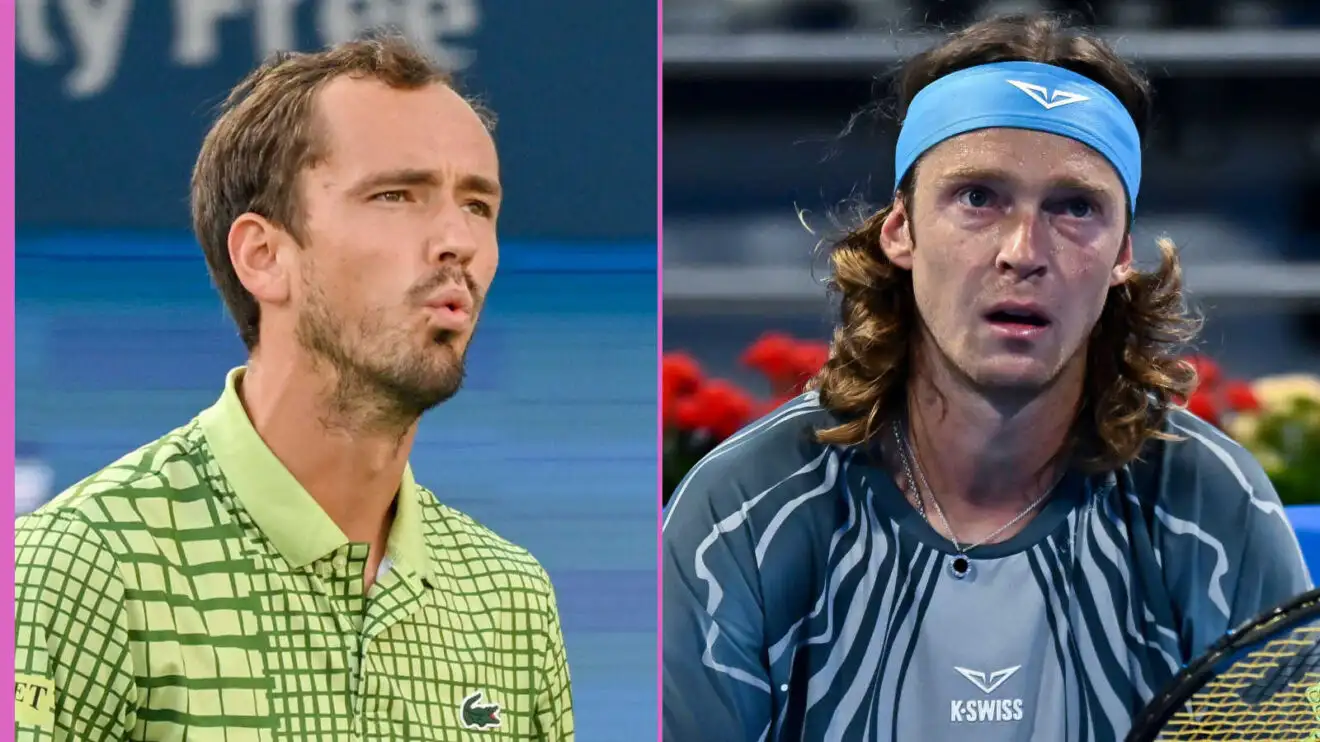
Former world No. 1 tennis star Daniil Medvedev was reported to be among those who are still stuck in Dubai, with the ATP still working on evacuation plans. Russian tennis professionals Andrey Rublev and Mirra Andreeva, both highly ranked players, are among top players affected by travel disruptions in the UAE.
England’s Test captain Ben Stokes and former player Andrew Flintoff were in Abu Dhabi with the England Lions, and now efforts are underway to secure their departure.
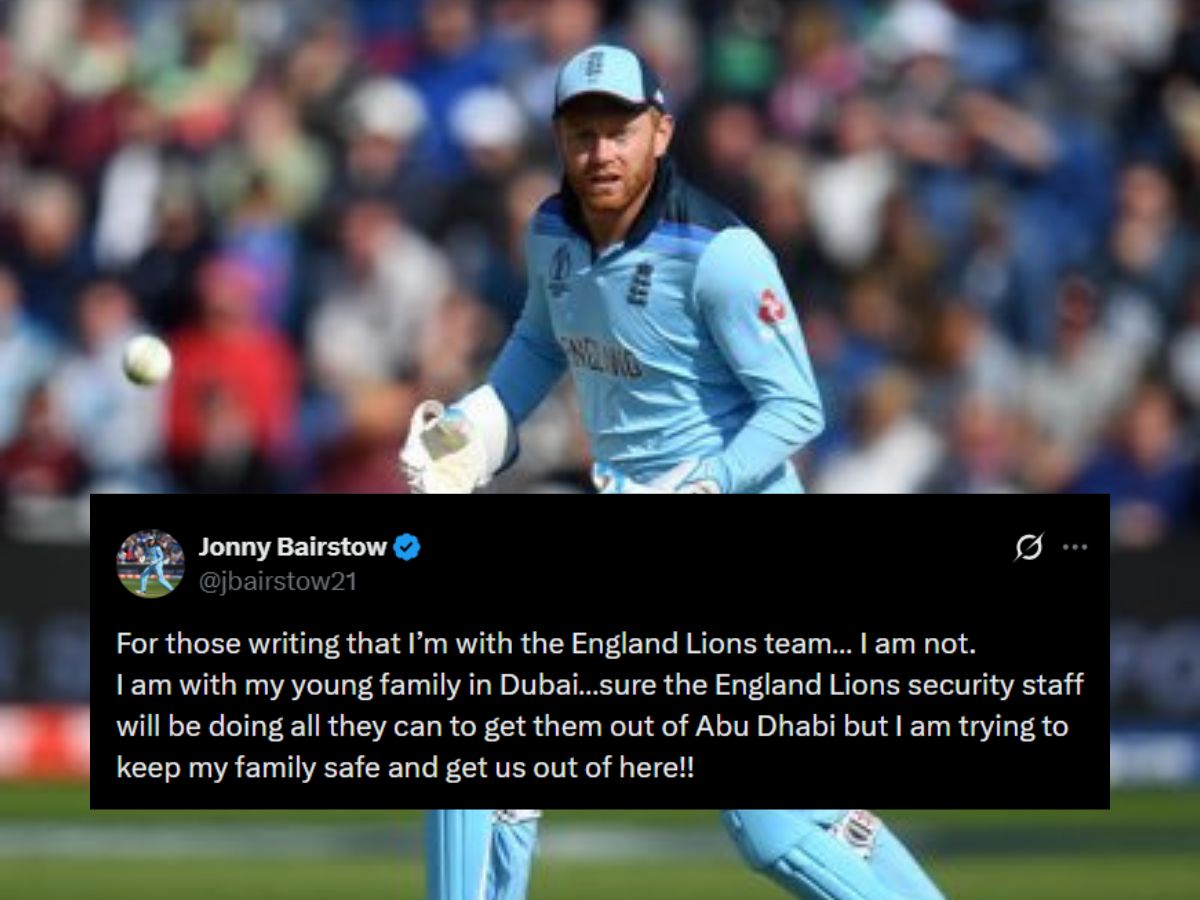
Jonny Bairstow, who was a member of the England squad that won the 2019 World Cup, was holidaying in Dubai when the war began. He wrote on Twitter (X): “I am with my young family in Dubai. I am trying to keep my family safe and get us out of here!!”
Coincidentally the England Lions were playing a series with Pakistan A (known as Shaheens), in Abu Dhabi but the series has been cancelled. Bairstow and his family are among thousands of British nationals who are still trapped in the midst of the conflict zone.
Postponements and cancellations
Several sports bodies in the Middle East have postponed or cancelled fixtures due to escalating tensions. The Qatar Football Association suspended all domestic competitions amid regional instability, putting high-profile matches which included a planned friendly match between Spain and Argentina, under threat.

Iran has suspended all national sporting events, including its top domestic soccer league, as the situation unfolds in a tragic manner on its home soil.
Impact on major international competitions
The conflict has raised questions about participation in some of the year’s most prominent global events. Iran’s national football team has qualified for the FIFA World Cup 2026, but the ongoing hostilities have cast doubts on whether it will travel to compete in the tournament that is scheduled to be held in the United States, Canada and Mexico. Iranian sports officials have expressed uncertainty about participation, though no formal withdrawal has been announced as yet.
Similarly, the 2026 Winter Paralympics has seen the International Paralympic Committee express concern over travel arrangements due to Middle Eastern airspace closures, with logistical challenges affecting the travel arrangements of the participating athletes.
https://youtu.be/dlvF9bWR-jg?si=0bFyeKEEkCLXaO2H
The Asian Football Confederation (AFC) postponed several AFC Champions League matches involving West Region clubs due to security concerns and travel risks in the Middle East. Qatar’s domestic football activities were halted in response to the regional instability.
Airline suspensions by carriers like Emirates, Etihad and Qatar Airways have compounded international flight chaos, affecting not just sports teams but officials, media and fans travelling globally. Organisers of European football leagues are monitoring the situation as flare-ups continue to threaten events and travel planning. Contingency planning is being carried out but the situation remains fluid and unpredictable.
2026 presents a gloomy picture for global sports
The war has highlighted the vulnerability of global sports to geopolitical conflict. Organisers and governing bodies are grappling with emergency planning, rescheduling, athletes’ safety, insurance complications and the broader problems of how to maintain international competition calendars in the midst of a prolonged unstable situation.
The response by sports federations to this conflict may shape international sporting norms for similar disruptions in the years ahead. One can only imagine what mind-boggling financial investments have gone into all these sports events and how great will be the loss that sponsors and promoters will incur from the sudden outbreak of hostilities. If the war becomes a prolonged affair, then one of the hardest hit sectors will be international sports. The rest of 2026 presents a gloomy picture for all sports across the world.