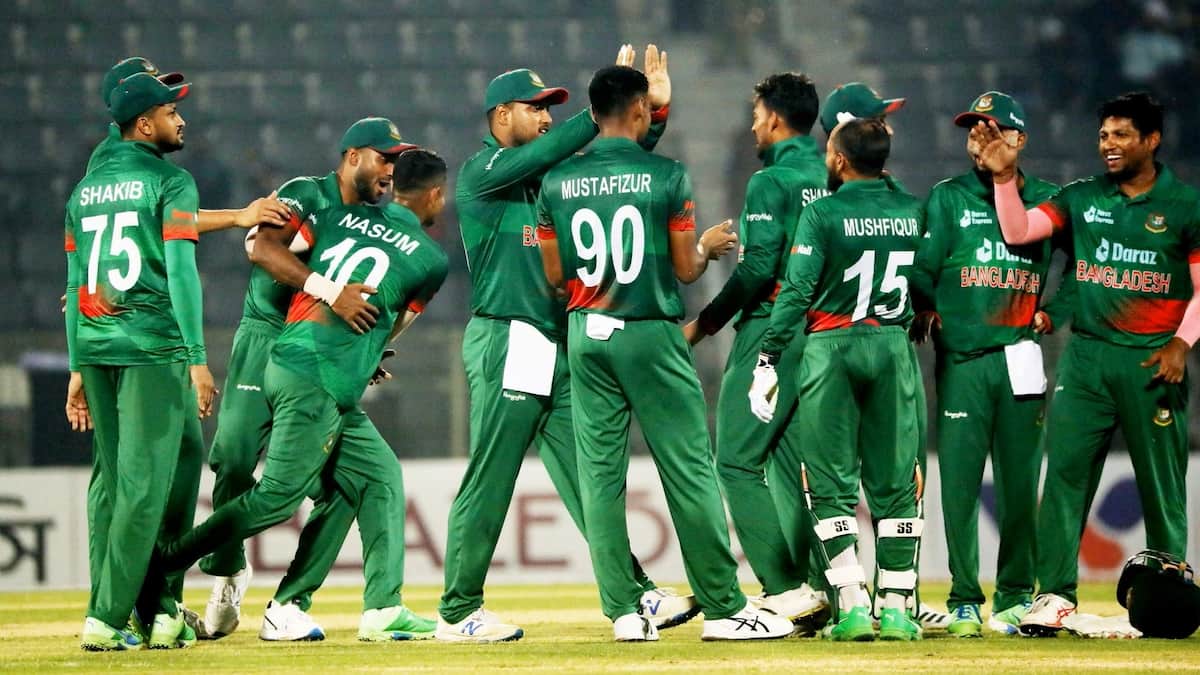
The Bangladesh Cricket Board (BCB) and the International Cricket Council (ICC) on Saturday failed to come to an understanding on resolving the impasse concerning Bangladesh’s refusal to play their matches in India.
A two-member ICC delegation was supposed to be in Dhaka for talks with the BCB but one of the ICC representatives, Gaurav Saxena, General Manager, Events and Corporate Communications, did not travel to Dhaka because of visa complications. This meant that only Andrew Ephgrave, ICC’s interim GM of the Anti-Corruption Unit, was in Dhaka and met the BCB officials but there has been no resolution on the issue. After the meeting the BCB issued a statement saying they will “continue engaging in constructive dialogue on this matter”.
“During the discussions, the BCB reiterated its formal request to the ICC to relocate Bangladesh’s matches to Sri Lanka,” the board said in a statement. “The Board also shared the Bangladesh government’s views and concerns on safety and security of the team, Bangladeshi fans, media and other stakeholders. The discussions were conducted in a constructive, cordial and professional manner, with all parties engaging openly on the relevant issues. Among other points, the possibility of moving Bangladesh to a different group as a means of facilitating the matter with minimum logistical adjustments was discussed.”
https://khelkhiladis.com/no-more-fizz-in-sports-bangla-seek-venue-change/
It was supposed to be an innocuous decision by the Board of Control for Cricket in India (BCCI), but the fire ignited by cricket board when it asked IPL franchisee Kolkata Knight Riders to release Bangladesh speedster Mustafizur Rahman doesn’t seem to be dying down anytime soon. The ugly episode is threatening to derail the T20 World Cup scheduled to be held in India and Sri Lanka in February-March this year.
BCB’s tit-for-tat move
Post the Mustafizur Rahman episode, in a tit-for-tat to the BCCI, the BCB had said that they were not willing to allow their team to travel to India for the World Cup matches and they asked the ICC to shift their matches from India. For the record, Bangladesh are supposed to play all their matches in India.
The ties between India and Bangladesh have taken a hit after Prime Minister Shaik Hasina had to flee the country and the resultant unrest in Bangladesh, where minorities are being targeted on a regular basis.
Though there was no official reason for the BCCI’s move, it is believed that the targeting of minorities in Bangladesh played a major part in it. But the move seems to have backfired and has led to the present impasse.
On January 4, the BCB had written to ICC stating that it would not be safe for their team to travel to India as there was security concerns for the team. The ICC had, in turn, shared a third-party security assessment report with the BCB and stated that the report had indicated no specific or heightened threat to the Bangladesh team. Hence, the ICC said there was no reason to entertain the BCB request for change of venues.
But on January 13, the BCB again reiterated its stance of not playing in India to the ICC. They wanted their matches to be moved out of India, but the ICC was not willing to tweak the schedule as the tournament kicks off on February 7, which was less than a month.
With the T20 World Cup less than three weeks away, the clock is ticking for both Bangladesh and the ICC to find a resolution and end the impasse. Things rest on Ephgrave, who has to find a way to convince Bangladesh to continue with the original schedule. Or else the resultant uncertainty is likely to put the tournament in jeopardy.