Exclusive
At 76, ‘Fearless’ Jimmy Amarnath remains a symbol of courage and unforgettable grit

Had there been bravery awards in cricket, then Mohinder Amarnath would have surely been decorated with at least five or six top category medals. There have been many great batters in the history of Indian cricket, but few have faced the most terrifying fast bowlers of the world with as much courage and fighting spirit as Mohinder Amarnath. The lion of Indian cricket turned 76 on Thursday (September 24).
https://x.com/BCCI/status/2102959960917147912?s=20
He belonged to an era when facing the world’s fastest bowlers was not merely a test of technique and temperament. It was a physical battle in which a batter could walk out to the middle and return with broken bones, bloodied faces and damaged teeth. There are many cases of batters being seriously injured including that of former Indian captain Nari Contractor, who almost died of a skull fracture after being hit by a delivery from Charlie Griffith.
Knocked down but still rose to fight fearsome pace
Mohinder was at the receiving end on many occasions during his international career of two decades. Richard Hadlee fractured his skull, Malcolm Marshall knocked out his teeth, Imran Khan once rendered him unconscious, and Michael Holding’s fearsome bowling sent him to hospital. Yet, remarkably, Amarnath kept returning to face these fearsome fast men, with undiminished defiance.

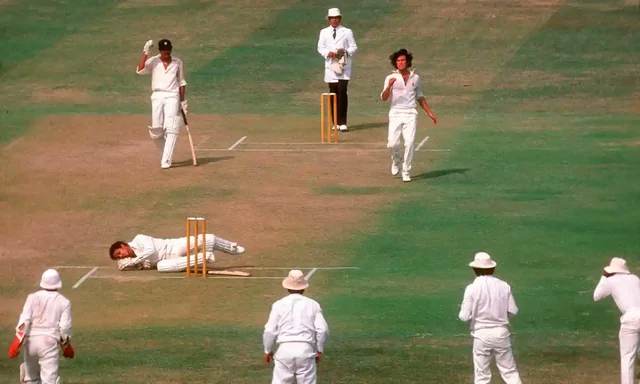
Mohinder Amarnath is felled by an Imran Khan bounder in the second Test in Lahore on October 27, 1978. Mohinder was knocked unconscious but returned with a runner later in the day. He scored 8 and 60 but India lost by eight wickets
Mohinder scored four centuries against Pakistan, three against the West Indies and two against the Aussies on their fastest pitches in Australia. The way he countered the ferocious Jeff Thomson was a sight that will never be forgotten. In all, the junior Amarnath scored 11 centuries in Test cricket. Each of these centuries were accumulated without wearing a helmet and using only old-fashioned protective gear against fast bowlers going flat out on hard pitches. The Guardian newspaper once lauded his bravery and called him the ‘Happy Hooker’.
Mohinder played an important role in the 1983 World Cup victory
In the 1983 World Cup, he bagged the Man of the Series award as well as two Man of the Match awards in the semifinal and final. The most enduring image from the final match is that of Mohinder ambling up at a leisurely pace and trapping Michel Holding LBW to ensure a historic victory for India.

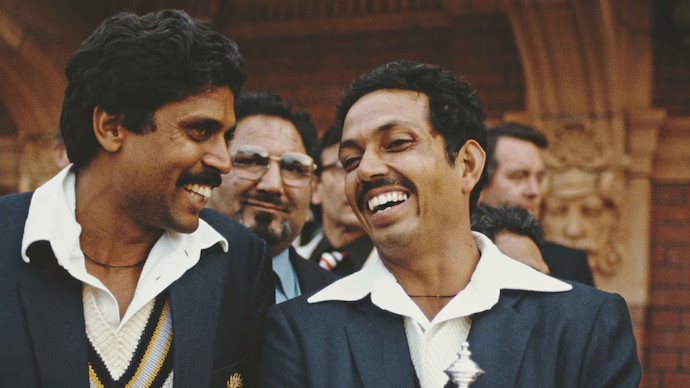
Mohinder Amarnath and skipper Kapil Dev have a laugh after winning the 1983 World Cup at Lord’s. Mohinder bagged the Man of the Series award as well as two Man of the Match awards in the semifinal and final. Pic: Getty Images
Born on September 24, 1950, Mohinder Amarnath Bhardwaj was destined to have cricket in his blood. His father, Lala Amarnath, was one of India’s earliest cricketing legends, a former captain and the first Indian to score a Test century. Lala was also the first post-independence captain of the Indian team. Mohinder’s elder brother, Surinder Amarnath, also represented India in Test cricket.
Family name was both a blessing and a curse
But being the son of a great cricketer was both a privilege and a burden. Jimmy, as he was called by friends, had to establish his own identity, and his journey was anything but smooth. His father once told him: “Beta tumhara naam Amarnath hai. Isme fayda bhi hai aur nuksan bhi.” (Your name is Amarnath. This is a boon as well as a curse).
https://x.com/SagarH62/status/2103077972739830260?s=20
Mohinder made his Test debut against Australia in 1969, initially as a medium-pace bowler who could also bat. But over the years, batting became his principal occupation. Yet, despite his obvious talent, he struggled to establish himself in the Indian team. He was dropped repeatedly, recalled, and dropped again. For a cricketer of lesser resolve, these disappointments might have ended their dreams. But for Mohinder, they just strengthened his determination.

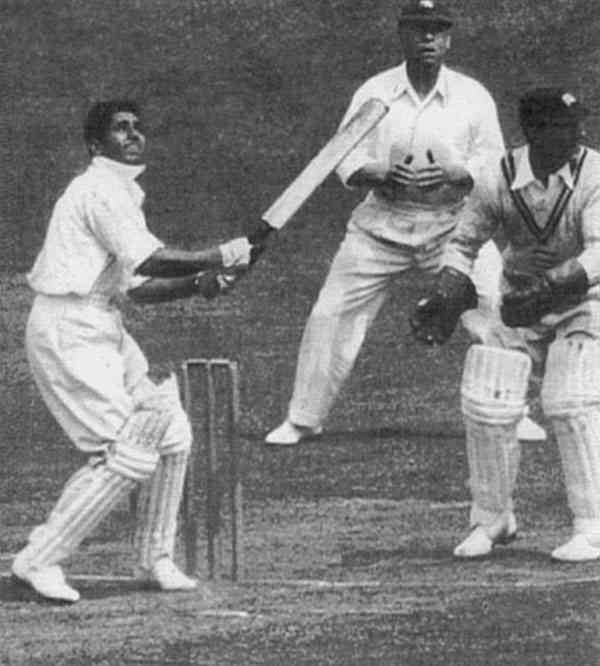
Attack is always the best policy: Lala Amarnath (in picture) had advised his son to always take the bowler by surprise and the best way to do it was to attack him
Lala’s advice was to always attack the bowlers
In his autobiography titled ‘Fearless’, Mohinder has written about a piece of advice that he received from his illustrious father Lala Amarnath that helped him in his career. This is what Lala told his son: “No matter how great a bowler is, once he is taken by surprise and attacked, he will become defensive. This applies to pacers as well as spinners. Attack is always the best policy.”
‘Sardar of Spin’ Bishan Singh Bedi was a fearless voice against injustice of any kind
Mohinder kept those words in mind throughout his 20-year long career.
https://x.com/CricketopiaCom/status/2102966359172976702?s=20
In the book he has also written about the varied experiences that he had while playing cricket in many lands. His first tour to the land of his ancestors, Pakistan, was in 1978. The Amarnath family used to live in Shah Alami Gate mohalla in Lahore before partition. When the Indian team landed on Pakistan soil, there was a huge crowd of fans waiting to greet the players. “I couldn’t believe it. Was this the nation that we fought against?” he has written.
Yeh dosti hum nahi todenge: A friendship that survived the pangs of India’s partition
His father was present there as a part-time PTI correspondent. “Papaji was extremely popular and people still remembered his exploits. The first thing that he did was to introduce me and my brother Surinder, to his old friend Fazal Mehmood. Papaji told us to seek Fazal’s blessings. For both of us brothers it was a dream come true to meet Fazal because we had heard so much about him from our dad,” Mohinder states.

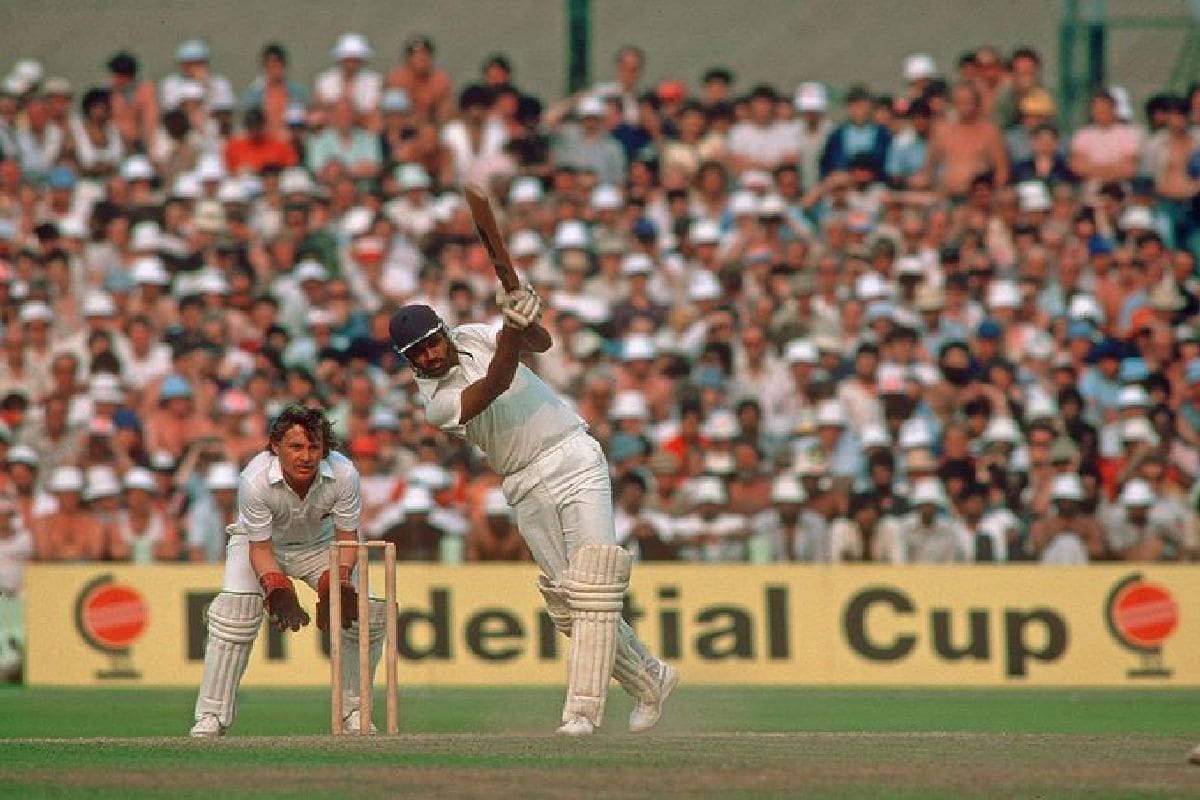
Mohinder Amarnath made his Test debut against Australia in 1969, initially as a medium-pace bowler who could also bat. But over the years, batting became his principal occupation
But it was also the first time that Mohinder encountered umpire Shakoor Rana, an umpire who was one of the most controversial officials of the game. As expected, there were some incidents of friction on the cricket field during the tour. But manager Fatehsingh Rao Gaekwad with his excellent diplomatic skills, ensured that there were no hiccups during the tour which was essentially a goodwill building exercise between the two countries.
Best Indian batters were baffled by reverse swing
But the 1982-83 tour of Pakistan did not go so well. The prodigious swing movement of the Pak bowlers baffled even the top Indian batters. It was the first time that they saw reverse swing with the old ball. “Sarfaraz Nawaz and Mudassar Nazar made the ball talk. We studied this phenomenon closely and found that it happened most after lunch and tea breaks. We felt that they were either changing the ball or applying something to its surface. However, despite that, I must admit that the Pakistan bowlers were more dedicated than us. They had an ideal role model in their captain Imran Khan,” Mohinder has written.

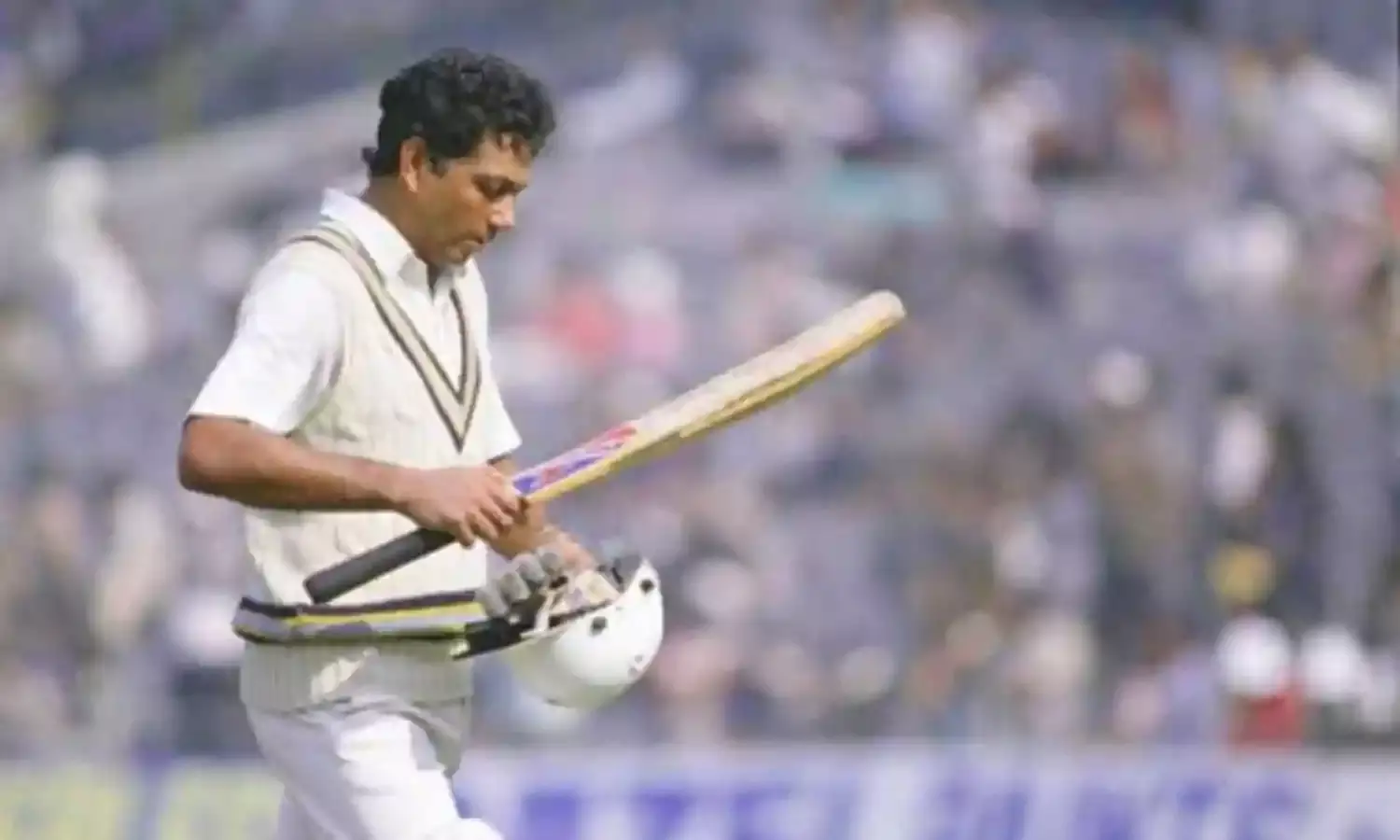
Mohinder Amarnath was dropped from the Indian team on several occasions but fought his way back again and again. He came to be known as the ‘Comeback Man’ of Indian cricket
It was no surprise that Pakistan ended up winning the six Test series 3-0. But Mohinder emerged as the highest scorer in the Indian team with a total of 584 runs.
Song from Rocky III that inspired Mohinder
There was a time when Mohinder was living in London where his wife Inderjit (he calls her Bickoo in the book) was working as a doctor. During this period, Sylvester Stallone’s film Rocky III had a profound effect on his life. Mohinder writes: “The moment I heard the theme song – Eye Of The Tiger – it reminded me of my struggle. I spent hours watching the film again and again and listening to the soundtrack. I felt that it infused me with new energy and created a new Jimmy full of energy and vigour.”
Mohinder was dropped from the Indian team on several occasions but fought his way back again and again. He came to be known as the ‘Comeback Man’ of Indian cricket. Every rejection hurt him emotionally as well as financially. His public remark about the BCCI selectors being a ‘bunch of jokers’ created a huge controversy. But Mohinder was unfazed and stuck to his guns.

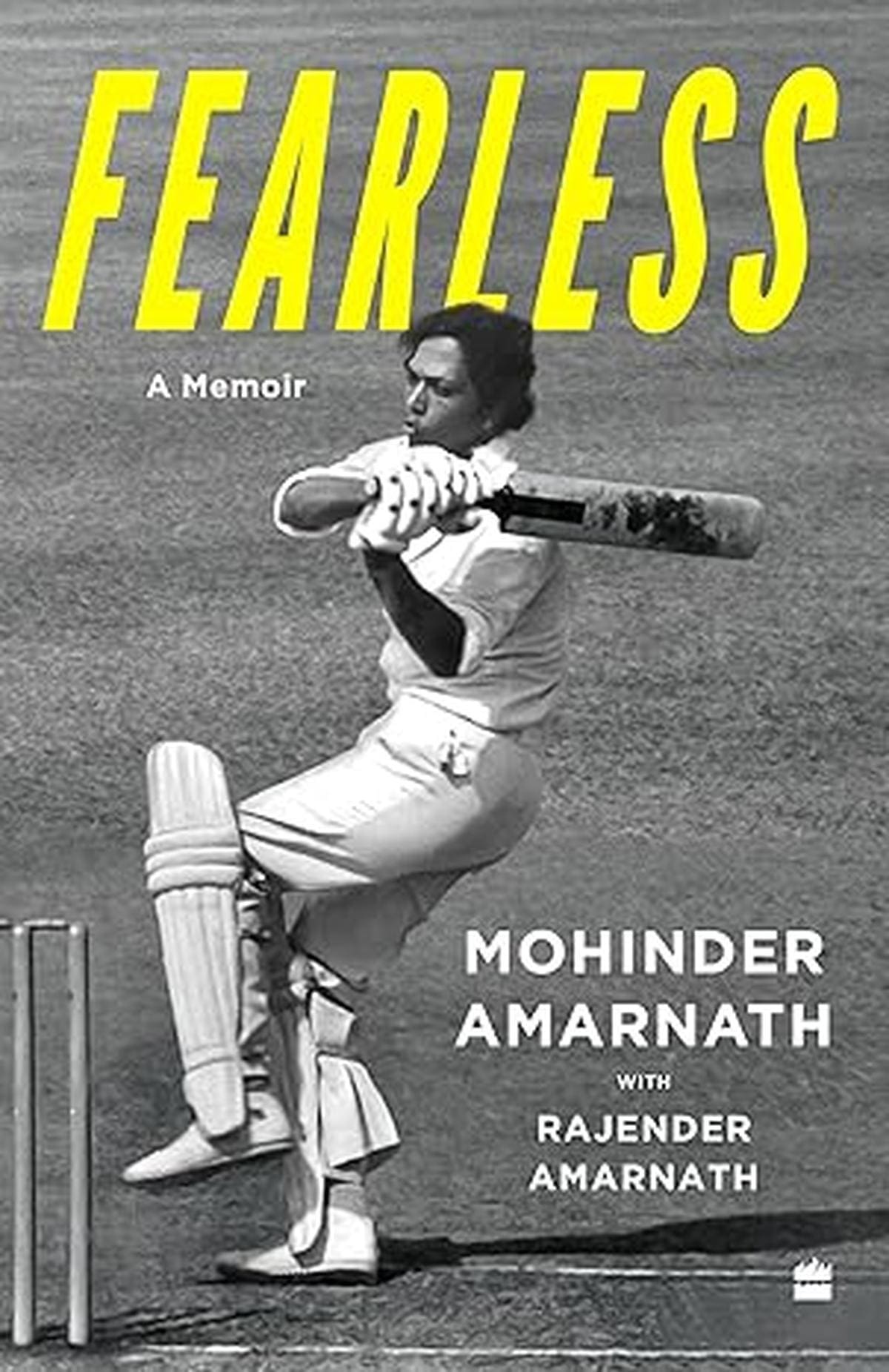
Mohinder Amarnath’s Autobiography Fearless. Pic: The Hindu
The most distinctive aspect of his character is his steely resolve. Outwardly he may seem to be a friendly man with an ever-smiling face and impeccable manners. But underneath lies an unbreakable strength and immense courage. Cricket fans hope that he continues to give his valuable inputs to Indian cricket for many more years.