Exclusive
A century of Indian hockey: From Olympic glory to setting up modern dreams of a nation

Indian hockey recently crossed the age of 100 and the event was celebrated at a grand function in New Delhi. The Indian Hockey Federation (IHF) was formed on November 7, 1925, in Gwalior and thereafter Indian teams began competing in international events. Rising quickly, India soon became the dominant force in world hockey and from then, Indian hockey has created a legacy that the nation can be proud of.
After the formation of the IHF, India was the first non-European team to be a part of the international federation of hockey (known as Federation Internationale de Hockey or FIH). The formation of the IHF was a landmark event because it enabled international exposure for talented Indian players.

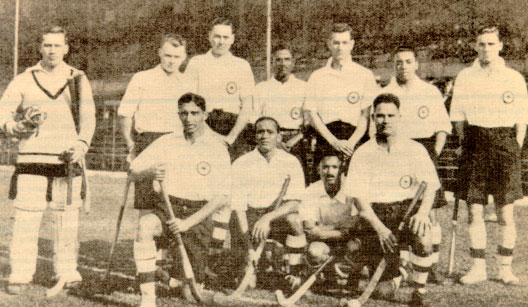
Indian hockey team of 1928
In 1926, the IHF organised India’s first international tour, a trip to New Zealand. The Indian players immediately made their mark. India ended the tour with 18 victories in 21 matches, and just one defeat. They scored a total of 192 goals, conceding 24, at an average of 9.31 goals per match. Astonishingly, the Indians registered a double-digit score in as many as nine games.
Davinder Singh Garcha, 1980 Olympic gold medal-winning hockey player, no more
It was during this tour of New Zealand that the world came to know about a player called Dhyan Chand who soon assumed a god-like status in the game. What Sachin Tendulkar was to cricket; Dhyan Chand was to hockey.
We felt like heroes, says Dhyan Chand
At that time, Dhyan Chand was an ordinary sepoy in the British Indian army. About being selected for the first-ever foreign tour, Dhyan Chand has written: “It was a great day for me when my Commanding Officer called me to his office and told me that I had been selected. I was dumbfounded, and did not know what to say. All I did was give a salute and retreat. Once out of sight of the officer, I ran to my barracks and communicated the good news to my fellow soldiers. And what a reception they gave me!”

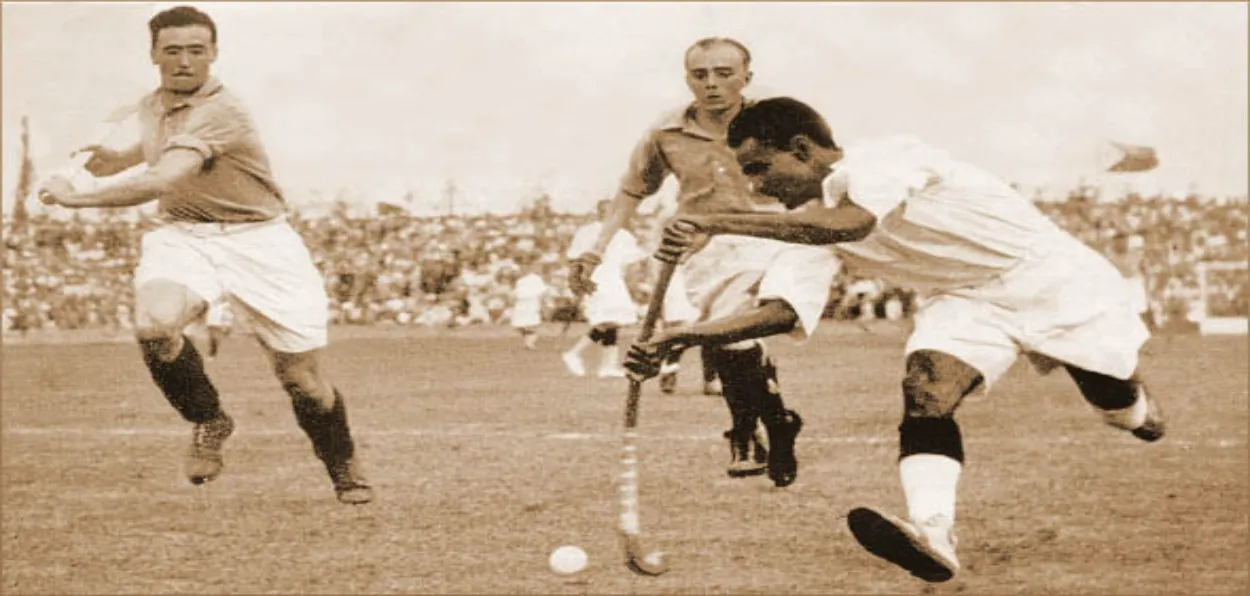
Hockey legend Dhyan Chand in action during the 1938 Olympic Games in Berlin
“I was not a rich man, my earnings as a sepoy were meagre. I clothed myself as inexpensively as possible, and my main item was my military uniform and kit.”
“But the trip was a great experience for all of us. Prior to this tour, we soldiers could never conceive of being feted and entertained at public functions. We felt like heroes, and on my part, if I may put it modestly, I achieved some success and made a good impression.”
For many decades, Indian team was unbeatable
Absorbed with cricket, we often forget India’s wonderful achievements in hockey. In 1928, India won their first Olympic gold medal and until 1960, the Indian men’s team remained unbeaten at the Olympics, winning six gold medals in a row. We had a 30–0 winning streak during this time, from the first game in 1928 until the 1960 gold medal final which we lost. India also won the World Cup in 1975.
India also have the best overall performance in Olympic history with 87 victories out of the 142 matches played. India scored more goals in the Olympics than any other team. It is also the only team ever to win the Olympics without conceding a single goal, having done so in 1928 and 1956.

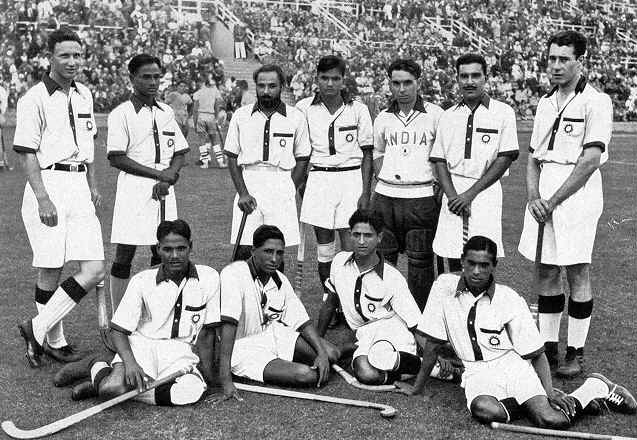
Indian hockey team of 1939
Needless to say, the men in blue are also one of the most successful teams in Asia. They have won the Asian Games four times – in 1966, 1998, 2014 and 2022. India came out on top at the Asia Cup in 2003, 2007 and in 2017. India has won 43 out of 56 matches in the Asia Cup and holds the records for most wins and best winning percentage in the competition.
The Indian team was the most successful team in the Asian Champions Trophy, winning the competition a record five times, namely in 2011, 2016, 2018, 2023, and 2024. In total, India have won 30 official international titles.

Dhyan Chand towers over all goal scorers
Two out of the top five goal scorers in history are Indians. Here are the top five goal scorers in history: Dhyan Chand stands head and shoulders above everyone else with 570 goals. Sohail Abbas of Pakistan is next with 348 goals. He is followed by Paul Litjens of the Netherlands with 268. Then, in 4th place comes Balbir Singh Dosanjh with 246. And fifth is Greg Nicol of South Africa with 245.
In international sport, where records are broken every two or three years, the record established by Balbir Singh Dosanjh in 1952, that of scoring five goals in a single match, that too in the final of the Olympics Games, remains unbroken after more than seven decades. Such is India’s dominance of this game.

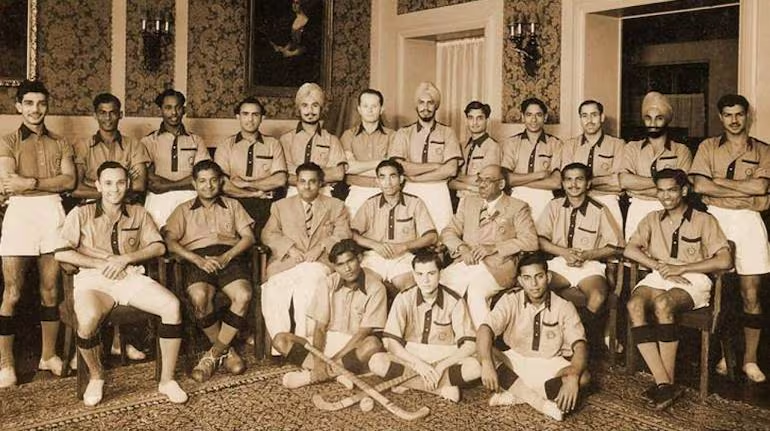
Indian hockey teams of the pre 1960s were unbeatable
India has achieved a hat-trick of gold medals in the Olympic Games on two occasions. Although it is now a fact that the flow of gold medals at the Olympic level has dried up, nevertheless, Indian hockey has set a standard that is unmatched by any other nation in the world.
Greatest hockey legends are from India
Some of the greatest legends of hockey are from India. Players like Dhyan Chand and Balbir Singh set a trend for several generations to follow in their footsteps. There was Roop Singh, younger brother of Dhyan Chand, Leslie Claudius who won four Olympic medals (3 golds and 1 silver), Udham Singh who also won four medals, and the first captain of India – Jaipal Singh Munda.
Munda was born in a tribal Christian family in a small village near Ranchi in 1903. Like many tribal people of that region, he showed amazing skills in hockey and to cut a long story short, he was given the honour of leading India’s first-ever team at the 1928 Olympic Games. But that was not all. Munda was also a brilliant student who excelled at academics. Noticing his potential, a body of missionaries took him to England for higher studies, where he graduated with Honours in Economics from St John’s College, Oxford University.

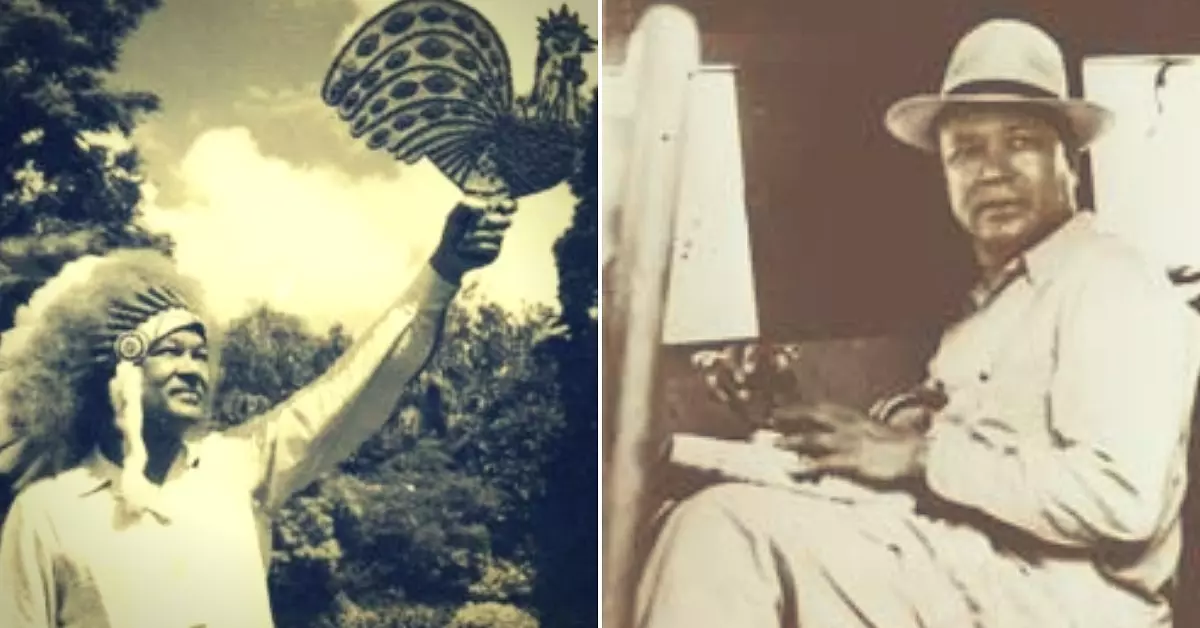
Jaipal Singh Munda led the 1928 Indian hockey team which won the Olympic gold medal. Pic: Better India
In later life he entered politics where too he made a mark. He was selected as a member of the Constituent Assembly which debated and discussed the Constitution of India when the nation became independent. India’s first hockey captain was truly an extraordinary man in many ways.
India’s second captain (at the Los Angeles Olympics in 1932) was Syed Lal Shah Bokhari. He too was a very noteworthy person and his achievements went far beyond hockey. Outside sports, he was an able administrator and at the time of the partition of India in 1947, he was serving as Hajj Officer to the Government of India. When the country was partitioned, he opted to move to Pakistan and served as a diplomat for Pakistan. His last posting was the highly prestigious job of being Pakistan’s ambassador to Iraq.

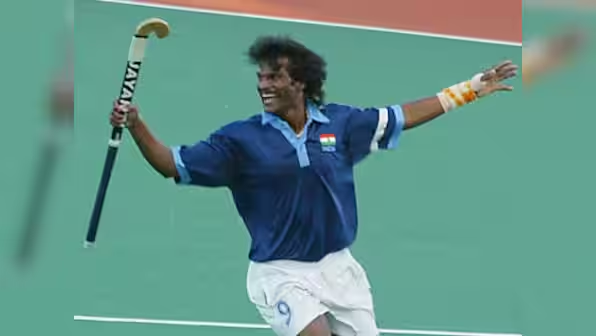
Dhanraj Pillay
Indians showed the world how to play hockey
Over the years, India’s contribution to world hockey has been immense. Indian players showed the world how to play the game at its highest level. Names like K D Singh, Grahnandan Singh, Randhir Singh Gentle and Keshav Chander Datt became household names across the world.
About K D Singh (whose nickname Babu is often added to his formal name), one London-based journalist wrote: “Babu’s performance was as near to perfection as it can be possible. Scintillating dribbling and adroit passes characterized his play and he was the chief instigator in tying up the England defence. It is tempting to write that Babu is as elusive as the great Dhyan Chand.”

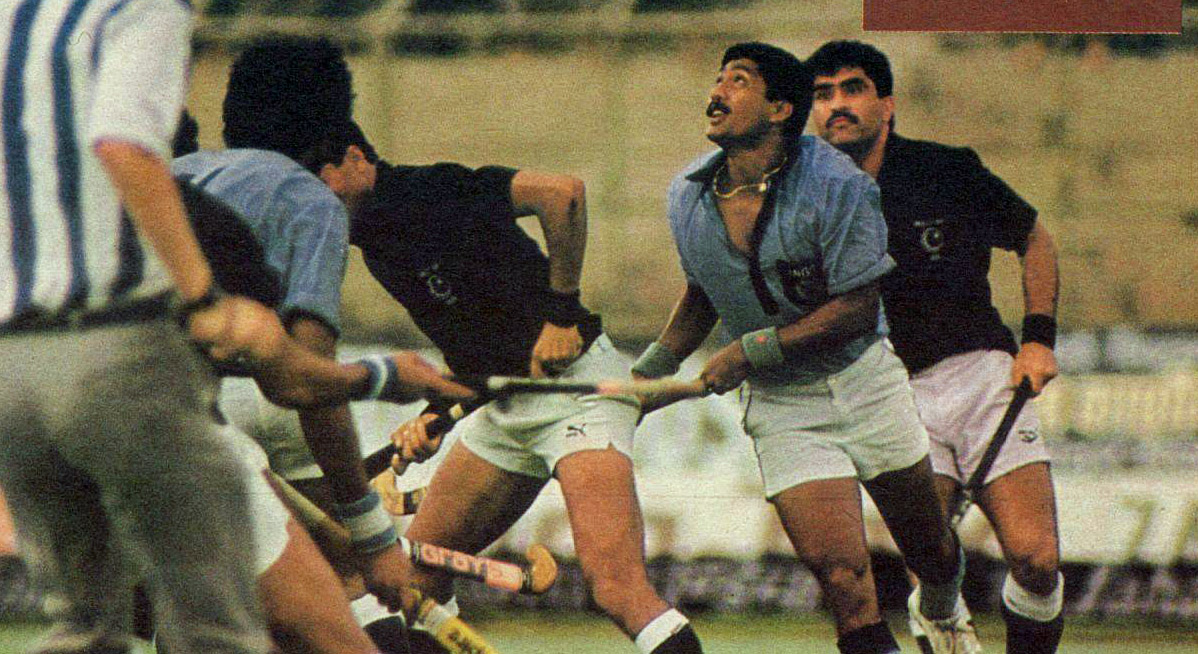
Mervyn Fernandis
If later generations of players such as Prithipal Singh, Gurbuz Singh, Surjeet Singh, Ajitpal Singh, Pargat Singh, Zafar Iqbal, Mohammed Shahid, Mervyn Fernandis, Dhanraj Pillay, Mukesh Kumar and Harmanpreet Singh dazzled the hockey world, it is because their legendary predecessors laid the foundation and gave them the confidence to take on the world and keep the Indian tricolour flying high.