Cricket
Jammu & Kashmir’s maiden Ranji Trophy title: Will it be the first light, or remain a mirage?

This time, it’s truly Jammu & Kashmir’s turn to be India’s crown. I’m talking about cricket. For the first time, Jammu & Kashmir reached the Ranji Trophy final — and became champions.
Jammu & Kashmir create history in their maiden Ranji final, emerge champions
To be honest, this victory belongs as much to Indian cricket as it does to Jammu & Kashmir. Gone are the days when Mumbai, Delhi, Karnataka, and Punjab dominated the domestic scene. Last year, Kerala —long ignored — played in the final. Vidarbha, Madhya Pradesh, and Rajasthan, once considered outside India’s cricketing map, have been thriving in domestic cricket for two decades. Teams like Tripura, Goa, and Nagaland occasionally make headlines. Cricket has spread to every corner of the subcontinent. The thrill Durham, Tasmania, or the Dominican Republic feel when their domestic teams win championships — that’s what this moment is like.

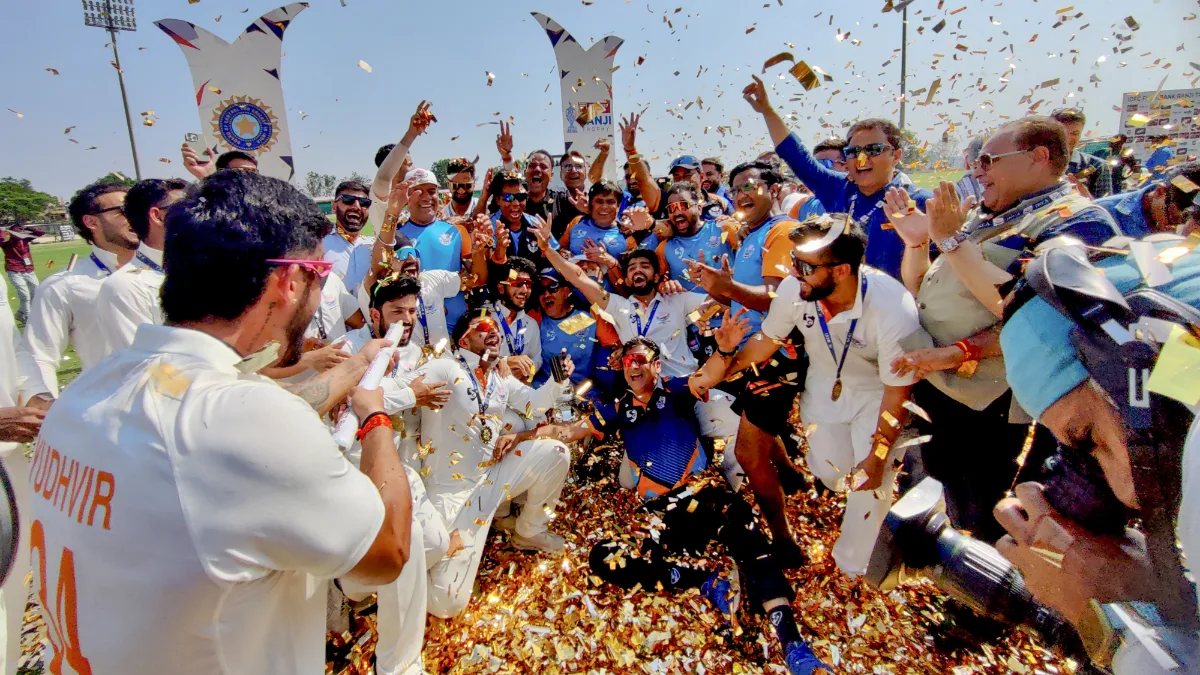
Jammu & Kashmir’s story is unique. Pic: IANS
Perhaps even more, because Jammu & Kashmir’s story is unique. The state has its own history, its own narrative. We all know it. No one from the region has ever played for India’s Test team (Suresh Raina, though a Kashmiri Pandit, entered the team playing for Uttar Pradesh).
https://x.com/BCCIdomestic/status/2027680334926803355?s=20
Yet the story could have been different. In the late 1980s, India was desperately searching for fast bowlers. Kashmiri pacer Abdul Qayoom Bagaw had everything — pace, height, domestic success. But the chance never came. Later, left-arm pacer Surendra Singh from Jammu showed promise before an Australia series, but luck didn’t favor him. Six years later, rising pacer Abid Nabi impressed coach Greg Chappell with his pace and swing. But that was all.
Bedi transformed J&K cricket
The man who truly transformed Jammu & Kashmir cricket is now gone: the legendary Bishan Singh Bedi. Between 2011–13, he coached the team, identifying talents like Parvez Rasool, Umar Nazir Mir, and Ian Dev Singh. Parvez later became the first cricketer from the state to wear India’s jersey. Though controversies clouded his career, there’s no doubt he inspired a generation. Bedi once said of Parvez’s off spin: “If anyone from Kashmir plays for India, it will be this boy.”
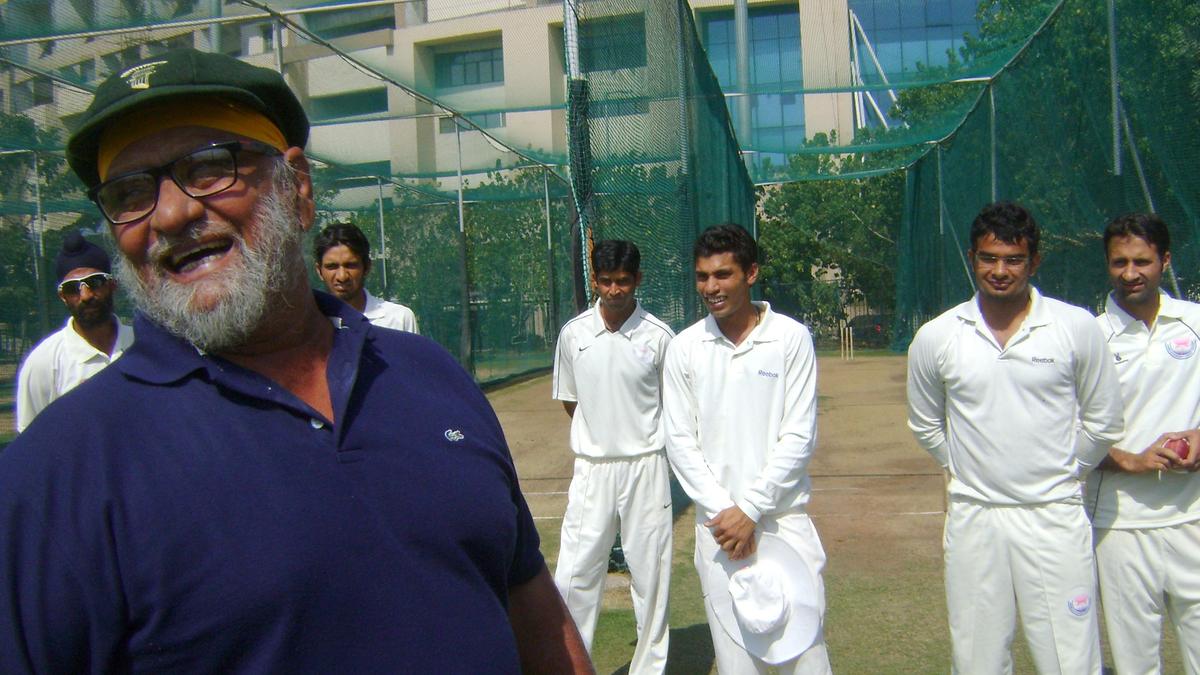
The man who truly transformed Jammu & Kashmir cricket isthe legendary Bishan Singh Bedi. Pic: The Hindu
But it was fast bowling, not spin, that became Jammu & Kashmir’s strength. Samiullah Beigh, Ram Dayal, Umar Nazir Mir, and Mohammad Mudhasir, all tall pacers, made waves in domestic cricket. Later, Irfan Pathan, as mentor, carried forward Bedi’s vision, organizing camps in villages to discover new fast-bowling gems like Rasikh Salam Dar.
Former India and Karnataka player Sunil Joshi’s tenure also brought light. His partnership with Parvez was strong, and batters like Shubham Khajuria rose. In 2014, Jammu & Kashmir’s victory over Mumbai in Mumbai became folklore.
Redemption for Ajay Sharma
Today, Ajay Sharma is the coach. Once buried under the match-fixing scandal despite a stellar domestic record, his life story mirrors Kashmir’s, what could have been, but wasn’t.

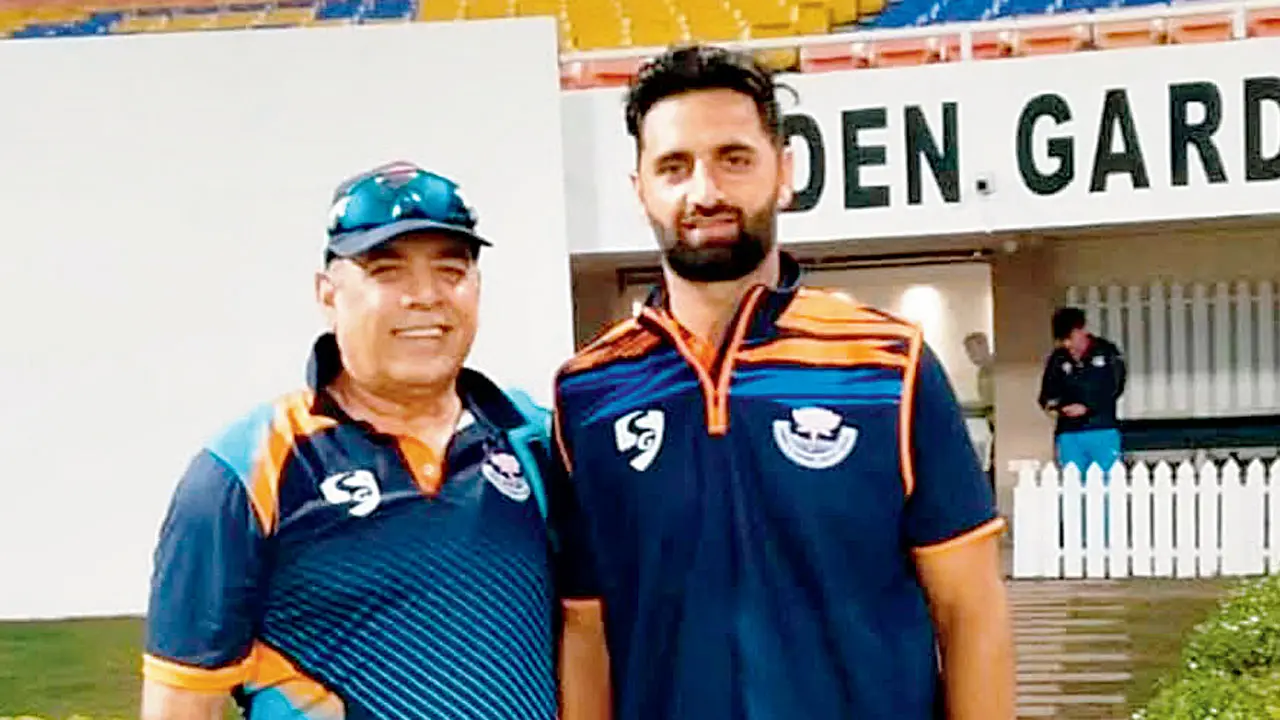
Ajay Sharma and Auqib Nabi
The future, however, looks different now. Names like Auqib Nabi, Abdul Samad, and Abid Mushtaq are familiar to true cricket lovers. Auqib has been fiery in Ranji Trophy for two seasons. His spell in the Duleep Trophy even stunned Arshdeep Singh. Despite being the highest wicket-taker this Ranji season and excelling in the semifinals and final, Auqib still hasn’t been called to the Test team. If that door doesn’t open, one must ask: does domestic cricket even matter?
Samad’s batting evokes memories of a young Rohit Sharma from twenty years ago. Perhaps the comparison is exaggerated, but his style reminds many of that era’s Rohit.
Can Auqib be Kashmir’s Muralitharan?
Then there’s Yawer Hassan Khan. Before the final, his highest score was 36. Yet in the Ranji final, he played an innings reminiscent of Sanjay Bangar at Headingley in 2002, showing grit born of growing up amid turmoil.
The hero of Jammu & Kashmir’s second innings in the final was Qamran Iqbal. Once considered a “teenage sensation,” he had faded. But his unbeaten 160 may soon be forgotten, Ranji finals don’t carry the glamour of IPL finals. Players like Paras Dogra, Sahil Lotra or Yudhvir Singh, despite scoring thousands in domestic cricket, rarely become household names.

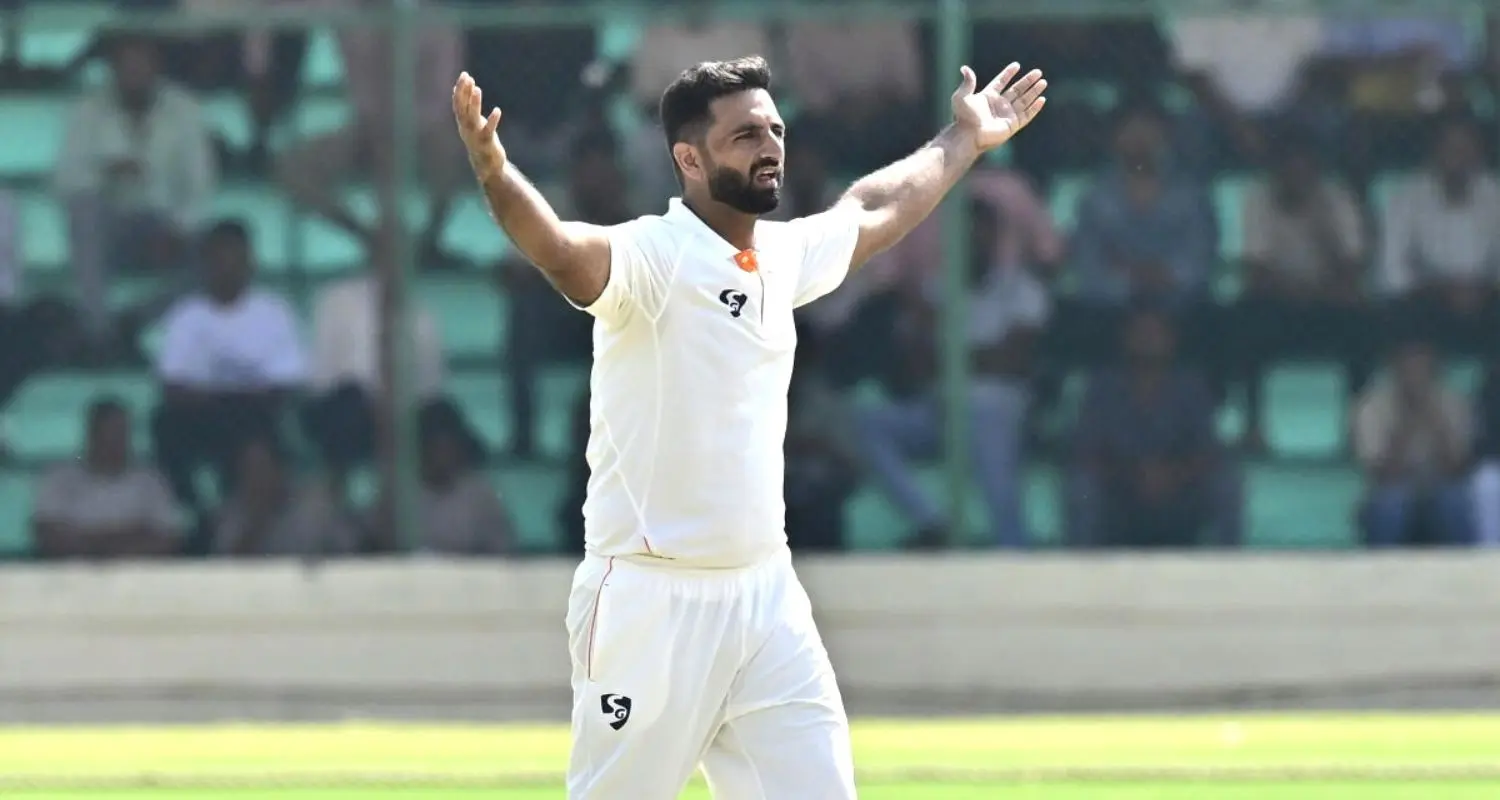
Why can’t Auqib one day become Kashmir’s Muttiah Muralitharan, or something close, for his people?
Still, one wonders: Is this Jammu & Kashmir cricket’s first light — or just a mirage? Finals are followed by more finals. But so, what? As poet Allama Iqbal wrote, “Beyond the stars lie other worlds, and love’s trials are yet to come.”
Hope may bring heartbreak, but why not dream? If a Tamil spinner once changed Sri Lanka’s cricket and history amid ethnic strife, why can’t a Kashmiri youth do the same? Why can’t Auqib one day become Kashmir’s Muttiah Muralitharan, or something close, for his people?
(The author is a cricket enthusiast and a physician. Opinions are personal).