Exclusive
Andy Roberts Turns 75: Saluting The Brainy Legend Of West Indies Fast Bowling

Whenever the West Indies fast bowling legend Andy Roberts used to walk to the top of his run up, he would have a deeply thoughtful look on his face. Shoulders slightly hunched, he would be lost in contemplation. Then he would turn, still looking calm and composed, shuffle a few steps and run in to deliver a thunderbolt.
https://www.facebook.com/reel/1228110955180312
This contrast between his outward demeanour and the pace at which he bowled, often caught many batters unawares. It took time for batters to get accustomed to Roberts’ unique style. Most of the famous fast bowlers from the islands were intimidating in appearance. They seemed to be as tall as the palm trees that are abundantly found on Caribbean beaches. Their ferocious, glaring eyes sent out warning signals to every batter before they bowled.
Terrifying bowlers of the West Indies
Whether it was Wesley Hall and Charlie Griffith of the 1960s or Michael Holding, Colin Croft and Joel Garner of the 1970s and 80s, or Curtly Ambrose and Courtney Walsh of the 1990s, they all had one thing in common. Their huge size, thundering run up and fearsome bowling actions spelled menace and foretold doom for opposing batters. Every over they bowled was like a hurricane that blew away each obstacle in their path.

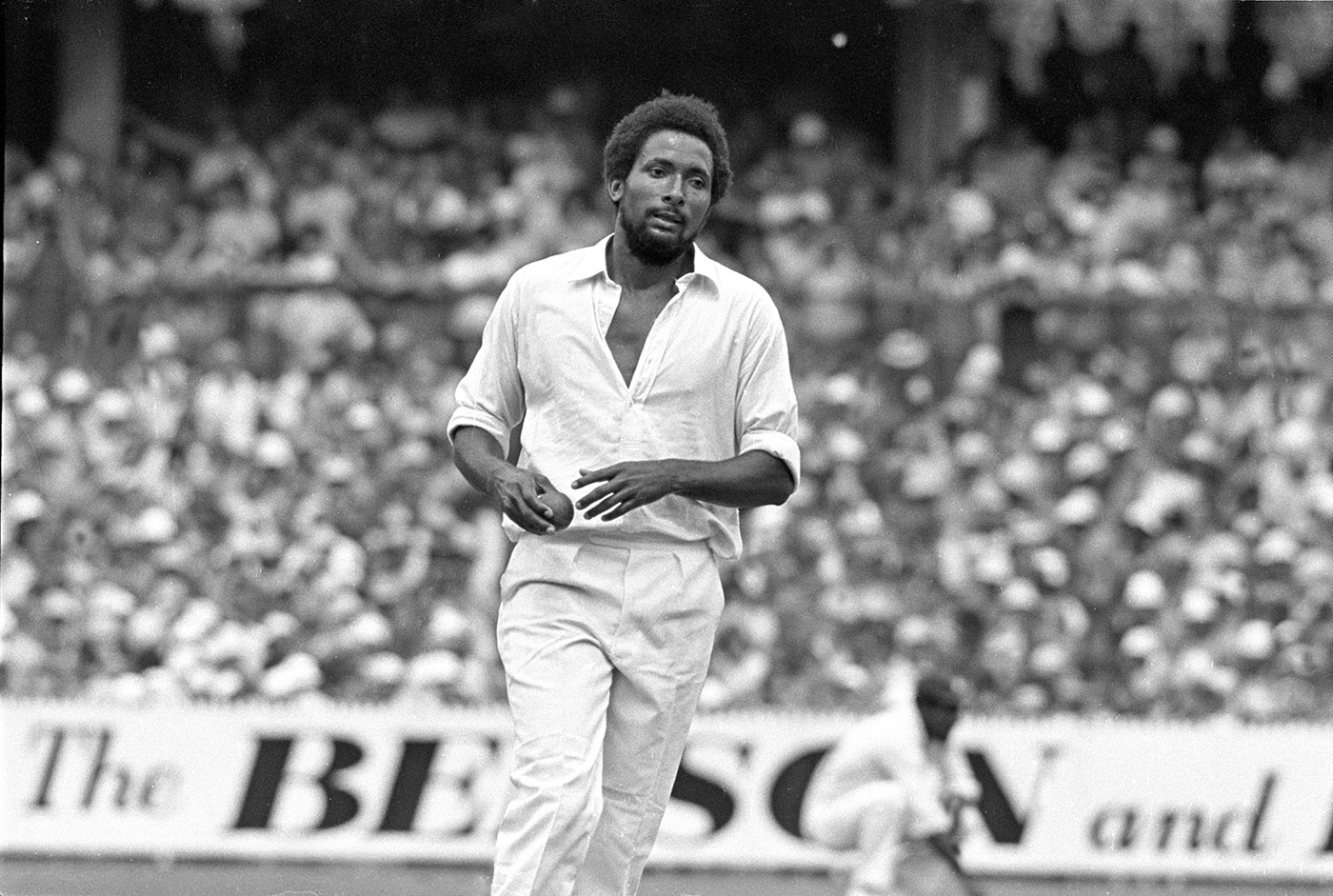
Andy Roberts thinking fast bowler who could trick a batter into playing a wrong shot and send his stumps cartwheeling without seemingly making any effort. Pic: The Cricket Monthly
But Roberts was different. He was a thinking fast bowler who could trick a batter into playing a wrong shot and send his stumps cartwheeling without seemingly making any effort. Although he was the world’s fastest bowler in his heyday, it was his combination of brain and brawn that was the secret of his success.
It was because of this quality that the Little Master Sunil Gavaskar rated Roberts as the most dangerous bowler of his days. In turn, Roberts also rated Gavaskar very high, but he once said: “On bouncy tracks, Sunil will have to yield to Vishy (Gundappa Vishwanath).”
This quiet and clever spearhead of the West Indies pace attack is 75 years old on Thursday. He was born on January 29, 1951, in the village of Urlings in Antigua as a member of a large family which had 14 children. His father was a fisherman who did not want his son Anderson Montgomery Everton, to play cricket. The father wanted his son to excel at studies and look for a stable career.
Fate decided Roberts’ cricketing journey
But ultimately it was fate which decided his life’s journey. By the age of 16, young Andy was already showing signs of becoming an extraordinary fast bowler. On his first-class debut, playing for Leeward Islands against Barbados, he took four wickets including that of Sir Gary Sobers. Inexplicably he was then dropped from the team. But he was brought back for the match against Guyana. He underlined his prowess again by dismissing Rohan Kanhai and Roy Fredericks. After that no whimsical selector could drop him.

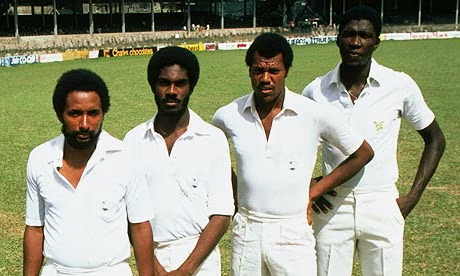
From left: Andy Roberts, Michael Holding, Colin Croft and Joel Garner of West Indies before the first Test against England in Trinidad in 1981. Pic: Adrian Murrell/Getty Images Europe
Roberts made his Test debut in 1974 and from the mid-1970s to the 80s, Roberts was a key member of the famous quartet of West Indian fast bowlers. The others were Michael Holding, Colin Croft and Joel Garner. Roberts was also part of the West Indies team that won the first two Prudential World Cups in 1975 and in 1979.
Roberts took advice from Trueman seriously
After watching Roberts keenly, Fred Trueman, one of England’s fast bowling legends, wrote in The Sunday People: “Roberts is a good bowler but he could be a great bowler if he brought his arm higher.” The bowler took that advice seriously and went to work on this for a year till his arm was higher at the time of delivery. It made him a lethal bowler.

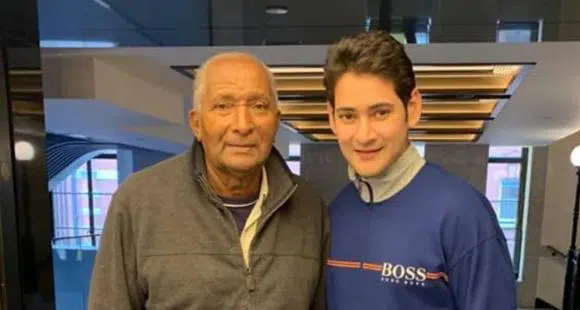
Andy Roberts with Tollywood superstar Mahesh Babu. Pic: pinkvilla.com
Roberts played his first series against India in 1974-75 where he skittled the Indian batting line-up with 32 wickets in the series. During that tour, this correspondent watched a match between the West Indies and South Zone at the Lal Bahadur Stadium in Hyderabad. Roberts took two for 77 in the first innings and three for 35 in the second innings. The most memorable incident of that match was an incomparable knock of 114 by G R Vishwanath. He was supported by Brijesh Patel (103) in South Zone’s first innings.
Roberts was West Indies’ answer to Lillee and Thomson
A year later, his seven for 54 in the second innings of the Perth Test of 1975-76 series destroyed Australia and Roberts became the West Indies’ answer to Dennis Lillee and Jeff Thomson. It took Roberts less than two-and-a-half years to reach 100 Test wickets. He was the quickest to do so at that point of time. His best years were unquestionably in the middle 1970s, before the Packer revolution rocked world cricket.
But later the edge went out from his pace, although his experience and ability to move the ball kept him in Test cricket until 1983-84. However, his own recurring injuries and the emergence of a young crop of fast bowlers from the Caribbeans, put an early end to his career in 1983.

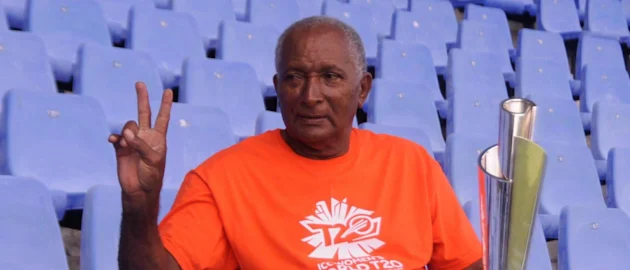
Andy Roberts oversaw the preparation of pitches and helped prepare the pitches at the Antigua Recreation Ground on which Brian Lara twice broke the world record for highest Test scores (375 and 400). Pic: ICC
Andy Roberts’ contribution to West Indies cricket has continued even after his retirement as a player. He oversaw the preparation of pitches and helped prepare the pitches at the Antigua Recreation Ground on which Brian Lara twice broke the world record for highest Test scores (375 and 400).
Roberts was the first Antiguan to play Test cricket for the West Indies, thus leading the way for many of his famous countrymen including Viv Richards, Richie Richardson and Curtly Ambrose. Here’s wishing the quiet and unassuming man a very happy 75th birthday.